

What is a moving container?
Before you book a moving container, it helps to understand exactly what you're working with, how these containers differ from your other options and which size is best for your home.
Portable storage container definition
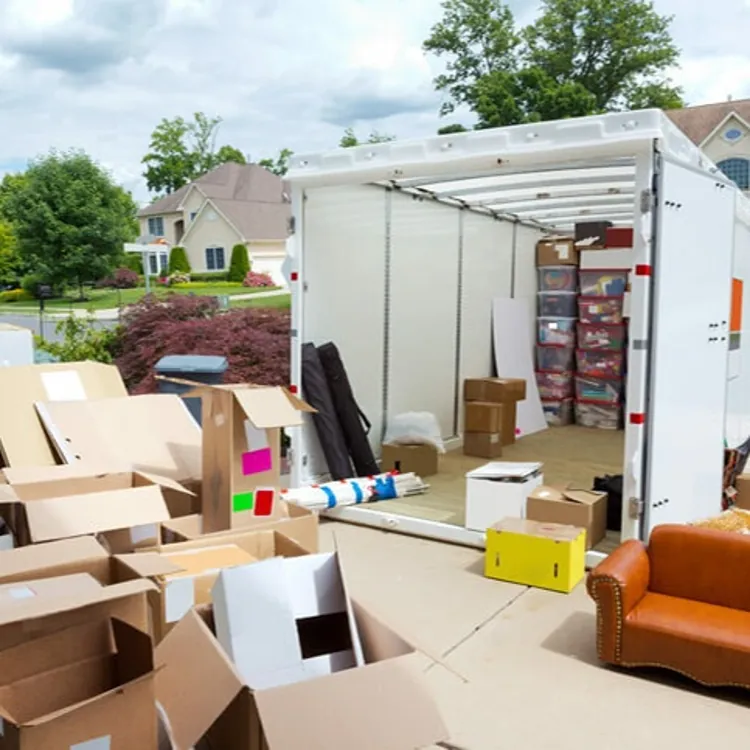
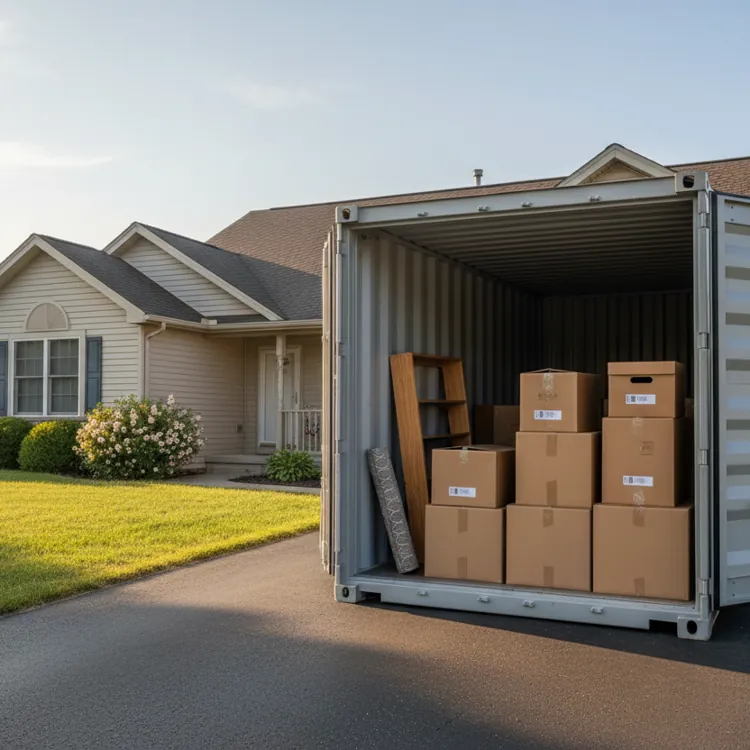
Moving containers are portable units that store your belongings during a move. Companies deliver the weatherproof units to your door, allowing you to load them on your own timeline.
These portable containers typically consist of a steel or wood frame with a steel or aluminum exterior. They have weatherproof seals and are usually lockable. Some have built-in lock boxes to prevent tampering.
Moving containers sit at ground level, eliminating the need for a ramp, which makes loading easy. Once you’re done packing, the company will pick it up and take it to where it needs to go (i.e., your new home).
Moving container vs. storage unit
While both are valuable when moving, moving containers and storage units serve different purposes. Accessibility, flexibility, transportation and cost are key variables to consider.
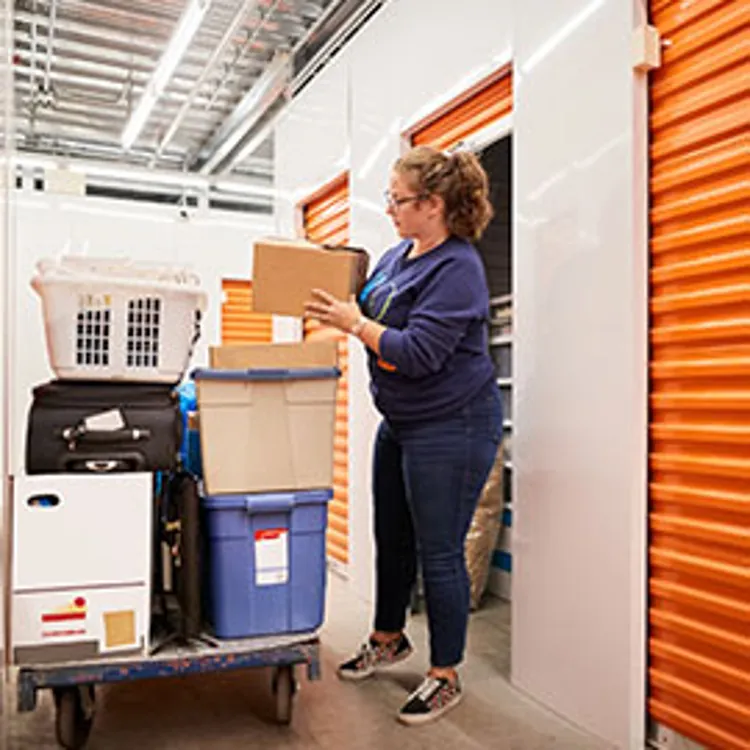
Storage units are off-site, meaning you need to go to a facility in person. Containers, on the other hand, come to you. With a moving container, there’s no need to work around storage facility hours. You can load and unload on your schedule.
Storage units and moving containers generally have similar monthly rates, but moving containers eliminate the need to rent a truck separately.
Moving containers are best for people in transition between homes. Storage units, on the other hand, are ideal for those with long-term storage needs.
Moving container vs. moving truck
When it comes to moving, one key difference between moving containers and moving trucks is the level of control you have over the process. If you rent a smaller moving truck, like a U-Haul, you can drive the truck yourself and control the timeline, loading and route.
Renting a moving container relinquishes some control, as the company handles the transportation. If you rent a moving container, you let the pros handle the logistics while you focus on other things.
The choice between a moving container and a rental truck also comes down to your timeline. Truck rentals are typically between one and three days, while you can rent a container for 30 days or more.
Both moving trucks and moving containers require self-loading, which can be physically demanding.
In terms of cost, the right method for you depends on the distance of your move. Trucks are generally cheaper for local moves, but prices increase dramatically the longer your move is. For long-distance moves, renting a moving container is more cost-effective.
» FIND OUT: How much does it cost to rent a moving truck?
Common sizes and weight limits
Moving containers come in several sizes, so you can find one that best fits your needs.
| Truck length | Home type |
|---|---|
| 7 ft. | Studio apartment or dorm |
| 8 ft. | 1 to 2 rooms |
| 12 ft. | 2- to 3-bedroom home |
| 16 ft. | 3 or more bedrooms |
Weight limits vary by company, but moving containers can typically handle between 4,000 and 5,000 pounds each. Most household moves fall well under the limit, but if you have bulky specialty items, like pianos, gym equipment or large appliances, consider supplementing with a trailer or truck rental for that item only.
Moving container process step by step
Using a moving container is straightforward when you know what to expect in the process. Let’s dive into each stage.
Moving container process overview
Here’s how renting a moving container works:
- Order and schedule. Choose a container size, set a delivery date and confirm your address and where the container will be placed on your property. Most moving container companies prefer bookings 4 to 6 weeks out.
- Container delivery. The moving container company will leave the container on a clear, leveled area, like a driveway, at your home. You're usually given a 3-hour delivery window.
- Loading. You pack and load the moving container at your own pace.
- Pickup. Once you’re done loading the container, the company will pick it up on your scheduled date. Moving container companies often allow you a month or more to load your container before picking it up.
- Transport. The company takes your loaded moving container to your destination. Depending on the distance of the move, transport can take 1 to 14 days.
- Final delivery. The container is delivered to your new address and the unloading window begins. Moving companies often offer flexible, self-paced unloading.
- Empty container pickup. Call to schedule retrieval once you’re done unloading. The company will pick up the empty container, and your rental period officially ends.
Storage options
Building restrictions or misaligned move-in dates may interfere with on-site moving container storage plans. Luckily, moving container companies give you options.
Companies like PODS, U-Haul, 1-800-PACK-RAT, Zippyshell, U-Pack and UNITS offer warehouse storage. The companies will hold your container between pickup and delivery as needed.
You can access your stored moving container while at these secure warehouses, but most companies require you to schedule an appointment first.
Scheduling flexibility
Renting a moving container is one of the most flexible options. Most companies allow rescheduling both pickups and deliveries with a 1- to 3-day notice, depending on the company. Some companies, like U-Pack, require a fee for short-notice changes.
Moving container pros and cons
Moving containers aren’t ideal for every move. Compare the advantages and disadvantages before renting one.
Moving Container Pros
- No driving required: The company handles the transportation, so you only need to pack and load.
- Flexible scheduling: As long as you give a few days’ notice, you can edit your pickup or drop-off window.
- Costs less than hiring pros: Because you handle the labor of packing and unloading, renting a moving container cuts costs.
- Pack and load on your own timeline: Moving container companies typically give you at least one month to pack and load at your own pace, and you don’t have to work around company hours.
- Built-in storage: Most moving container companies have off-site storage options in secure warehouses, so you can store your container there if your moving date doesn’t line up.
- No ramp needed: Ground-level loading is better for your back and your furniture because you won’t need to lift heavy items vertically or use steep, unstable ramps.
Moving Container Cons
- Longer delivery time: Renting a moving container makes your move slower than if you drove a moving truck yourself. Container delivery can take anywhere from a day to a couple of weeks, depending on the distance.
- Higher cost than DIY truck rental: Renting a moving container allows you to skip the driving, but that convenience makes containers more expensive than renting and driving a truck yourself.
- Needs parking space: You’ll have to place the container somewhere accessible, like a driveway or permitted street spot, which isn’t always possible in every area.
- Labor isn’t included: You’re responsible for packing, loading and unloading everything, which is physically demanding. Hiring help is an added expense if you don’t want to do it yourself.
- Possible restrictions: Some neighborhoods, apartment buildings or cities have regulations that limit or ban storage containers.
- Not cost-effective for small moves: If you don’t have much to move, the price of a container might not be worth it compared to renting a moving truck.
Moving container costs and price factors
The cost to rent a moving container varies by company, location and distance of the move. Consider cost components and common price drivers to understand how pricing works, and call companies for specific quotes.
»LEARN: How much does it cost to move?
Key cost components
The four major cost components are:
- Base price of container rental
- Location
- Transport
- Destination delivery and pickup
Storage is another add-on if you need a safe place to keep your packed and loaded moving container before moving to your new address.
| Cost component | What it covers | Common price drivers |
|---|---|---|
| Rental | The base fee for using the container during your rental window | Container size, number of containers, rental duration |
| Delivery | Drivers transporting the empty moving container to your home for you to load it | Distance from warehouse, driveway accessibility |
| Transport | Drivers transporting the packed and loaded moving container to off-site storage or your new home | Distance from destination, container size, fuel |
| Storage | Storing the packed and loaded moving container at an off-site facility until you’re ready to move in | Facility location, duration of storage, moving container size |
| Pickup | Retrieval of the empty moving container after unpacking | Distance from warehouse, driveway accessibility |
Typical moving container costs
Renting a moving container can range from a few hundred dollars for local moves to thousands for cross-country trips.
| Move distance | Average cost |
|---|---|
| Local (under 100 miles) | $300 to $500 |
| Short distance (100 to 500 miles) | $1,000 to $2,300 |
| Long-distance (1,500 and up miles) | $2,300 to $3,000 and up |
Add-ons
Optional add-ons like hiring workers to pack and load or unload the container, insurance and moving-related supplies (packing blankets, tie-downs and more) increase the cost of renting a moving container by hundreds.
While opting for these extras can reduce your physical load and make the move more efficient, they are optional. If you’re on a budget, keep things simple and minimize add-ons when possible.



FAQ
Are moving containers cheaper than movers?
Yes, renting a moving container is often cheaper than hiring professional movers. This is because renting a moving container requires you to handle the physical labor. For short local moves, a full-service crew can sometimes be more cost-effective than renting a moving container.
How many PODS do I need for a 2,000 sq. ft. house?
Most 2,000 sq. ft. homes will fit in a single 16 ft. container. If you have lots of bulky furniture to pack, you may need a second, smaller container.
How much do moving containers cost?
Moving containers cost anywhere from $300 to $3,000 or more. Your total cost depends on key factors like the distance of your move, the container size you need and whether you need extras like storage.
Can moving containers be placed on the street?
Local regulations determine whether or not moving containers can be placed on the street. In most cases, they can be placed on the street, but many cities require a permit before doing so. Contact your city to find out more.
Article sources
ConsumerAffairs writers primarily rely on government data, industry experts and original research from other reputable publications to inform their work. Specific sources for this article include:
- Jack Cooper, "PODS Moving and Storage Cost Guide." Accessed March 26, 2026.
- U-Pack, "How Self-Moving Works." Accessed March 26, 2026.
- PODS Enterprises, LLC, "PODS vs. U-Haul: Compare Your 2025 Moving and Storage Options." Accessed March 26, 2026.
- MovingPlace, "What PODS Container Size Do I Need?" Accessed March 26, 2026.
- PODS Enterprises LLC, "Portable Container Sizes." Accessed March 26, 2026.
- U-Pack, "How Far in Advance Should I Book a Moving Company?" Accessed March 26, 2026.
- PODS Enterprises LLC, "Portable Storage Units: How PODS Works | Storage FAQs | PODS." Accessed March 26, 2026.
- PODS Enterprises LLC, "Choosing Moving Containers for Long-Distance Moves: Understand the PODS Process and Who It Fits Best." Accessed March 26, 2026.
- U-Pack, "ReloCube Moving Containers." Accessed March 26, 2026.
- U-Haul International, Inc., "How to Modify or Cancel a Reservation." Accessed March 26, 2026.
- Poseidon Moving & Storage, "Moving Pods Cost and Size Guide: Which One is Best for Your Move." Accessed March 26, 2026.
- CostWhale, "How Much Does Moving Container (PODS) Cost?" Accessed March 26, 2026.U-Haul International, Inc., "Costs for Moving Cross Country." Accessed March 26, 2026.
- U-Haul International, Inc., "Costs for Moving Cross Country." Accessed March 26, 2026.
- Moving APT Inc., "How Much Do Pods Cost to Move?" Accessed March 26, 2026.