

How to move heavy furniture on carpet by yourself
Below is a step-by-step guide for moving heavy furniture across the carpet when you have no one else to help.
1. Clear the path and measure spaces
Before you start moving anything heavy, make sure you’ve packed up and cleared everything in your way so you’re not bumping into objects when you’re pushing furniture. You’ll also want to remove rugs, toys, cords and any small items that could get caught under the sliders.
Don’t forget to measure doorways, hallways and tight corners so you know whether the furniture will actually fit through them before you start moving it.
“Planning your move is the most important part. Determine what your pathway will be and how you need to manipulate the furniture before attempting to move it,” said Kristianne Egbert, a certified professional ergonomist.
2. Lighten and protect the furniture
The heavier the furniture, the harder it is to move by yourself. So to make your life easier, lighten the furniture by removing components that can be reassembled once you’re done moving. For example, you can take the cushions off the couch, remove shelves and detachable pieces and remove drawers from dressers.
This reduces the total weight and also prevents items from shifting or falling during the move. It’s also a good idea to wrap delicate surfaces and corners with towels or moving blankets to protect the furniture while you reposition it.
3. Lift edges with a pry bar
Lifting an entire piece of heavy furniture by yourself can seriously hurt your back if you’re not careful.
To help, use a small pry bar, furniture lifter or sturdy lever to lift one side just slightly. This way, you can raise the furniture high enough to position a slider or a cardboard piece underneath each leg.
If you don’t have a pry bar and must lift it by yourself, tighten your core when you do so. “Stand close to your lifting point with your feet in a wide staggered stance, giving you a stable base so that you can lift with your leg muscles rather than your back,” Egbert explained. “Keep your feet pointing towards your lift so your back is not twisted, and keep your chest up to reduce back rounding.”
Stand close to your lifting point with your feet in a wide staggered stance, giving you a stable base so that you can lift with your leg muscles rather than your back.”
4. Place sliders or cardboard under feet
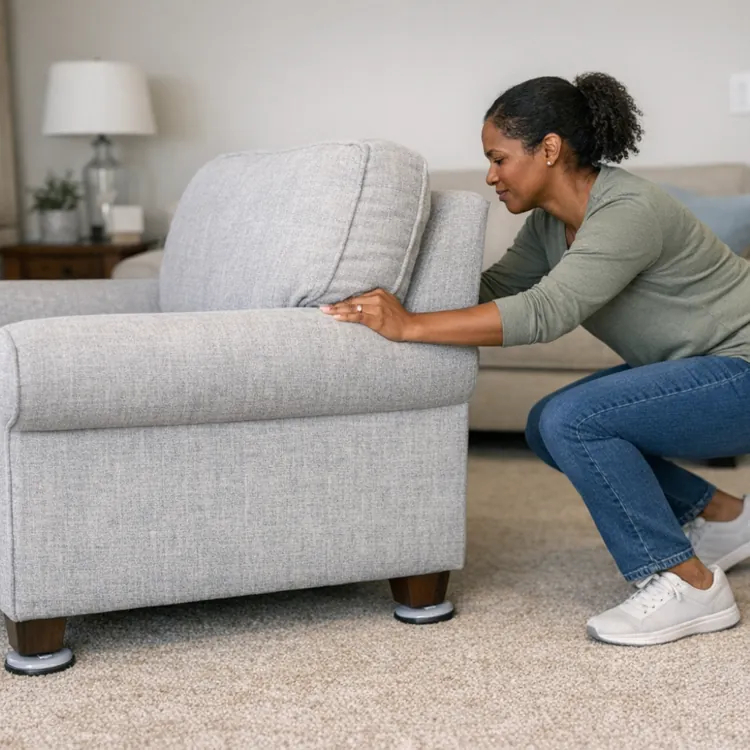
Once one edge is lifted slightly, place your slider material underneath the furniture leg. Repeat this process for each leg.
If you don’t have sliders, you can also use thick cardboard squares, moving blankets, plastic lids or trays. Make sure the smooth side faces down toward the carpet so the furniture glides more easily before you start moving it.
5. Push safely and steer around corners
Once you’ve put the sliders underneath your furniture, you can start moving it. Keep your back straight and your knees slightly bent, and push with your legs instead of your back.
Apply steady pressure instead of sudden force. And if you need to turn a corner, push from one side of the furniture and gently guide it in the direction you want it to go.
6. Reset sliders and finish positioning
If the furniture starts to drag or feels harder to push, stop and check whether the sliders have shifted. If they have, lift the edge again and reposition them so they sit directly under the furniture legs. Once you’re done moving, lift the furniture one side at a time and remove the sliders or cardboard.
Furniture sliders and DIY options
Furniture sliders are one of the easiest ways to move heavy items across carpet. But if you don’t have them, you can use materials you already have at home.
| Method | Best for carpet type | Pros | Cons |
|---|---|---|---|
| Furniture sliders | Most carpet types, especially thick carpet | Designed for smooth sliding, reusable, very durable | May not be as easy to find as other items |
| Cardboard | Low-to-medium pile carpet | Cheap, easy to find, disposable | Can bend or wear down quickly |
| Moving blanket | Medium pile carpet | Protects furniture and floors | Can bunch up under heavy weight |
| Towels | Light furniture on carpet | Common household item, flexible | Less durable |
| Plastic lids | Small furniture items | Smooth surface | Only works for lighter pieces |
Safety tips for solo furniture moving
Moving heavy furniture alone always carries some risk. Follow these safety tips to avoid injury and damage:
- Bend your knees and keep your back straight when lifting.
- Use your legs instead of your back to apply pushing force.
- Wear grippy shoes to avoid slipping on carpet.
- Use work gloves to improve grip and protect your hands.
- Take breaks if you start to feel tired.
- Avoid twisting your body when pushing furniture.
- Check for cords, toys or rugs in your way before you start moving.
- Protect furniture corners with padding when you’re moving through tight spaces.
“Be an honest judge of your own physicality, and consider distances, stairs and terrain that you might be crossing. If it seems like it might be too much, it probably is,” Egbert said.
If anything feels too heavy or unstable to move alone, ask for help or hire professional movers instead.
» COMPARE: Best moving companies
Be an honest judge of your own physicality, and consider distances, stairs and terrain that you might be crossing. If it seems like it might be too much, it probably is.”
How to protect carpet and walls
It’s easy to damage the carpet, walls, or door frames when you’re moving heavy furniture alone. To avoid expensive repairs, put large sheets of cardboard under the furniture base to help distribute weight evenly and prevent the furniture legs from digging into carpet fibers.
If you’re moving furniture in tight spaces or around corners, always pad the sharp edges with towels or foam. You’ll also want to wrap furniture corners with moving blankets and cover pointed edges with socks or a soft cloth.
Also, make sure to check the bottoms of the sliders before moving furniture. Small debris stuck underneath can scratch surfaces or snag carpet fibers.
FAQ
How to move a heavy piece of furniture without a dolly?
You can move heavy furniture without a dolly by placing sliders, cardboard or towels under each leg. These items make it much easier for you to glide your furniture across the carpet without hurting yourself.
What can I use instead of furniture sliders on carpet?
If you don’t have furniture sliders, you can use cardboard squares, moving blankets, towels and plastic container lids.
Are furniture sliders safe for all carpet types?
Yes. Most furniture sliders are safe for both low-pile and high-pile carpet.
Can cardboard damage carpet when moving furniture?
Cardboard generally won’t damage carpet when you use it to help you move furniture. Just make sure the cardboard is clean and free of debris before placing it underneath each furniture leg.