

Prep, measure and plan
If you have the option of going through more than one doorway, you’ll want to start by getting the couch’s dimensions. Then measure any doorways, hallways, stairs or tight spaces. You may need to reroute your moving path. Depending on your earlier measurements, you may need to temporarily remove a door to allow the couch to pass through.
Once you’ve found the best moving path for your sofa, remove any potential hazards that could cause injury or tripping hazards, such as area rugs.
Consider arranging extra help on moving day. If you need to move your couch up or down a flight of stairs, you’ll probably need to enlist help from a friend. Stairways present a high risk when moving heavy furniture, and attempting this task alone isn’t recommended due to the potential for injury. Even if you have ramps and elevators available, certain couches, like bulky sectionals and sleeper sofas that carry the added weight of an entire mattress, will need to be moved by professionals.
» RELATED: Packing tips
Use the right equipment
Having the right equipment simplifies your move, prevents damage to your couch and reduces the chance of injuries.
You can purchase the following equipment or rent it from moving truck rental companies:
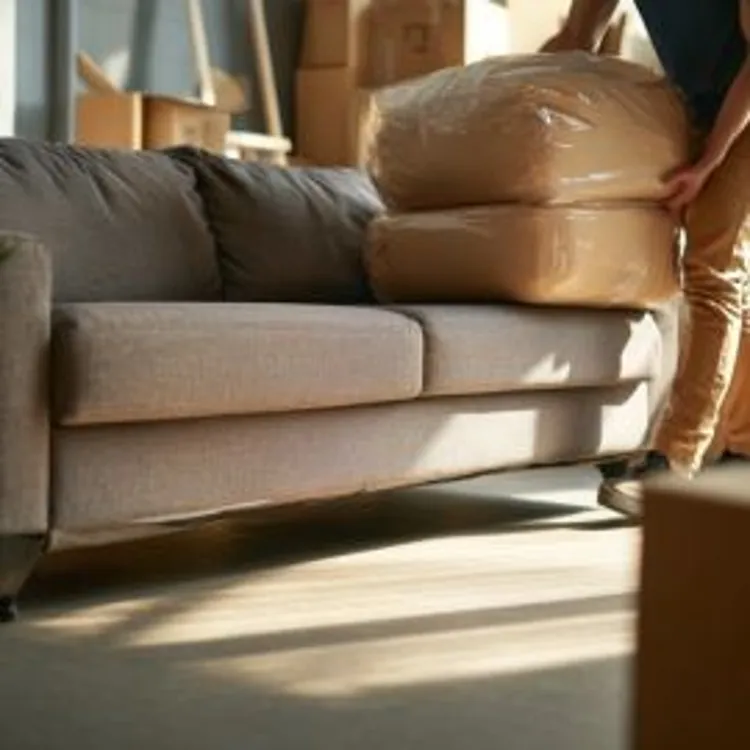
- Plastic wrap or moving blankets: Despite your best efforts, there may be times your upholstery touches the ground or scrapes against doorways. Use plastic and moving blankets to cover and protect the couch.
- Oversized furniture sliders: Furniture sliders are small, flat pads that go under the legs or corners of heavy furniture — kind of like coasters. They usually have smooth plastic or felt surfaces, allowing you to slide your furniture without damaging your flooring. Place these under the couch legs or the corners of the base. This should allow you to easily scoot the heavy couch.
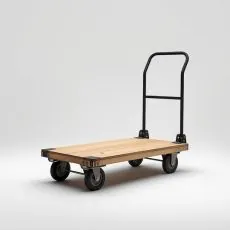
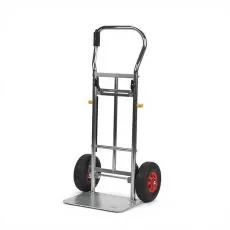
- Flat furniture dolly or hand truck: These are essential for moving the couch outside and loading it into the truck safely. A flat furniture dolly works well if you don’t have stairs to deal with. If your building doesn’t have ramps and elevators, you’ll need to rent a hand truck or utility dolly.
- Tie-down straps or bungee cords: Use these to securely fasten the couch to the hand truck.
- Lifting straps: These are optional, but there are several different kinds of lifting straps you can buy to help you with weight distribution, including wrist straps, forearm straps and shoulder straps. Most lifting straps are designed for two users, but there are some that can be used by just one person.
Flat furniture dolly vs. hand truck
|
|
» LEARN: How to pack for a move
Disassemble the couch if possible
Disassembling your couch significantly reduces its overall size and weight, making it easier to move and maneuver safely through tight areas or narrow doorways. For most couches, you’ll only need a few basic tools, like a screwdriver and a socket wrench.
Caution: Always consult the manufacturer’s manual that came with your couch before attempting disassembly. Some couches aren’t designed to be taken apart after assembly, and attempting to do so may result in permanent damage.
Here are the steps to disassemble your sofa:
- Remove any cushions, pillows and slipcovers: Cover these in plastic wrap or place them in a bag so they don’t get damaged during the move.
- Locate and remove legs or feet: Turn the couch over or tilt it on its side so you can see the bottom. Check to see if the legs are screwed on, bolted in or attached with a quick-release mechanism. If the legs are screwed in, you can use a screwdriver, although some may twist off by hand. If legs are bolted on, you’ll need a wrench or socket set to remove the bolts holding them in place. Be sure to put all hardware and screws in a labeled bag so it’s easier to put together your sofa later.
- Remove additional features: For sectionals, unhook the metal connectors that hold the pieces together. For sleeper sofas, the mattress and its frame may unbolt from the main couch frame.
- Detach any arms and the backrest: Some couches have detachable parts, and removing them can make it easier to move it. Look underneath or inside the frame for bolts or screws that connect the arms or backrest to the main couch frame. Remove the bolts and carefully lift the arms or backrest away from the main frame. Place hardware in a labeled bag.
Wrap and protect the couch
Wrapping a couch in plastic wrap (or stretch wrap) protects it from dirt, stains and minor damage during your move. To begin, wrap the couch starting from the bottom edge in a horizontal direction. Pull the stretch film tight, ensuring you overlap each layer by about half as you continue wrapping around the entire piece.
Next, place a moving blanket or thick pad underneath the legs of one side of the couch, and with a helper, carefully turn the couch on its side. Using the plastic stretch wrap, wrap the couch again, this time in a vertical pattern, making sure each layer overlaps. Secure with packing tape. You can also cover it with a moving blanket for added protection during transit.
For sectionals or other couches that are disassembled, you’ll need to wrap those pieces in plastic wrap as well, using the same horizontal then vertical patterns. However, don’t use plastic wrap on leather surfaces; it can trap moisture and potentially damage the couch. Instead, cover leather couches with moving blankets and secure them with packing tape.
Navigate stairs and tight spaces
Stairs and tight corners make moving a couch harder, so it’s important to plan your approach before you start lifting.
Using a hand truck with a helper
It’s best to have at least one helper and use a hand truck when moving a couch up or down a flight of stairs. First, with the helper’s assistance, tilt the couch onto the hand truck so that the back of the couch is aligned with the hand truck’s back support. To prevent shifting, secure it tightly to the hand truck using strong tie-down straps or bungee cords.
One person should stand a few steps down to support most of the couch’s weight. The other person should control the hand truck’s handles at the top of the stairs. Slowly tilt the hand truck back to balance the weight and move down one stair at a time. The person at the bottom should guide and stabilize the couch.
Be cautious and move slowly. It’s important to communicate any changes in footing, balance or position. Use short commands like “Lift,” “Step” or “Hold.”
When going upstairs, follow the same process but reverse positions so the person at the top pulls the hand truck up one step at a time.
A hand truck also helps with tight doorways and corners. Angle the couch down to fit and use slow, controlled pivots to move through narrow areas.
How to get a couch through a tight doorway
- Remove what you can: Take off any legs, feet and cushions.
- Lay it on its side and hook it in: Turn the couch on its side and angle the back corner into the doorway first. As soon as that corner passes the frame, pivot the rest of the couch so the base follows through.
- If that doesn’t work, try tilting the sofa diagonally: If the base of your couch is too wide for the doorway, you may have to tilt it so the top edge is angled toward the doorway. Feed the upper corner through at an angle first, then shift the bottom edge through after it clears.
- Stand it up and angle it in: If tilting doesn’t work, stand the couch on its end and feed one top corner through the doorway first, then twist the bottom through.
- Remove the door if needed: If the frame is still too tight, you may need to temporarily remove the door to gain extra clearance.
Moving a couch alone on stairs
It’s best to have at least two people when moving a couch. That being said, some experienced movers have moved a standard sofa alone with a hand dolly, but only under certain conditions:
- It’s a regular sofa, not a sectional or sleeper.
- You have access to a hand dolly.
- You have experience lifting and balancing heavy furniture or equipment.
Going up the stairs solo
If you’re going up stairs, you’ll need to work backward with the sofa in front of you. Lift the hand truck by the top handle using your legs, not your back, and raise the dolly one step at a time.
Going down the stairs solo
On the way down, the sofa will still be in front of you, but you’ll need to position your body sideways. Place one hand on the midframe handle of the hand truck and your other hand on top of the sofa for balance. Turn your body sideways and slowly side-step down, one step at a time.
FAQ
How to move a heavy sofa on your own?
It’s always best to get help when moving heavy furniture. But if you need to move a heavy sofa on your own, use furniture sliders and a utility dolly to move the couch across floors. Never attempt to move a heavy couch, like a sleeper sofa or sectional, down the stairs by yourself; it’s too dangerous.
Do all sofas come apart?
No, not all sofa models are designed to be taken apart, and trying to do so may result in permanent damage that prevents it from being reassembled later. Always check the owner's manual before attempting to disassemble a sofa.
How do you protect floors when moving a couch?
If you’re gliding the couch across the floor, you can use furniture sliders, which are equipped with felt padding or smooth plastic to protect your floors from scratches.
For extra security, there are materials you can buy and lay down to protect your flooring, like floor runners, rosin paper, adhesive plastic film and cardboard sheets. Just make sure any flooring protection you lay down is secured so that it doesn’t create a tripping hazard.
What are the best tools for moving furniture alone?
The best and most effective tool for moving furniture by yourself is a hand truck or a utility dolly. This equipment helps bear the majority of the couch's weight, allowing you to move it around much more easily.