

Prepare for the move
Before attempting to move large pieces of furniture, measure your items and compare their dimensions to the width of all doorways and narrow spaces, such as staircases, to anticipate any tight fits. For furniture like bed frames or large couches, you may need to remove the door from its hinges to gain clearance. This step helps prevent damage to both the furniture and the door frame.
Next, carefully plan the exit path from your home to the moving truck. Walk the entire route and remove any potential tripping hazards, such as area rugs or loose items, before beginning the move.
Then, gather the necessary tools and equipment to help with the heavy lifting and protection:
- Furniture sliders (plastic for carpet, felt for hardwood floors)
- Utility dolly (for smaller, heavier furniture)
- Furniture dolly (for larger items)
- Lifting straps (optional, but essential if you are not using a dolly)
- Non-slip gloves
- Stretch wrap
- Ratchet straps or bungee cords
- Cushioning material (optional)
- Moving blankets
- Sealable bags (for hardware like screws and bolts)
- Protective materials: cardboard and carpet film or red rosin paper (depending on your floor type)
- Painter’s tape
Lay down protective materials along the entire traffic path to protect your floors from scratches or stains. You'll need a roll of red rosin paper for hardwood floors and plastic film for carpeted areas, and ensure the stairs are also covered. Heavy furniture can also easily scrape or dent sharp wall corners. Use painter's tape to pad tight areas with cushioning material or sturdy cardboard before moving the furniture past them.
» RELATED: Best moving companies
Disassemble furniture
Disassembling heavy, bulky furniture before your move is highly recommended, as it makes the load lighter and reduces the risk of personal injury or property damage. Smaller, separate parts are much easier to handle and maneuver.
These are the pieces of furniture you should disassemble before moving:
- Beds: Separate the frame, headboard, footboard and side rails.
- Dressers: Remove the mirror and take out the drawers if you anticipate lifting the unit (e.g., without a dolly or when moving downstairs).
- Desks or large dining room tables: Remove the legs if they are attached with bolts.
- Shelving units or bookcases: Remove any adjustable shelves and pack or wrap them separately from the main unit.
- Sectional sofas and modular furniture: Break these down into their individual sections for easier transport.
When moving ready-to-assemble (RTA) furniture, such as items you built yourself, first confirm with the manufacturer if the piece is designed for disassembly and reassembly. If the item is not structurally made to be taken apart, it must be transported intact. Take extra care to prepare the piece for transit, ensuring its stability and preventing it from falling during the move.
» STEP-BY-STEP: How to pack for a move
Use the right tools
Equipment like dollies and sliders can help make moving much safer. You can purchase furniture sliders and lifting straps at most hardware stores. Dollies are available for rent from hardware stores or moving companies. Before moving any item, cover the furniture with a moving blanket secured with packing tape or use stretch wrap to protect it from dirt and scratches.
Here are some tips for using moving equipment properly:
- Furniture sliders: Lift one corner of the furniture and place a slider beneath the leg. Repeat for all legs. Avoid putting your fingers under the feet. Only use sliders to move items near the exit door.
- Furniture dolly (four wheel): Have the dolly close by. Lift the furniture piece straight up and use your foot to slide the dolly underneath the center of the item. Maintain a firm grip on the furniture to keep it balanced while rolling.
- Utility dolly (two wheel): Position the dolly behind the item and center the metal base plate underneath. Secure the item to the truck using ratchet straps or bungee cords. Use the handles to gently tip the item back toward you and wheel it out.
- Lifting straps: Both movers place the harness on their shoulders. Feed the loops under the item and lift simultaneously in tandem. Keep your back straight and always lift primarily with your leg muscles to avoid back injury.
» DO IT RIGHT: Moving tips
Safe lifting techniques
It’s important to dress properly before moving heavy furniture. Wear closed-toe shoes with a good grip to prevent slipping and falling. Non-slip gloves can also make it easier to grasp heavy furniture.
When lifting furniture, use these safety techniques:
- Lift with your legs, not your back. Squat down to the item, keep your back straight and core tight, and push up using your powerful leg muscles. This minimizes strain on your spine.
- Avoid twisting your torso. If you need to change direction while holding the load, pivot or shuffle your feet. Never twist at the waist.
- Keep the furniture close to your body. Hold the item near your center of gravity. This increases stability and reduces the effort required to carry the load.
- Maintain clear communication with your partner. Designate one person to lead the lift. This leader should count (e.g., "One, two, three, lift!") to ensure everyone lifts at the same moment.
- Call out hazards. The person in the front should clearly warn the person in the back about nearby obstacles, corners, walls or stairs.
By maintaining proper lifting posture and ensuring clear communication, you significantly reduce the risk of bodily injury during the move.
Moving furniture upstairs
Navigating stairs with heavy furniture requires assistance and proper technique; don’t attempt this challenging task alone due to the risk of injury. Equipment like dollies or lifting straps can be extremely helpful.
When using a utility dolly, ensure the furniture is secured with ratchet straps or bungee cords. Position the dolly at the bottom of the stairs with the wheels and handles facing the lowest step. The person on the stairs should stand on the first step, then slowly tilt the dolly up, making sure both wheels are securely planted on the step before advancing to the next.
If you opt for lifting straps, work with your helper to lift the item using your legs, maintaining straight arms and placing your hands at the base of the furniture. Designate the strongest person for the lower position since they will carry the heaviest load. The person at the top should walk backward up the steps, moving one step at a time and coordinating the movement by calling out cues like "one, two, three, step." You can use this same technique if you aren’t using lifting straps.
FAQ
How to easily slide heavy furniture?
Reduce the furniture's weight by emptying its contents first. Then place furniture sliders under each leg and slide the item across the floor toward the nearest outside door, slowly and gently.
How do you move a heavy sofa?
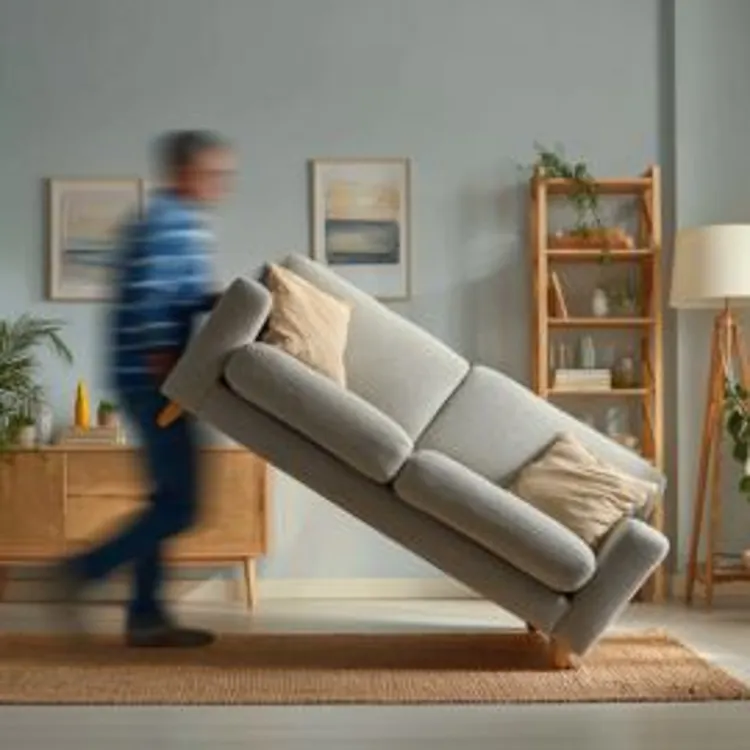
To move a sofa, use furniture sliders to glide it across the floor or lifting straps to evenly distribute the weight between you and your partner. If neither tool is available, ensure both partners grip the bottom of the sofa for better stability (avoid the arms), keep your backs straight and cores engaged, and use your legs to lift and move.
What tools are best for moving heavy furniture?
Furniture sliders and dollies are essential tools for moving heavy furniture. They enable you to safely maneuver and transport items.
Why is it important to disassemble furniture before moving?
Disassembling large furniture (if it’s meant to be disassembled — check with the manufacturer for your individual piece of furniture) makes it both lighter to carry and easier to move in smaller pieces, which significantly reduces the risk of injury.
Article sources
ConsumerAffairs writers primarily rely on government data, industry experts and original research from other reputable publications to inform their work. Specific sources for this article include:
- Edson's Movers, "Door Removal: When It Saves Time." Accessed Nov. 28, 2025.
- Moving.com, "How to Use Furniture Sliders." Accessed Nov. 28, 2025.
- Extra Space Storage, "How To Move Heavy Furniture." Accessed Nov. 28, 2025.
- Moving.com, "Wall Protection: Avoiding Wall Damage During a Move." Accessed Nov. 28, 2025.
- U-Pack, "How to Protect Your Floors During a Move." Accessed Nov. 28, 2025.
- Allied, "Ask Allied: What Furniture Should Be Taken Apart for the Move?" Accessed Nov. 28, 2025.
- EverSafe Moving Co., "Should I Disassemble Furniture Before Moving?" Accessed Nov. 28, 2025.
- Moving.com, "The Intelligent Mover's Guide to Using a Moving Dolly." Accessed Nov. 28, 2025.
- Moving.com, "How to Use Moving Straps." Accessed Nov. 28, 2025.
- Edson's Movers, "Moving Day Footwear and Clothing Tips." Accessed Nov. 28, 2025.
- Move4U Movers, "How to Move Furniture Up & Down Stairs." Accessed Nov. 28, 2025.
- Caddy Moving, "Proper Technique for Lifting Heavy Furniture." Accessed Nov. 28, 2025.