

Tile installation cost per square foot
The average cost to install tile flooring is between $7 and $25 per square foot, including materials and labor. That puts the average cost to retile a bathroom floor between $280 and $1,000 and the average cost to retile a kitchen floor between $1,575 and $5,625.
Note that bathroom floor installers may have minimum prices above $280 to cover labor, equipment and insurance. Minimums vary by installer and region, so check with local flooring contractors for a more accurate cost estimate.
Materials account for an average of between 50% and 80% of your total, while labor accounts for the remaining 20% to 50%. Materials for tile floor projects cost between $3.50 and $20 per square foot, and the installation labor costs between $1.40 and $12.50 per square foot, on average.
Tile flooring material costs
The biggest factor affecting material costs is the type of tile you choose. But durability ratings, tile format and glazing can also affect the price.
Tile type
Ceramic and porcelain are two of the most common tile options. Ceramic tiles are generally more affordable, with prices closer to $3.50 per square foot. Porcelain offers better resistance to water and wear, but it costs significantly more. Premium options may approach $20 per square foot.
PEI rating
You can check a tile’s durability and wear resistance by looking for its PEI rating, a standard developed by the Porcelain Enamel Institute (PEI). Tiles get ratings from 1 to 5, with 1 being the least durable and 5 being the most. Tiles with higher PEI ratings usually cost more but may last longer in high-traffic areas.
Individual tile vs. tile sheets
Some modern tile designs use individual tiles or tile sheets, which have multiple small tiles attached to a flexible mesh backing. Material costs don’t vary much between the two options, but your choice can affect labor costs.
Get an intricate look for less
Tile sheets can create a detailed pattern without the higher labor costs of laying small tiles individually.
Creating a custom pattern with individually laid tiles can drive labor costs well above average. Prearranged tile sheets can produce a similar look while reducing installation time.
Glazing
Ceramic and porcelain tiles may have glazed or unglazed surfaces. The finish can affect the tile’s price, durability, water resistance and fall risk. Unglazed tiles are more affordable, but they wear more easily and are more susceptible to moisture intrusion.
Glazed tiles are more expensive, but they stand up extremely well to physical wear, water and moisture. Glazed tiles have a slick surface and are usually more slippery when wet, so consider safety along with your budget while making a decision.
Tile installation labor costs
There are also some cost factors that influence how time-consuming and labor-intensive your tile floor installation will be:
Make your tile budget go further
Simple patterns generally cost less to install. Use one across most of the floor and reserve intricate tilework for a small focal area. That way, you get a custom look while keeping labor costs down.
- Room complexity: The layout of your room and the number of obstructions your installer has to work around can play a key role in your labor costs. Tile is a very hard material, which makes it challenging to cut, so any vanity, toilet or cabinet base your installer needs to work around will make the job take longer and drive up labor fees.
- Tile pattern: Simple patterns with tiles running parallel to your walls will be the easiest and most affordable to install. More complex patterns, like herringbone or mixed-design patterns, will increase difficulty and cost.
- Tile size: Larger tiles are easier and faster to install because the installer covers more ground with each tile. Smaller tiles take longer to set, space and grout, which increases installation time and cost.
- Installer experience: Tile installation is tricky and takes a lot of experience to get right. Contractors who specialize in complex tile installations may charge more for their expertise.
» COMPARE: Top-rated flooring installers
Tile installation prep and finishing costs
Any flooring installation may require subfloor repairs or preparation, but tile in particular must be installed on a stable, dry and flat surface.
Old floor removal
Most of the time, homeowners choose a tile floor installation for areas that previously had tile flooring. Unfortunately, removing tile flooring is labor-intensive, which makes it one of the most expensive types of floor to remove. It’s also a heavy material, which drives up dumping costs.
You could pay $4 per square foot to remove and haul away old tile, while removal and disposal fees could sit as low as $1 per square foot if you’re replacing laminate, vinyl, engineered wood or carpet with tile.
Floor leveling
Tile can crack under foot traffic if the subfloor isn’t perfectly level and flat. If your room doesn’t have a level floor, you may need to pay an additional $2 to $8 per square foot to get it level before installation.
Subfloor repairs
If your flooring installer finds hidden subfloor damage, you’ll also pay more to repair it and prevent ongoing problems. Subfloor repairs can add $2 to $10 per square foot to your total.
Subfloor repairs are more common in bathrooms and kitchens because leaks from appliances and fixtures can cause hidden damage. As a result, you may be more likely to encounter unexpected repair costs in these rooms.
Underlayment and waterproofing
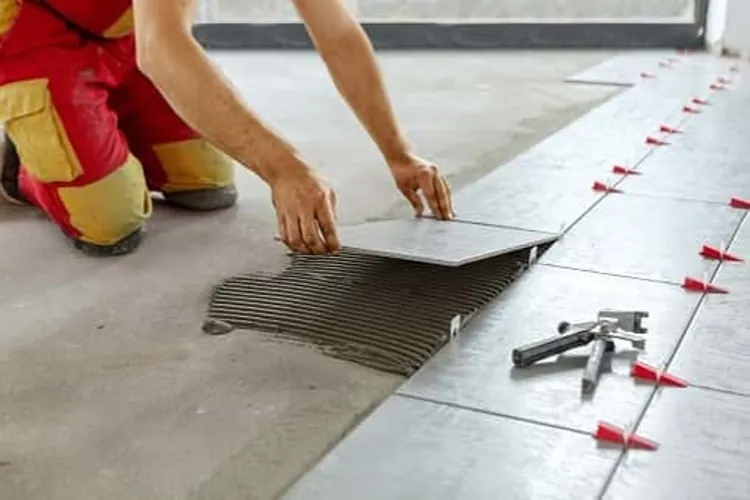
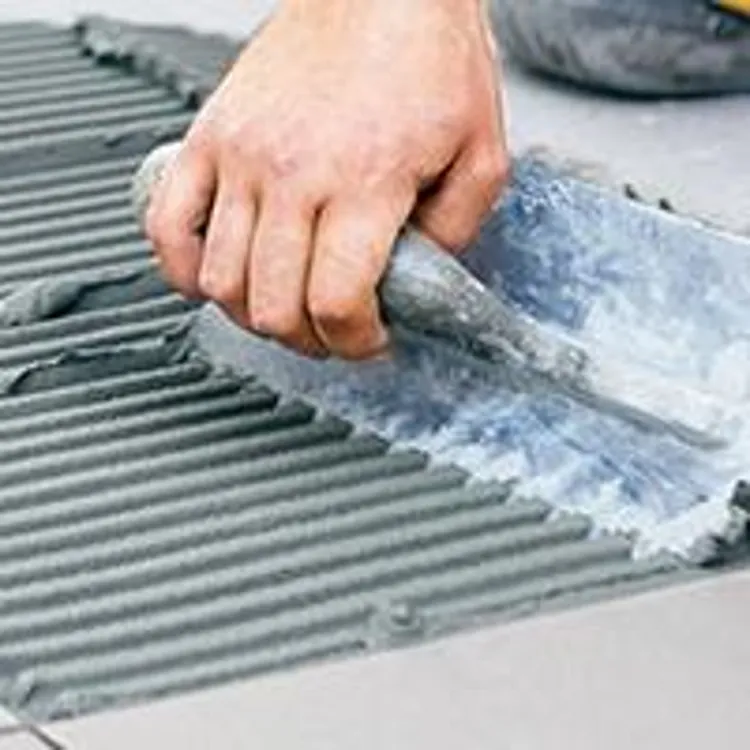
Installers commonly use thin-set mortar to bond tile to a prepared surface. This material is affordable, but the installer has to apply it by hand rather than roll it out onto the subfloor as you would with felt paper or foam underlayment. Labor costs are higher with this material than with most other flooring types.
Permits and finishing costs
Permit requirements and finishing work can also increase the total cost of tile installation:
- Permit fees: Most municipalities don’t require a permit to replace a floor, but if you’re replacing flooring as a part of a larger project, like a total bathroom or kitchen renovation, you may need to pay permit fees to keep your project legal.
- Finish options: Contractors may charge an extra $2 to $6 per linear foot to remove and reinstall trim. You may also pay for a transition strip or threshold where the tile meets another flooring material. Stone thresholds, including marble, can cost more than basic options.
Tile installation cost by room
The table below estimates tile flooring installation costs by room based on typical room sizes and a cost of $7 to $25 per square foot.
| Room | Typical size (sq. ft.) | Low estimate | High estimate |
|---|---|---|---|
| Half bathroom | 20 | $140 | $500 |
| Full bathroom | 40 | $280 | $1,000 |
| En suite bathroom | 75 to 120 | $525 | $3,000 |
| Small kitchen | 70 to 200 | $490 | $5,000 |
| Average-size kitchen | 225 | $1,575 | $5,625 |
| Large kitchen | 225 to 440 | $1,575 | $11,000 |
| Entryway | 15 to 25 | $105 | $625 |
| Laundry room | 35 to 55 | $245 | $1,375 |
| Outdoor patio | 50 to 250 | $350 | $6,250 |
Your actual cost may vary based on the tile, room layout, subfloor condition and other factors.
» MORE: Find a bathroom remodeler
FAQ
How much does it cost to lay 1,000 square feet of tile?
The average cost to lay 1,000 square feet of tile is between $7,000 and $25,000. Your exact cost will depend on the type of tile you want, including the specific material, glazing and size, as well as the complexity of the room’s layout.
Subfloor repairs and leveling are additional expenses you may need to consider, but these are impossible to estimate without a professional assessment.
Why is tile so expensive to install?
Tile is one of the most expensive flooring types to install because the material costs more than most other flooring, and the installation process is more labor-intensive.
If you’re replacing an existing tile floor, an installer may need to remove and dispose of the old tile and grind away the remaining thin-set mortar. The installer must then prepare the subfloor, apply new thin-set mortar and carefully set, align, space and grout the new tiles. Any necessary subfloor leveling or repairs can add significantly to the total cost.
Can I install new tile over existing flooring?
It’s technically possible to install new tile over existing flooring, but only in rare cases. It’s usually best to remove the old flooring before starting. You should only ever install tile over tile or stone, and even then, it’s best to remove the old tile first to uncover any subfloor damage or hidden leaks you need to address.
Installing tile over any other type of flooring isn’t ideal, as tile requires a perfectly stable and flat base to prevent cracking under foot traffic, and anything other than tile or stone won’t provide that.
How long does it take to install a tile floor?
A tile flooring project usually takes three or more days, including preparation, installation and curing time. After the tiles are set, the thin-set mortar must cure before the installer applies grout. The grout then typically needs another day or two to cure before the floor is ready for normal use.
Bottom line
The average cost to install tile flooring is between $7 and $25 per square foot. Room layout, subfloor condition and existing flooring type will all affect your total cost. You could pay higher prices for custom patterns or high-end tiles made of marble or granite. Floor leveling may add $2 to $8 per square foot, while subfloor repairs may add $2 to $10 per square foot.
Article sources
ConsumerAffairs writers primarily rely on government data, industry experts and original research from other reputable publications to inform their work. Specific sources for this article include:
- Badeloft USA, "The Most Common Bathroom Sizes and Dimensions." Accessed Aug. 20, 2026.
- Marble.com, "Average Kitchen Sizes: What Are the Standard Sizes for Kitchens?" Accessed Aug. 20, 2026.
- George Ceramic, "PEI Rating Explained." Accessed Aug. 20, 2026.
- BELK Tile, "Understanding Glazed vs Unglazed Tile: Key Differences." Accessed Aug. 20, 2026.
- US Kitchen Cabinet, "Laundry Room Dimensions and Floor Plans: Designing an Efficient Space." Accessed Aug. 20, 2026.
- ConcreteNetwork.com, "Concrete Patio Size & Type." Accessed Aug. 20, 2026.
- LandscapingNetwork, "Tips for Determining Patio Size." Accessed Aug. 20, 2026.