

Key insights
Standard picture windows range from $250 to $800, but you could pay as little as $100 for a very small window or as much as $1,600-plus for oversized picture windows.
Jump to insightInstallation costs include labor ($100 to $480) and materials ($150 to $320), but you may need to pay a few hundred dollars more for permits, framing repairs or installation on a second story.
Jump to insightFrame material, glass type, window size, custom shapes, energy upgrades and window brand will all play a role in determining your final price.
Jump to insightPicture window cost by size
Larger picture windows will almost always cost more when all other factors are equal. Since picture windows tend to range widely in size, dimensions are a key factor in determining your total.
“As windows become larger, they require more frame material, more glass and often additional engineering considerations, all of which can contribute to higher product costs,” according to Jessica Ehrlichmann, vice president and general manager at Andersen Windows & Doors.
“A ballpark estimate [for cost by size] would be $25 to $45 per square foot of window,” said Manny Kavouklis, president of CMK Construction, a home remodeling company in the Tampa Bay area.
Common picture window sizes and costs
Here’s a breakdown of typical picture window costs, including materials and labor, based on the size of the window opening.
| Window dimensions (inches) | Square feet | Typical cost |
|---|---|---|
| 24 x 24 | 4 | $100 to $180 |
| 24 x 36 | 6 | $150 to $270 |
| 36 x 48 | 12 | $300 to $540 |
| 48 x 60 | 20 | $500 to $900 |
| 48 x 72 | 24 | $600 to $1,080 |
| 72 x 72 | 36 | $900 to $1,620 |
What picture window installation costs include
On average, 40% to 60% of your total cost will go toward labor, which means labor fees for an average picture window run between $100 and $480. These fees can climb higher for oversized picture windows that require multiple techs or window lifts to maneuver them into place during the installation.
Here’s what you can expect labor costs to include:
- Removing the existing window
- Hauling away the old unit
- Placing and shimming the new window
- Spraying foam insulation around the interior of the window
- Caulking the seams on the exterior of the window
- Restoring the siding and trim on the exterior
- Reinstalling the trim on the interior
Factors affecting the cost of installing picture windows
Labor costs for picture window installation can vary widely, so consider the following factors to get an accurate estimate.
Window size
Small picture windows are easy to maneuver into place and install, and they often only require two technicians. Unlike window styles with operable sashes, you’ll usually need one tech outside to place the window and one inside to shim and position it before attaching the frame to your home.
Larger picture windows, on the other hand, are heavy and bulky. They’re more likely to demand three or more techs, which can dramatically increase your hourly rate.
Window location
Installing a picture window on the first floor of your home has the lowest labor costs, while installation on the second floor adds an average of $50 to $150 per window. This is because it will require ladder work and safety equipment, which slows the process. You may also see an added equipment fee for a window lift, especially if you need a large window.
Number of windows
Most window installers offer a small per-window discount for bulk orders because they’re guaranteed more work. Your total will always increase with the number of windows, but you can save a bit in the long run with a whole-home window replacement.
Removal and disposal costs
Most window companies include removal and disposal services for your old window, but some don’t. Expect to pay an additional $50 to $100 per picture window if yours charges separately, or more for oversized picture windows.
Replacement vs. new construction windows
Replacement picture windows are usually more expensive than new construction windows because your techs will need to remove siding, trim and flashing to access an existing window. With new construction windows, the wall opening is entirely exposed, making installation easier.
New construction windows also usually mean bulk orders for the entire home, which means you’ll likely save 10% to 15% on each window, according to Kavouklis.
Hidden damage
The window installer you hire may find hidden damage when removing your old window. Minor water damage may add minimally to your total, but extensive water damage, plus resulting electrical issues and mold problems, can dramatically increase your costs. Your pro may also uncover structural issues which can be costly depending on the extent of the problem.
Permits
In some cases, your window pro will need to pull permits for your window replacement project. Permits add an average of between $100 and $400 to your total. You’re more likely to need them if you’re changing the size of your wall opening or replacing your windows as part of a larger remodeling project.
Geographical location
Finally, where you live affects your total costs, as the local cost of living influences hourly rates. Expect to pay more in high-cost states and major metropolitan areas.
Hiring a pro for window installation will raise your total costs, but it’s usually worth the investment. “Window performance is greatly [affected] by the quality of installation, so we highly recommend selecting an installer that's been trained on installation by the window manufacturer and that provides an installation warranty,” says Ehrlichmann.
How your picture window choices affect prices
In addition to labor costs, you’ll also need to consider material costs and how they can vary based on your needs. A few key considerations can help you get the most accurate estimate possible.
Frame material
Vinyl is the most common window frame material for residential windows, but you have other options that vary in cost, energy efficiency, appearance, durability, lifespan and more.
Here’s a breakdown of average window costs based on frame material.
| Window frame material | Average cost per window | Pros | Cons |
|---|---|---|---|
| Aluminum | $400 to $900 | Affordable, resists warping | Can corrode, shorter lifespan |
| Composite | $600 to $1,200 | Energy-efficient | Expensive, performance varies |
| Fiberglass | $700 to $1,500 | Highly energy-efficient, long-lasting | Very expensive |
| Vinyl | $300 to $800 | Affordable, widely available, good value | Can warp in extreme heat |
| Wood | $800 to $1,500 | Boosts curb appeal, easy to repair | Prone to rot, requires more maintenance |
“Comparing frame materials across manufacturers isn't always an apples-to-apples exercise,” adds Ehrlichmann. “An aluminum-clad window from one manufacturer isn't necessarily the same quality as one from another. It's worth digging deeper when comparing frame materials across brands.”
Glass upgrades
Double-pane glass is the industry standard for picture windows because it balances upfront cost with energy efficiency. You can upgrade to triple-pane glass and choose other coatings and treatments that improve performance.
Here’s what you’ll pay for glass upgrades.
| Upgrade | Average upgrade cost per window | Benefits |
|---|---|---|
| Triple-pane glass | $100 to $200 | Improves energy efficiency and sound dampening |
| Low-emissivity coating | $50 to $150 | Reduces heat transfer between your home and the exterior |
| Window tinting | $75 to $150 | Reduces solar heat gain and UV-related fading |
| Frosting or etching | Varies widely based on window size and options | Adds privacy while allowing natural light |
“Double-pane glass is considered the industry standard for residential windows, offering a balance of energy efficiency, comfort and affordability,” says Ehrlichmann. “Triple-pane glass costs more due to the additional layer of glass and insulating air space, but that added insulation typically means improved energy efficiency, reduced drafts and lower utility bills.”
Size and shape
All of the sizes mentioned above are considered common dimensions for picture windows, and most manufacturers will have these options in stock.
If you need custom sizes or shapes, you’ll spend significantly more. Your manufacturer will need to make one-off products, and you’ll lose the benefit of mass production.
Brand and warranty coverage
Finally, picture window costs vary by brand, and they usually scale with quality. High-end brands like Andersen, Champion and Pella typically cost more than entry-level options.
Warranty coverage options can also affect your window costs. More durable, reliable brands often come with longer warranties that keep you and your home protected longer. Consider the peace of mind your warranty provides, especially in relation to the window cost.
What does an 8-foot-by-8-foot picture window cost?
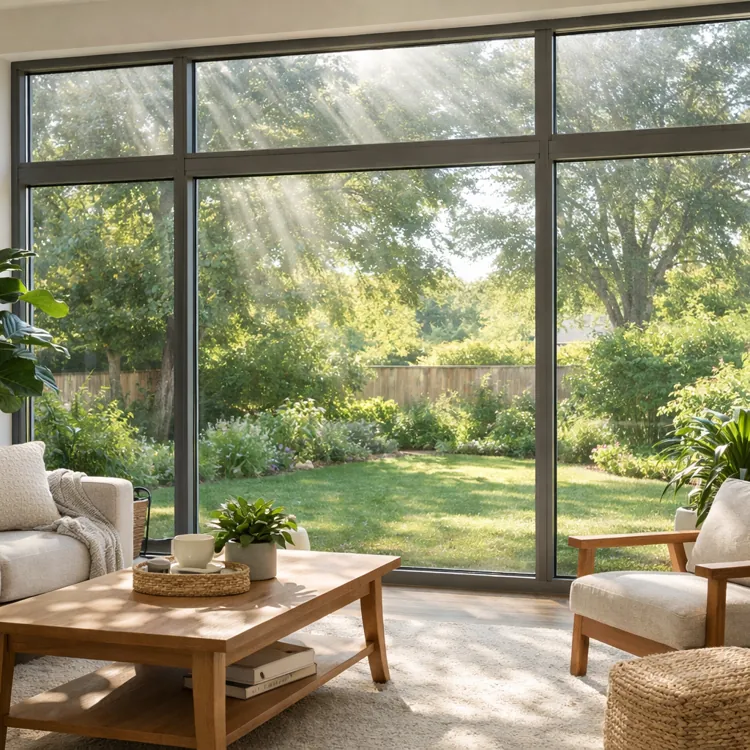
The primary benefits of picture windows are maximizing natural light and providing unobstructed outdoor views, so this window type is often available in oversized options.
An 8-foot-by-8-foot picture window is a common size that provides floor-to-ceiling views in a standard home, and this can cost $1,600 to $2,880 on average.
Larger picture windows may require more expensive frame materials, since aluminum and vinyl can’t always support larger panes of glass and the structural loads placed on them by exterior walls.
For custom picture windows with triple-pane glass and fiberglass or wood frames in even larger dimensions, you could pay close to or over $10,000.
Pricing over $10,000 usually includes the following:
- Custom design and manufacturing
- Structural changes to your home’s exterior wall, including new support beams installed above and below the window
- High-end glass that’s more stable and less likely to break under added loads
- The use of window lifts or cranes to maneuver the window into place
- Extensive interior and exterior repairs after installation
FAQ
Are picture windows less expensive than other window types?
Yes, picture windows are among the least expensive window styles, largely because they don’t have complex opening mechanisms that add to manufacturing costs. However, they tend to be larger than other windows, so the cost comparison applies only to similarly sized units.
What affects picture window pricing the most?
Window size is the biggest cost factor for picture windows. Frame options, glass materials and labor complications can also add to your cost. However, because picture windows vary so widely in size, dimensions are usually the primary factor in upfront cost. Larger picture windows come with higher material costs and labor costs.
Do picture windows require special installation?
Yes, picture windows require a little more specialized installation because they’re large, heavy and don’t open.
With operable windows, your installer can access the inside and outside of the window from one side of your home. Because picture windows don’t open, you’ll usually need at least two window techs to lift, place and position the window before installing it.
Are picture windows energy-efficient?
Yes, picture windows are the most energy-efficient windows you can install because they don’t rely on seals or weatherstripping, so fewer gaps and systems can fail.
For maximum energy efficiency, choose a picture window with a fiberglass frame and triple-pane glass. You can also consider low-emissivity coatings or window tinting to boost performance.
Bottom line
On average, a picture window will cost between $250 and $800, including materials and labor. Your costs could be lower or much higher, depending on window size, installation complexity, frame material, glass upgrades and more. Get estimates from local window installers for a more customized quote.
Article-sources
ConsumerAffairs writers primarily rely on government data, industry experts and original research from other reputable publications to inform their work. Specific sources for this article include:
- Lake Washington Windows, "The Complete Guide to Standard Window Sizes, Charts & Codes." Accessed Sept. 30, 2026.
- The Window Factory, "Picture Window Sizes Demystified: A Power Packed Guide to Perfect Dimensions." Accessed Sept. 30, 2026.
- PRL Glass Systems Inc., "Standard Window Sizes: Common Dimensions by Type and How to Measure." Accessed Sept. 30, 2026.