

Compare our top bariatric stair lift picks
| Company | Customer rating | Our pick for | Weight capacity | Financing offered | Availability | |
|---|---|---|---|---|---|---|
 Lifeway Mobility | Get a Quote | 4.7 | Best overall | 600 pounds |  | Over 25 states across the U.S. |
 Stannah Stairlifts | Get a Quote | 4.7 | Best warranty | 352 pounds | | Over 42 states across the U.S. |
 Bruno Independent Living Aids | Learn More | 4.8 | Best for space efficiency | 400 pounds | | All 50 U.S. states |
 Arrow Lift | Get a Quote | 4.8 | Best customer service | 400 pounds | | 5 U.S. states |
Lifeway Mobility

- Weight limit
- 600 pounds
- Warranty
- Varies
- Types of stair lifts
- Straight, curved, outdoor
- Consultation
- Free in-home or virtual consultation
Stannah Stairlifts

- Weight limit
- 352 pounds
- Warranty
- Lifetime motor gearbox coverage; 1-year parts and labor
- Types of stair lifts
- Straight, curved, outdoor
- Consultation
- Free home survey
Bruno Independent Living Aids

- Weight limit
- 400 pounds
- Warranty
- Limited lifetime on major components
- Types of stair lifts
- Straight, curved, outdoor
- Consultation
- Free in-home consultation
Arrow Lift

- Weight limit
- 400 pounds
- Warranty
- Varies
- Types of stair lifts
- Straight, curved, outdoor
- Consultation
- Free on-site consultation
Methodology: How we chose the best bariatric stair lifts
The ConsumerAffairs Research Team assessed companies across three core areas: installation and service experience, cost and value, and weight capacity. Our analysis combined verified customer feedback submitted to ConsumerAffairs between July 1, 2023, and June 30, 2026, along with company-reported product and policy details to identify the providers that best serve heavier riders.
1. Installation and service experience (based on verified reviews): We measured satisfaction with:
- Installation
- Customer service
- Staff
- Punctuality and speed of service
These factors help show how well companies handle the consultation, installation and follow-up support that a stair lift purchase requires.
2. Cost and value: We reviewed company-reported pricing, warranty and purchase options and evaluated:
- Price satisfaction
- Warranty length
- Whether the company offers rental or used stair lifts
Companies with stronger price satisfaction, longer warranties and more flexible purchase options received higher scores.
3. Weight capacity: We compared the maximum weight limit of each company's stair lifts. Companies that support heavier riders received higher scores, since weight capacity determines whether a lift is a viable option at all.
How scoring works
Companies earned a 0 to 10 score for every factor:
- The top-performing company for a given factor earned a 10.
- Other companies were scored relative to that leader.
This standardized scoring system allowed us to compare customer satisfaction, pricing, warranty coverage and weight capacity on the same scale.
How we chose the winners
We evaluated every company using the same core factors but adjusted the weighting for each award to reflect what matters most in that category. The company with the highest weighted score earned the corresponding “Our pick for” designation:
- Best overall gave the most weight to maximum weight limit at 20%, with the remainder spread across installation, customer service and price satisfaction at 15% each and staff, punctuality and warranty at 10% each.
- Best customer service emphasized customer service satisfaction at 30% and staff satisfaction at 20%, which together made up half of the category’s weighting.
- Best value gave 40% of the weighting to price satisfaction, with the remainder spread across service, warranty and weight capacity factors.
- Best warranty gave 40% of the weighting to warranty length, with the remaining weight distributed evenly across the satisfaction factors.
Bariatric stair lift buyers guide
When choosing the best bariatric stair lift, ensure you select an option with sufficient weight capacity and safety features. It’s also critical to choose an option that fits your stairs and home configuration.
Key insights
Customization is the main factor that increases the price.
Jump to insightWeight capacity, comfort and safety features are top priorities.
Jump to insightLifts can be costly but are generally worth it.
Jump to insightBariatric stair lift cost
The cost of a stair lift for bariatric use varies substantially, ranging from $3,000 to over $20,000, depending on factors like your stairway width and style, home configuration and the features you want.
Here are the main factors influencing stair lift cost:
- Curved vs. straight stairs: Since curved staircases require a custom-built lift, curved lifts cost much more—beginning around $12,000. This is the biggest factor affecting your stair lift cost.
- Stair lift model: The exact model you choose affects the price, with more feature-rich, robust models costing more. Often, this means that stair lifts with a higher weight capacity will cost more.
- Upgrades: Advanced features like swiveling seats, backup batteries, automated footrests, extended armrests and alarm buttons add to the price.
- Online vs. dealer: Buying a stair lift online may seem cheaper at first, but it usually ends up costing more than buying from a dealer, with shipping, measuring and installation adding hidden costs.
- Used vs. new: Getting a used stair lift can reduce the price substantially, but used lifts often have more limited warranties than new lifts.
While stair lifts cost a lot upfront, the good news is that this cost includes everything—measurement, installation, demonstration and the warranty period. When possible, we recommend choosing a provider that offers a lifetime warranty, which is usually worth the extra cost.
What to look for in a bariatric stair lift
Prioritize safety and home fit when choosing a bariatric lift. Choosing the best stair lift for you and your home means looking for the right weight capacity and chair size, making sure the design fits your home and staircase shape.
Weight capacity
Above all, prioritize weight capacity—an essential safety metric. Nearly all stair lifts support 250 pounds or above. However, if you weigh over 300 pounds, your options become slightly more limited. If you weigh over 400 pounds, the Harmar SL600HP is your best option.
Full weight support is an essential safety component in your stair lift. It lets you ride safely for years and helps your lift last longer, especially if you keep up with regular servicing, which is recommended once a year.
Features and specs
Beyond the weight capacity, several key features distinguish bariatric models from other types of stair lifts. These include the seat width, armrests and seat swiveling capabilities.
These features are especially important in a bariatric stair lift:
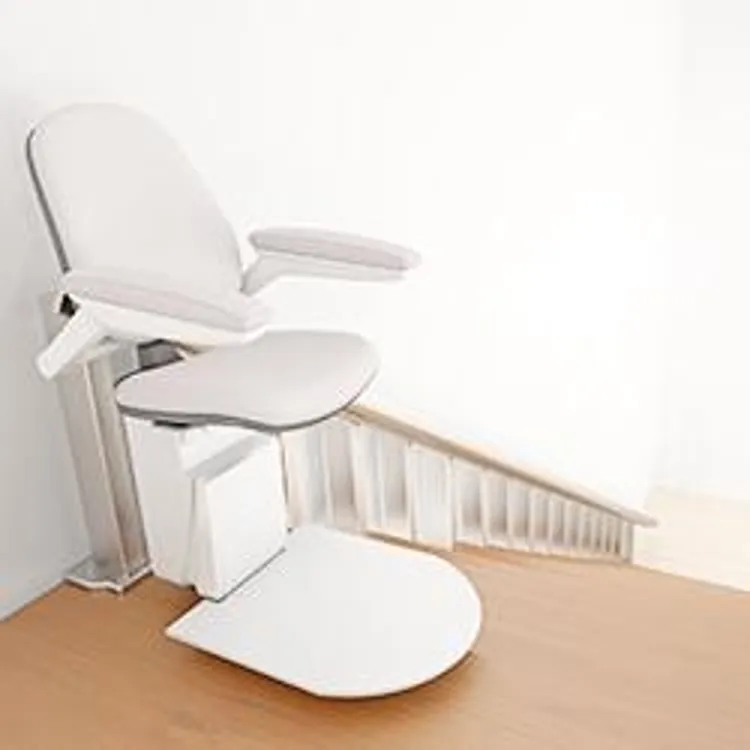
- Extrawide seat: While typical stair lifts have a seat width of around 18 inches, some bariatric lifts—like the Harmar SL600HD—include adjustable seats that can accommodate up to 25 inches, providing a much more comfortable experience.
- Automatic folding footrests: Some stair lifts require you to fold the footrests by hand if you want to tuck them in when not in use. However, some models or add-ons allow footrests that fold automatically, so you don’t have to bend over.
- Extended armrests: Extra-long armrests, like on the Stannah Sienna, make it easier to get in and out of the chair.
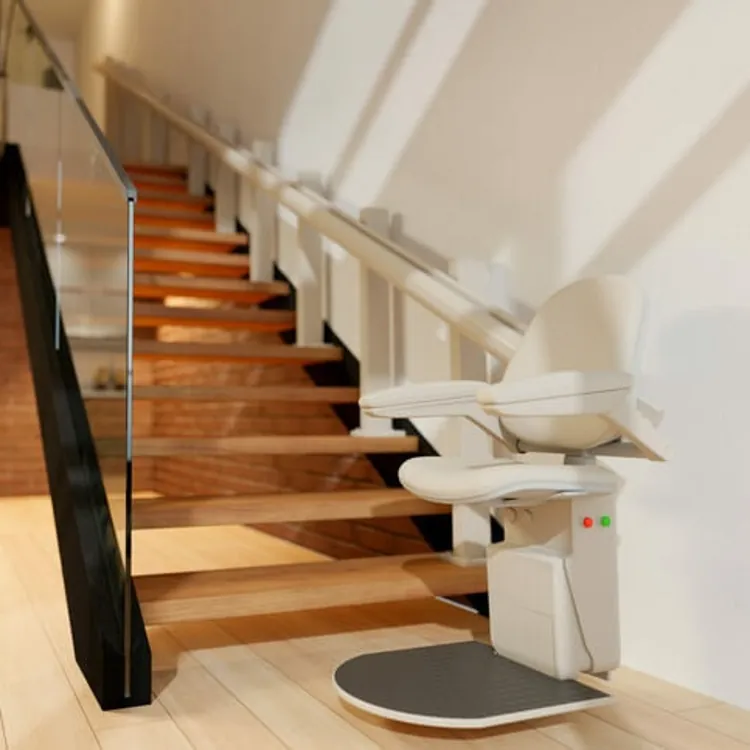
- Swiveling seats: Seats that swivel—whether while moving or at the top and bottom of the stairs—save space. Swiveling lets you rotate your legs while riding the lift and keeps them out of the way when it’s parked.
- Seat padding: The lift’s seat padding plays a critical role in your comfort while riding. Look for options with high-density foam, comfortable upholstery and a cushioned backrest for a more pleasant ride.
- Obstruction detection: This safety feature stops movement when it detects objects blocking your chair lift’s path. This helps ensure a safe ride and supports your machine’s longevity.
Installation requirements
When you install a bariatric stair lift, it’s critical to make sure beforehand that your stairway is wide enough, with sufficient overhead and structural support to accommodate a lift. For most bariatric lifts, you’ll need a stair width of at least 28 inches, a total length of no more than 16 feet and an incline between 30 and 45 degrees.
Thankfully, all stair lift installation companies provide a home inspection, including measurements, as part of the price estimate and installation process. This will ensure that your stair lift works properly and avoids damaging your home.
Pros and cons of bariatric stair lifts
When choosing a stair lift, bariatric lifts are nearly always worth it for the safety benefits alone.
Beyond the safer ride, bariatric lifts also provide a more comfortable ride and let you access more of your home independently. On the other hand, they tend to cost a bit more than regular stair lifts and demand routine maintenance.
Pros
- Full access to your home
- Better weight support and safety features
- Comfortable riding experience
- Quick one-day installation for straight lifts
- Durable design and structure
Cons
- Higher upfront cost
- Warranties can vary
- Needs greater stairway width
- Curved stairways can take several weeks to install
- Requires annual maintenance
FAQ
How much weight can a bariatric stair lift support?
Most bariatric stair lifts support over 300 pounds, and some models, such as the Harmar SL600HD, support up to 600 pounds.
What are the alternatives to a bariatric stair lift?
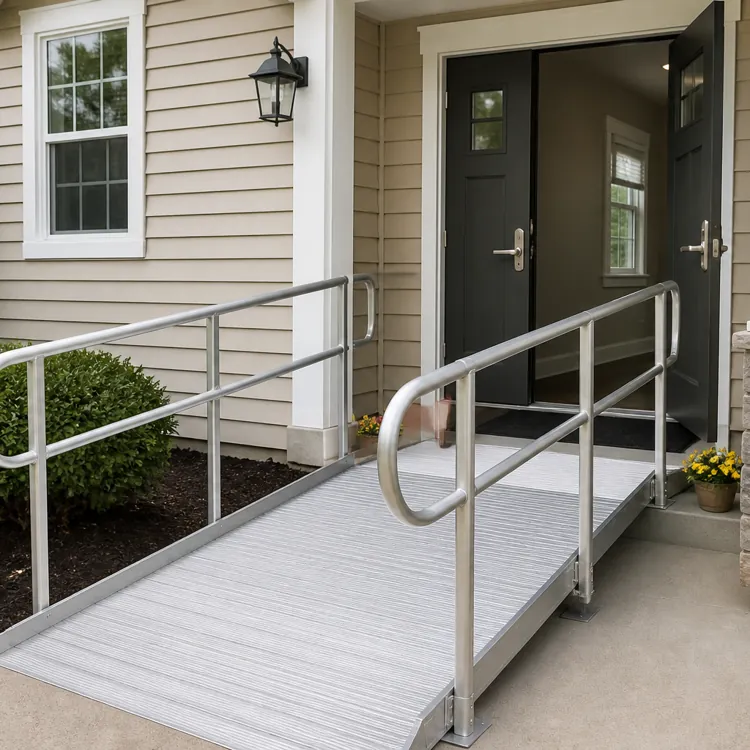
Popular bariatric stair lift alternatives include through-floor elevators, traditional elevators, platform lifts, wheelchair ramps and home modifications.
Are bariatric stair lifts available for curved staircases?
Yes, bariatric stair lifts are available for straight or curved staircases.
How do bariatric stair lifts differ from standard stair lifts?
Bariatric stair lifts differ from standard lifts mainly in weight capacity, with bariatric lifts safely supporting several hundred pounds more. Bariatric lifts also often have wider seats.
What features should I look for in a bariatric stair lift?
When choosing a bariatric stair lift, look for features like an extra-wide seat, a swiveling chair, an automatic footrest and obstruction detection.
Guide sources
ConsumerAffairs writers primarily rely on government data, industry experts and original research from other reputable publications to inform their work. Specific sources for this guide include:
- Arrow Lift, "Stair List Costs: 17 Factors that Affect Stair Lift Pricing." Accessed July 31, 2026.
- DME Lift, "Stairlift Maintenance: How to Care for your Stair Lift." Accessed July 31, 2026.
- Lifeway Mobility, "7 Stair Lift Alternatives to Consider For Your Home." Accessed July 31, 2026.
- Lifeway Mobility, "How Much Does a Stair Lift Cost in 2026?" Accessed July 31, 2026.
- Options HME, Inc., "Stair Lift Price Guide." Accessed July 31, 2026.
- Safe Step Stairlift, "Stairlift Dimensions." Accessed July 31, 2026.
- USA Medical Supply, "Harmar SL600 Pinnacle HD: Your Ultimate Guide to Stairlift Safety, Independence, and Comfort." Accessed July 31, 2026.