

Key insights
Vinyl frames are better for insulation, while aluminum is better for larger windows and offers a sleek, modern aesthetic.
Jump to insightVinyl windows are more energy-efficient, but you can upgrade aluminum frames with internal insulation for better performance.
Jump to insightAluminum resists warping in extreme heat but only lasts for 15 to 25 years, while vinyl requires virtually no maintenance and can last for 20 to 40 years.
Jump to insightAluminum vs. vinyl windows overview
Aluminum window frames are made from lightweight aluminum, sometimes with a thermal break inside that helps reduce heat transfer through the conductive material. Vinyl window frames are made from polyvinyl chloride (PVC), and they usually don’t have thermal breaks because the vinyl itself is a good insulator.
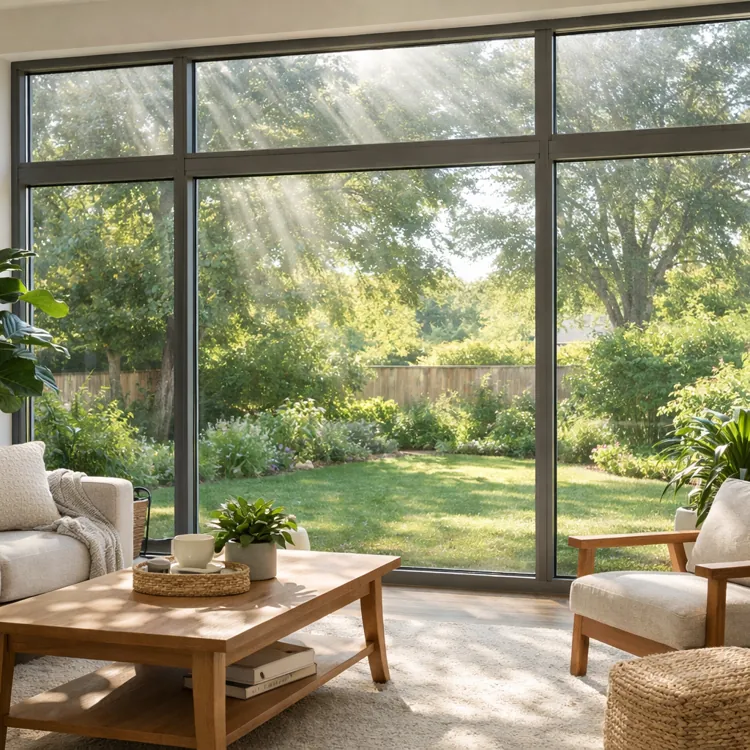
Because aluminum is stronger than vinyl, it can support heavier loads and reach across wider spans with thinner, sleeker and more modern frames. However, vinyl is more insulative, so it’s a much better option in extreme climates, where it’s likely to save you money on heating and cooling bills and reduce wear and tear on your HVAC equipment.
Aluminum vs. vinyl window performance compared
Here’s a quick breakdown of how aluminum and vinyl windows compare to help you decide which is best for your home.
| Best for modern homes in moderate climates (or extreme climates if they have thermal breaks) | Best for more traditional homes, especially in extreme climates or coastal areas |
| Less energy-efficient, not ideal for extreme climates | Better insulation, superior option for extreme climates |
| High strength, good for wide windows and thin, modern frames | Low strength, not ideal for large wall openings |
| Prone to denting from impact | Won’t dent, but can crack from impact |
| Prone to corrosion in coastal areas | Won’t corrode from exposure to water or sea spray |
| Won’t expand, contract or warp in extreme temperatures | Prone to warping with temperature fluctuations |
| Shorter lifespan, usually between 15 and 20 years | Longer lifespan, usually 20 to 40 years |
| Won’t degrade from UV radiation, but paint can fade over time | Can see minor degradation from UV exposure, sometimes just color fading |
Aluminum vs. vinyl windows: Energy efficiency
Energy efficiency is a key consideration when choosing a window frame material, as it plays an important role in how well your home remains insulated from the elements. Vinyl windows are more energy-efficient, though you can upgrade to aluminum windows with a thermal break at a higher cost.
Here’s a quick breakdown of all the energy-efficiency factors you should consider when deciding between these two materials.
- Raw insulative values (U-factor): This measures how well your window frame insulates. U-factor usually ranges from 0.2 to 1.2, with lower numbers being more insulative. Vinyl windows will have lower U-factor ranges, although aluminum windows with thermal breaks can have similar U-factor ratings to vinyl.
- Solar heat gain coefficient (SHGC): You should also consider the SHGC of your window, which tells you how much solar heat can pass through your window. This rating pertains to the glass and not the frame material, but it’s still an important consideration, especially in sunny areas.
- Heating and cooling costs: More insulative windows may be more expensive, especially in the case of aluminum windows with thermal breaks, but you stand to save over the long term on heating and cooling costs. Choosing Energy Star-certified windows and more insulative frames is very often worth the investment.
- Wear and tear on your HVAC system: Less insulative windows means your HVAC system needs to work harder to maintain your preferred temperature. Saving money upfront by going with less insulative windows could end up costing you more over time in HVAC maintenance, repairs and replacements.
- Indoor comfort: Even if long-term cost isn’t a major concern, more energy-efficient windows allow for greater control over living space temperature, making them a worthwhile upgrade for comfort alone.
- Condensation risk: Aluminum windows are less insulative, which means condensation may build up on whichever side is colder. In hot climates, where you run the AC to cool your home, this can result in moisture issues indoors.
Aluminum vs. vinyl window frames based on climate
Since the energy efficiency of your window should be a primary concern for long-term performance, you can use the table below to help choose which material is likely a better fit for your window replacement project.
| Climate | Better frame material | Reason |
|---|---|---|
| Moderate | Vinyl | Vinyl has a longer lifespan |
| Extremely hot | Aluminum (ideally with a thermal break) | Vinyl is still better for insulation, but aluminum won’t warp with extreme temperature changes |
| Extremely cold | Vinyl | Vinyl insulates better and reduces heating costs significantly |
Aluminum vs. vinyl windows: Durability
Vinyl windows are more energy-efficient, and they’re also the superior choice for durability and longevity in most cases. On average, aluminum windows last for 15 to 20 years, while vinyl windows last for 20 to 40 years. Because vinyl windows cost less than aluminum windows on average, you get much more value from vinyl.
However, you do need to think about the specific conditions in your home and in your area, as this will help you determine which will last longer. Make sure you factor in the following when considering window installation cost and long-term value.
Pro Tip:Vinyl can withstand hail and blown debris better than aluminum, which can dent.
- Extreme weather: While both materials can crack from extreme impact, aluminum can dent from minor impacts due to things like hail or debris in storms. Dents and dings may not reduce window lifespan, but can detract from your home’s curb appeal. This makes vinyl the better option for window longevity if your area experiences extreme weather.
- Extreme temperature swings: Aluminum may provide better long-term performance in areas that see extreme temperature swings because it doesn’t warp. Vinyl will expand and contract with temperature changes, which can lead to air and water leaks over time. Vinyl’s lifespan can be shorter in more volatile climates.
- Heavy sun exposure: Some vinyl windows are made with UV stabilizers to resist degradation with exposure to UV radiation, but they’re not infallible. In sunny areas, aluminum windows may last longer, as they don’t degrade, so it might be worth upgrading to aluminum windows with a thermal break for added energy efficiency.
- Coastal locations: Aluminum is prone to corrosion, especially in coastal areas with salty air. Aluminum windows will have an even more limited lifespan in these conditions, and they’ll lose curb appeal more quickly. However, you can upgrade to a powder-coated aluminum frame, which can fare better in corrosive environments.
- Larger window spans: Aluminum is significantly stronger and more suitable for structural loads than vinyl, so it’s less likely to buckle or deform under heavy or uneven loads in an oversized window.
Aluminum vs. vinyl windows: Cost and value
On average, aluminum windows cost between $400 and $900 each, including materials and labor, while vinyl windows cost between $300 and $800 each. If you need aluminum windows with thermal breaks, you’ll pay a bit more.
Additionally, your prices for both materials can fall well outside of these ranges depending on a few other factors.
- Window size: Larger windows demand more material and often more laborers to maneuver them into place. Vinyl windows are more likely to see price hikes as windows get larger because manufacturers need to add structural elements for stability.
- Type of window: Certain window types, like bay windows and bow windows, are much larger than others, meaning they cost more on average. Also, operable window styles tend to be more expensive than simple picture windows, and some have complex opening mechanisms that drive up the material costs.
- Glass materials: Glass options will also affect window material costs. You’re more likely to pay extra for things like triple-pane glass, low-emissivity coatings and window tinting on aluminum windows, as they have a lower baseline efficiency rating.
- Standard vs. custom sizes: Standard window sizes are almost always more affordable than custom dimensions and shapes, regardless of frame material. However, since vinyl windows are far more popular than aluminum, they’re mass-produced in more size options, meaning you’re less likely to require a custom window.
- Installation complexity: Skylight installation or window installation on a second story can drive up labor costs, especially for larger windows that require lifts or cranes to maneuver them into place. Aluminum windows are usually lighter with slimmer frames, so you’re less likely to have to pay the window installer for use of specialized equipment.
- Geographical location: Finally, where you live will influence local labor costs, but these will fluctuate evenly across different window frame materials.
Overall, vinyl windows tend to provide better value because they cost less, last longer and help save more on energy bills. However, aluminum may be a better option from a value perspective if you live in an area where vinyl windows could suffer degradation from UV radiation or warping from extreme temperature fluctuations.
FAQ
Is it worth getting aluminum windows?
Aluminum windows can be worthwhile if you have a more modern home with a curb appeal that will benefit from slimmer window frames, or if you live in an extremely hot climate where vinyl frames can warp over time. However, most homeowners see greater long-term value from vinyl window frames, as they’re more energy-efficient and can last more than twice as long.
Are vinyl windows better than aluminum windows?
Vinyl windows are generally better than aluminum ones, and they’re the most popular option for homes. Vinyl offers better insulation, which can mean savings on heating, cooling and HVAC repair bills, and lasts 20 to 40 years, compared to 15 to 20 for aluminum.
Do aluminum windows require more maintenance than vinyl?
Aluminum windows and vinyl windows are both relatively low-maintenance, but aluminum will usually demand a bit more attention. Aluminum can corrode with prolonged exposure to moisture, so they require regular cleaning, as dirt and dust can trap moisture and speed up corrosion. This is less of an issue in dry climates, but it’s still a concern.
Can vinyl windows withstand extreme temperatures?
Vinyl windows can withstand extreme temperatures, although the material will expand and contract with temperature changes. They’re ideal for longevity in moderate climates and stability in cold ones, but in hot climates, vinyl windows may see a shorter lifespan due to warping. In these areas, you may benefit from choosing aluminum windows with a thermal break, or from upgrading to fiberglass windows.
Bottom line
Choose aluminum windows if you live in a mild climate and want a sleeker, more modern curb appeal. Opt for vinyl if you want to keep costs a bit lower or if you want better energy efficiency for greater long-term performance in more moderate or extreme climates. Speak with a window installer if you’re not sure which material suits your home best.
Article sources
ConsumerAffairs writers primarily rely on government data, industry experts and original research from other reputable publications to inform their work. Specific sources for this article include:
- Lawrence Berkeley National Laboratory Energy Technologies Area, "High Performance Windows." Accessed Sept. 30, 2026.
- The Pennsylvania Housing Research Center, Penn State University, "Evaluation of Residential Window Retrofit Solutions for Energy Efficiency." Accessed Sept. 30, 2026.
- International Association of Certified Home Inspectors, "InterNACHI's Standard Estimated Life Expectancy Chart for Homes." Accessed Sept. 30, 2026.
- Building and Construction Technology, Department of Environmental Conservation, College of Natural Sciences, University of Massachusetts Amherst, "Windows: Understanding Energy Efficient Performance." Accessed Sept. 30, 2026.
- Office of Energy Efficiency and Renewable Energy, U.S. Department of Energy, "Guide to Energy-Efficient Windows." Accessed Sept. 30, 2026.