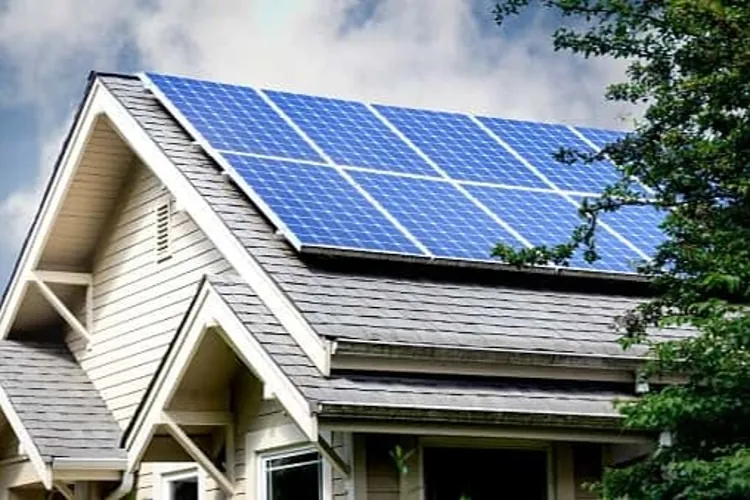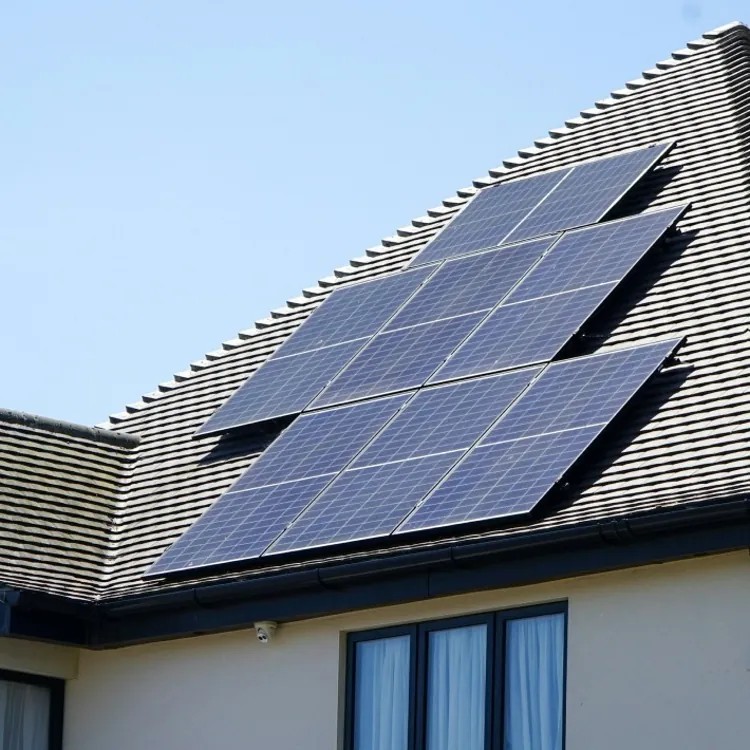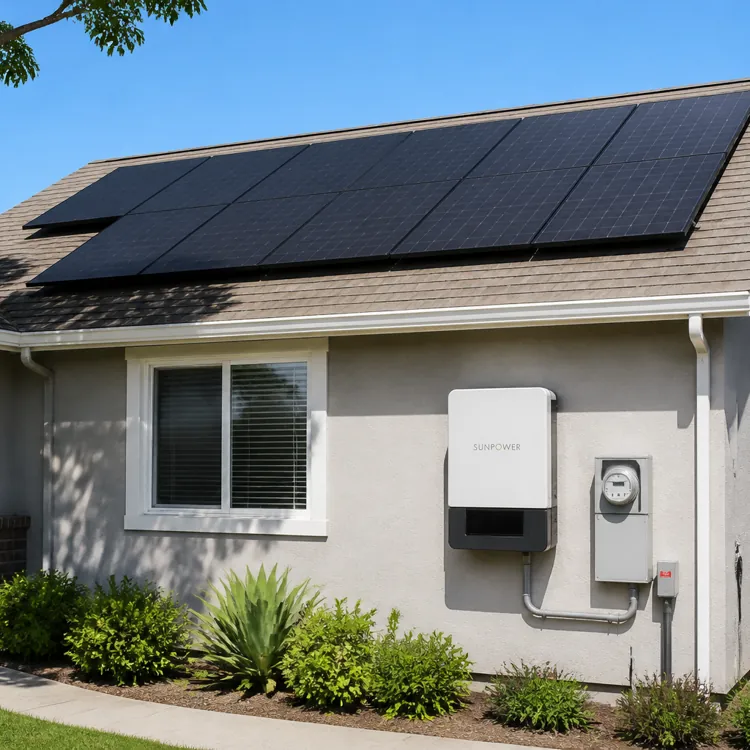

The three main types of solar power systems
There’s no perfect, one-size-fits-all solution for going solar, but there are three main options you may encounter when researching what’s best for you: grid-tied, off-grid and hybrid.
» LEARN: Types of solar panels
Grid-tied solar power systems
Grid-tied systems are the simplest and most popular to install. Solar panels don’t produce electricity consistently throughout the day, and being connected to the electric grid gives these systems a way to compensate for that inconsistency.
If you don't have a battery, your solar energy system won't work during a power outage to protect people working on the power lines.
If your solar panels make more electricity than you need at the moment, like during the middle of the day when no one is home, they can send that excess energy out to the grid instead of it being wasted or lost. Likewise, anytime you need more energy than your panels are producing, like at night or on rainy days, you can receive extra energy from the grid.
This often works through a setup called net metering, which acts as a point system between you and your utility company. Basically, every time you have enough electricity to share, you accrue a credit. Later, when it’s dreary or dark out, you can use those credits to pay for energy from the grid. By the end of the year, your system typically exports more power than it imports, and many people achieve a zero net electricity bill.
Grid-tied systems are great for people who want the flexibility and reassurance of two energy sources without spending extra on solar batteries. With less equipment, the installation is also more straightforward.
However, grid-tied systems are susceptible to power outages. Without a backup battery to store your excess energy, you’re just as vulnerable to blackouts as you were before you installed solar panels.
Grid-tied pros
- Unlimited power is available from the electric grid when needed
- Net metering can help cancel out your grid power use
- More affordable
Grid-tied cons
- Vulnerable to power outages
- Not available in some rural areas
- Electric bills if net metering doesn’t cover your energy consumption
Off-grid solar power systems
As their name suggests, off-grid solar panel systems are not connected to the electricity grid. Instead of bouncing excess power to the grid, they store it in solar batteries.
Because solar batteries have hefty price tags and require additional equipment (like charge controllers), off-grid systems tend to make a bigger dent in your bank account. They may, however, be your only option if you live in a rural or remote area that doesn’t have access to the grid, and they do have their perks.
Residential solar batteries usually cost between $10,000 and $20,000, including installation.
When you’re completely independent of the grid, you don’t have to adjust to the ups and downs of the energy market or deal with net metering policies. Like any product, energy prices can spike depending on consumer demand. So, when electricity rates increase, it can be a major benefit to avoid reliance on utility companies. You’re also immune to the grid’s blackouts.
The downside is that it’s critical for off-grid systems to be powerful enough to keep your house up and running on their own, and you are still vulnerable to some factors outside of your control. If gray skies and bad weather hit your region for an extended time, you could run out of energy if you don’t have enough battery storage.
“My only disappointment is that we did two Tesla battery wall packs and I wish I would have done three,” said Michael, a ConsumerAffairs reviewer from Hawaii. “At the time you're doing it, you don't know how much a battery is going to hold. I was kind of under the impression that two batteries would carry me for a few days ... even if it was cloudy days.”
Off-grid pros
- Energy independence
- No electric bills
- Protection from power outages
Off-grid cons
- Expensive
- More susceptible to bad weather
- Banned in some areas
Hybrid solar power systems
With a hybrid system, you can get the pros of both grid-tied and off-grid systems. Just like grid-tied systems, they have the advantage of pulling from the electric grid when necessary, but unlike grid-tied systems, hybrids aren’t susceptible to utility outages. Your appliances and lights can keep running during a blackout since they can pull power from your battery.
This mix of benefits also means your solar panel array and batteries don’t have to be as large as with a fully off-grid system. Michael, who we mentioned above, luckily had a hybrid system that maintained a connection to the grid, meaning things didn’t go dark just because their batteries ran out of juice.
This flexibility comes at a cost. Hybrid systems are more expensive than grid-tied systems, and in many cases they’re only cheaper than off-grid systems because they utilize smaller arrays and less battery storage.
Hybrid pros
- Reliable power supply
- Efficient use of resources
- Saves money on electricity bill
Hybrid cons
- Complex installation
- Expensive
- Less battery life
» MORE: Best solar batteries
How to choose a type of solar power system
If you’re deciding which system is the best fit for your home, consider three factors: your budget, your location and how much space you have.
Consider your budget
However, if money isn’t the main concern, you may want a more dependable solar option, such as a hybrid solar system.
Consider your location
Consider your space
If space is an issue in your home or yard, consider a grid-tied system.
If you’re ready to go solar, the next step is usually deciding which solar company to work with. You can check out our top picks for solar energy companies to get a head start.
Expanding your solar system later
Your energy needs may change years after you've chosen your solar power system, such as if you didn't originally opt for a battery and want to add one, or if you decide to install additional panels to generate more power. It is possible to change or expand your system, but it might take some additional work.
If you don't already have a solar inverter that is ready to connect to a battery, that will need to be added to your system first. It may be a good idea to reach out to your original installer if you're interested in expanding your solar power system because they'll be able to tell you what other upgrades you may need before modifying your existing system.
FAQ
How much do solar batteries cost?
On average, batteries for residential use cost $10,000 to $20,000, including installation. Your overall price depends on the quality of the batteries you choose, how many batteries you need to power your property and whether the battery has its own inverter.
» MORE: How much do solar panels cost?
Do you need a battery for your solar panels?
If your solar energy system is connected to the electrical grid, you don’t need a battery. (Though you may want one.)
If you are not connected to the grid, you should install a battery with your solar panels — otherwise, you won’t be able to power your home when the sun isn’t out.
Can you use solar panels during a blackout?
Solar panels without backup batteries won’t function during a blackout to protect people working on the power lines. However, if your panels are paired with a solar battery, you can still produce and use your solar energy.
Article sources
ConsumerAffairs writers primarily rely on government data, industry experts and original research from other reputable publications to inform their work. Specific sources for this article include:
- “GoGreenSolar, “The 3 Different Types of Solar Power Systems Explained.” Accessed Dec. 4, 2025.
- Hoymiles, “What is a grid-tied solar system?” Accessed Dec. 4, 2025.
- SaveOnEnergy, “Off-Grid Solar Explained.” Accessed Dec. 4, 2025.
- Solar Technologies, “Advantages and Disadvantages of Hybrid Solar Energy Systems.” Accessed Dec. 4, 2025.
- Solargain, “Which solar energy system is right for me?” Accessed Dec. 4, 2025.
- EnergySage, “Solar battery cost: Are they actually worth it?” Accessed Dec. 4, 2025.
- Solar.com, “Can I Use Solar Panels Without Battery Storage?” Accessed Dec. 4, 2025.
- Sunrun, “Will Solar Panels Work During a Power Outage?” Accessed Dec. 4, 2025.