

- Grain Free Pure Meadow for Senior Dog
- $39.99/12lb bag
- Limited ingredient diet for easy digestion

- Select Grain Free Chicken with Potato and Spinach
- $15.99/5lb roll
- Easy to eat for dogs with dental issues

Canidae Grain-Free PURE Meadow for Seniors

Freshpet Select Grain-Free Chicken Recipe
Purina Bright Mind Adult 7+ Chicken & Rice

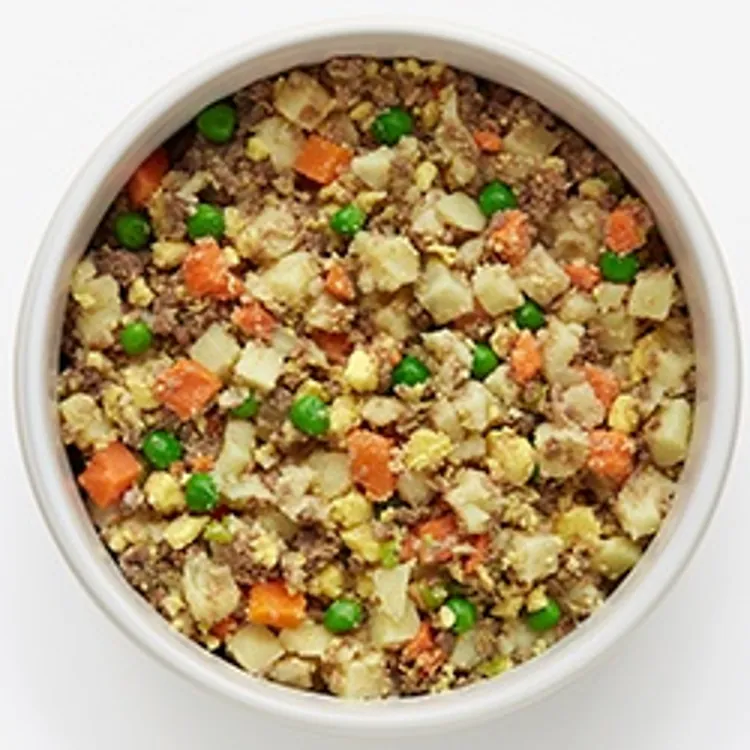
NomNomNow Heartland Beef Mash Recipe
Nutro Wholesome Essentials Large Breed Senior

How to choose the right senior dog food
To choose the best senior dog food for your four-legged friend, you’ll need to understand the special needs of your dog. The best way to do this is to consult with your veterinarian.
Veterinarian recommended dog food
If your dog has serious health concerns, you will need the help of your veterinarian to plan a proper diet. For example, a good diabetic diet can delay the absorption of food and control raising blood pressure caused by diabetes. Your vet might recommend putting your diabetic dog on a low-fat and high-fiber diet.
Senior dogs with heart disease need low-calorie and low-sodium formulations to keep their weight down. While they still need protein, the protein ingredients should come from low-fat sources, such as chicken, turkey and fish.
Senior dog food vs. regular dog food
Senior dogs require fewer calories than their younger, more active counterparts. If your older dog is relatively healthy, you may be able to get away with keeping them on the same formula and adjusting the serving size to accommodate their level of activity.
Some senior dogs will benefit from special formulas designed to help strengthen their bodies and fight against these common ailments that come with age:
- Constipation: Some senior dogs have problems with constipation for which they will need high-fiber diets.
- Joint pain: Joint pain caused by arthritis is an age-related issue for many senior dogs. A dog with joint problems or inflammation may benefit from glucosamine and chondroitin supplements, available in some special veterinary diets.
- Dental problems: Soft or wet diets are recommended for senior dogs with dental problems.
When should you switch to senior dog food?
The size and breed of your dog determine what age is considered “senior.” In general, larger dogs tend to have shorter lifespans than smaller dogs. Dogs are considered senior during the last 25 percent of their lives. Below are the average ages when dogs are considered senior based on size and weight.
- What is considered a senior dog?
- When should you put your dog on senior food?
- The right time for putting your dog on senior food depends on their size, breed and age. If your pet has some health issues, such as diabetes, arthritis, heart disease, kidney disease, dental problems or cancer, it may be time to shift to senior food with ingredients that address these specific issues.