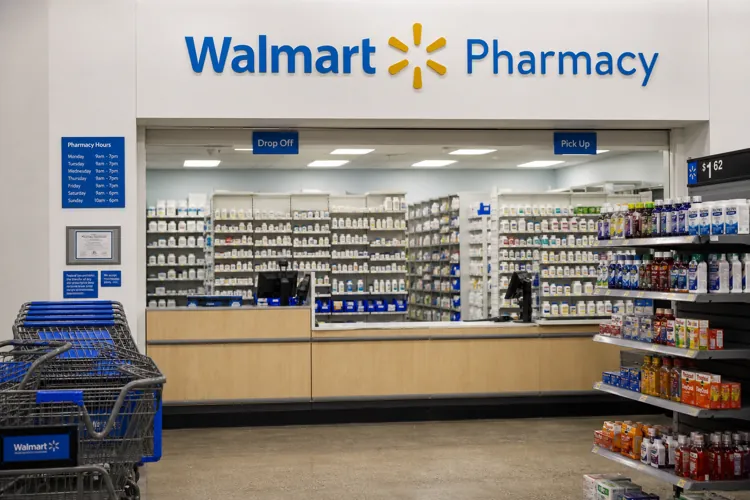

Walmart will pay $50 million to settle federal allegations that its pharmacies illegally filled thousands of prescriptions for opioids and other controlled substances.
The Justice Department says Walmart employees sometimes filled prescriptions despite warning signs involving suspected “pill mill” doctors, unusually high doses, and requests for early refills.
The settlement also requires Walmart to strengthen pharmacy oversight, including monitoring dispensing patterns and creating a hotline for employees and patients to report suspected illegal activity.
Walmart has agreed to pay $50 million to settle a long-running federal lawsuit accusing the nation's largest retailer of improperly filling prescriptions for opioids and other controlled substances.
The Justice Department and Drug Enforcement Administration (DEA) announced the agreement, resolving allegations that Walmart pharmacies violated the federal Controlled Substances Act by filling thousands of prescriptions that should have been rejected.
The settlement brings an end to a case dating back nearly six years and adds another chapter to efforts by federal, state, and local governments to hold pharmacies, drug manufacturers, and distributors responsible for their alleged roles in the nation's opioid epidemic.
Importantly, the settlement does not amount to an admission of wrongdoing. The Justice Department said the claims being resolved are allegations and that there has been no determination of liability. Walmart said it was pleased to put the matter behind it and would continue supporting its pharmacists and their work providing patient care.
What the government alleged
The Justice Department filed its original lawsuit against Walmart in December 2020, alleging that the retailer repeatedly violated the Controlled Substances Act beginning in 2013.
Federal officials alleged Walmart pharmacists filled prescriptions even when there were warning signs suggesting they might not have been issued for a legitimate medical purpose.
Those red flags allegedly included prescriptions from doctors suspected of operating “pill mills,” dangerous combinations of opioids with other drugs, repeated prescriptions for unusually high doses and requests to refill controlled substances earlier than expected.
The government also alleged that Walmart's own pharmacists sometimes alerted the company's compliance operation about suspicious prescribers by submitting thousands of forms documenting their refusal to fill prescriptions.
According to the Justice Department, Walmart's corporate compliance team knew that some prescribers were suspected of operating pill mills but failed to adequately respond to pharmacists' concerns.
When the lawsuit was originally filed, the government also accused Walmart, which formerly distributed controlled substances to its own pharmacies, of failing to report suspicious drug orders to the DEA. At the time, federal officials said potential civil penalties could have totaled billions of dollars if the company were found liable.
Walmart will have to make changes
The agreement involves more than the $50 million payment.
Walmart has entered into a memorandum of agreement with the DEA requiring additional safeguards governing how its pharmacies dispense controlled substances.
Among other things, Walmart must establish a hotline that employees and patients can use to report suspected illegal dispensing. The retailer must also proactively monitor dispensing patterns at its pharmacies for signs of potentially illegal activity and maintain a process for evaluating doctors and other prescribers suspected of improper prescribing.
“This $50 million settlement makes clear that pharmacies have a responsibility to identify and prevent the unlawful dispensing of controlled substances,” DEA Assistant Administrator Cheri Oz said in announcing the agreement.
Not Walmart's first opioid settlement
The federal settlement is separate from a much larger agreement Walmart previously reached with states, local governments, and Native American tribes.
In 2022, Walmart agreed to a nationwide settlement worth more than $3 billion to resolve thousands of opioid-related claims. Walmart's financial filings show that it ultimately accrued about $3.3 billion for those settlements, including remediation payments, legal fees, and other costs.
For consumers, the newest Walmart agreement is unlikely to produce individual payments. The $50 million resolves the federal government's Controlled Substances Act claims rather than establishing a consumer compensation fund.
Its more visible impact may instead be behind the pharmacy counter, where Walmart will face additional requirements designed to identify suspicious prescribing and dispensing before controlled substances reach patients.