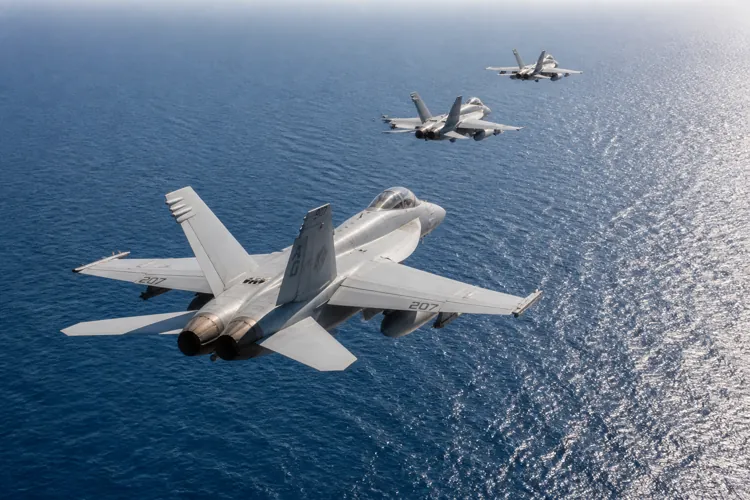

Oil prices jumped more than 2% Monday after U.S. forces struck Iranian rocket launchers and Iran retaliated, renewing fears that the conflict could disrupt oil shipments through the Strait of Hormuz.
Brent crude moved back above $90 a barrel, while U.S. West Texas Intermediate crude climbed above $85, reversing some of last week’s decline.
American drivers are likely to feel the impact if oil remains elevated, as the national average for regular gasoline is already about $4.08 a gallon, and another sustained rise in crude could push pump prices higher in September.
A renewed outbreak of fighting between the United States and Iran has quickly spilled into the energy markets, pushing crude oil prices sharply higher and raising the prospect of another increase in gasoline prices for American motorists.
Oil prices rose more than 2% in early trading Monday after U.S. forces struck two Iranian rocket launchers on Larak Island in the Strait of Hormuz on Sunday. It was the first known U.S. military strike on Iran since late July. Iran responded by attacking two U.S. bases in Jordan, according to Iranian media.
Brent crude, the international oil benchmark, climbed about 2.5% to roughly $90.30 a barrel early Monday, while U.S. West Texas Intermediate crude rose more than 2% to around $85.20. Later trading pushed oil even higher, with Brent topping $91 at one point.
The reaction underscores just how sensitive oil markets remain to developments involving Iran.
The biggest concern isn't necessarily Iran's own oil production. It's the Strait of Hormuz.
Why the Strait matters
The narrow waterway between Iran and Oman has historically carried about one-fifth of the world's oil supplies. Any military action that threatens tankers or further restricts shipping can quickly add a "risk premium" to the price of crude.
Shipping through the strait has already been sharply reduced during the conflict. Reuters reported Monday that the number of visible commodity vessels passing through the waterway over the weekend had fallen to about five a day as shipping companies remained wary of attacks.
The U.S. Energy Information Administration (EIA) estimated earlier this month that disruptions connected with the Strait of Hormuz resulted in about 5.5 million barrels per day of oil production being shut in during July. EIA expects oil flows to recover gradually, but it warned that normal production and trade patterns may not return until early 2027.
That means even relatively limited military confrontations can move prices.
Analysts told Reuters that oil could remain in roughly an $85-to-$95-a-barrel range without greater clarity about the strait. A sustained disruption to tanker traffic or attacks on major oil infrastructure could send prices significantly higher.
What it means for gasoline prices
For consumers, the renewed oil-price increase comes at an especially bad time.
AAA says the national average price of regular gasoline is about $4.08 a gallon, compared with about $3.21 a year ago. August is on track to be the most expensive August on record for U.S. gasoline prices.
Crude oil is the largest single component of the retail price of gasoline, so a sustained increase in oil prices normally works its way through refineries and wholesale markets before showing up at service stations.
That doesn't mean Monday's jump will immediately produce a corresponding increase at the pump. Oil prices would have to remain elevated for several days — or rise further — before much of the increase would likely reach consumers.
There is also a seasonal factor working in motorists' favor. Gasoline demand normally begins declining after the summer driving season, and refineries eventually switch to less expensive winter-grade gasoline. Those factors can put downward pressure on prices during the fall.
But the Iran conflict could overwhelm some of that seasonal relief.
Some analysts say that if Brent remains above $90 and moves toward $95, motorists could see gasoline prices begin climbing again rather than falling after Labor Day. A more serious interruption of oil traffic through the Strait of Hormuz would pose a much greater risk and could send U.S. gasoline prices substantially higher.