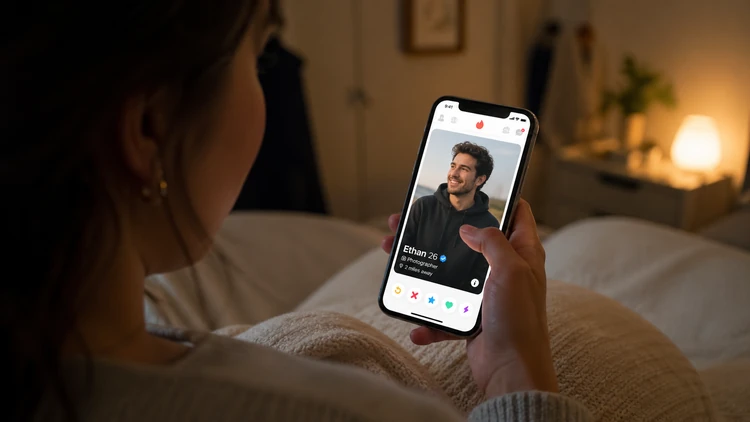

A recent investigation shows scammers can still get verified on Tinder using stolen or manipulated photos — making the blue check less reliable than it seems.
Experts say facial verification only confirms a moment in time, not whether an account is truly real, consistent, or trustworthy.
To stay safe, users should focus on behavior — like rushed intimacy, off-platform requests, and money asks — rather than relying on a verified badge.
Dating apps want you to feel safer swiping — and features like photo verification are supposed to help.
But a recent investigation shows just how easy it still is for scammers to game the system. By uploading manipulated images and stolen photos, a fake Tinder profile was able to earn a verified badge almost instantly — raising fresh questions about how much that blue check is really worth.
So what’s going wrong? According to Husnain Bajwa, SVP of Product, Risk Solutions at SEON, the issue isn’t just a glitch — it’s a bigger blind spot in how platforms verify identity in the first place.
How are scammers bypassing verification tools?
According to Bajwa, facial verification confirms that a real person appeared in front of a camera at a specific moment. However, it does not establish that the identity behind the account is genuine, consistent, or trustworthy over time. This is what allows scammers to bypass these controls.
“Modern fraudsters build synthetic identities using a combination of real and fabricated information, including credible photos, aged email accounts, valid phone numbers and consistent personal details,” he explained. “By the time they reach a selfie check, the account already appears legitimate.
“Selfie-based verification validates only a single moment of interaction. It does not assess whether the same individual is operating multiple accounts, using shared infrastructure, or engaging in coordinated fraudulent activity. It also does not evaluate behavior over time.”
How do you spot a scam?
Bajwa broke down the biggest red flags that can help consumers spot scammers on dating apps. His biggest piece of advice: focus on behavior rather than just profile details.
Common warning signs include:
Rapid emotional escalation
Requests to move conversations off the platform
Refusal to participate in live and unscripted video calls
Any early mention of financial hardship, urgency, or requests for money
Inconsistency in the person’s digital footprint. A profile may appear detailed and convincing, but there is little long-term or verifiable presence to support it. This can include newly created accounts, limited history or information that does not align across platforms.
Communication patterns can also provide clues. Messages that feel overly consistent, scripted, or unusually polished may indicate that the interaction is not genuine. Real conversations tend to vary in tone, timing, and detail. Real human interaction tends to be a little messy, uneven, and sporadic. If something feels overly optimized, it is worth slowing down and verifying.
Going beyond selfie matching
While selfie matching verifies that the same face appears in two images, it does not establish intent, history or context. This is the key to these kinds of scams.
“Selfie matching can confirm visual similarity, but it does not determine whether the identity is genuine, whether the account is part of a coordinated scam network, or whether behavior changes over time,” Bajwa said.
“These limitations are significant. Platforms may miss patterns such as multiple accounts linked to the same individual, account handoffs, shared infrastructure or repeated use of the same devices. They may also miss behavioral signals that only emerge after the account has been created.”
Tips for safe dating
Bajwa shared his top three tips to help dating app users cut through the noise – and the scammers:
Do not rely on a verified badge as proof of authenticity. A badge typically confirms that a specific check was completed at a single point in time. It does not mean the identity has been fully validated or that the account is trustworthy over time.
Pay close attention to the pace of the interaction. Sophisticated scammers often try to build trust quickly by escalating emotions or creating a sense of urgency. If someone pushes for intimacy, exclusivity, or sympathy unusually fast, that should be treated as a warning sign.
Use verification methods that are harder to manipulate. This can include asking for a live, unscripted video call, checking for a consistent presence across other platforms, or using reverse image search if something seems unusual. Users should also avoid sending money or sharing sensitive information with anyone they have only met online.