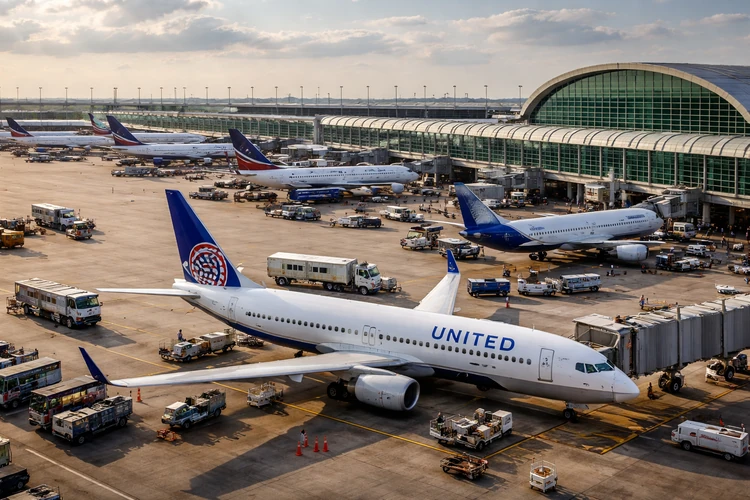

The FAA is capping daily flights at Chicago O’Hare to 2,708 during peak summer travel, down from more than 3,000 scheduled departures and arrivals.
The cuts — more than 300 flights per day — will run from May 17 through Oct. 24.
Officials say the move is aimed at reducing delays, easing congestion, and maintaining safety at one of the world’s busiest airports.
The Federal Aviation Administration (FAA), expecting a busy travel season in the months ahead, has ordered a significant reduction in flights at Chicago’s O’Hare International Airport this summer, stepping in to curb what officials describe as an unsustainable surge in airline schedules.
Under the new directive, O’Hare will be limited to 2,708 flights per day between May 17 and Oct. 24, down from the roughly 3,080 daily flights airlines had planned during peak travel periods.
The reduction amounts to more than 300 fewer flights each day and represents a roughly 10–12% cut in scheduled operations, according to federal officials and reports.
This will affect not just passengers traveling to and from Chicago, but thousands of connecting flights that make stops in Chicago en route to their final destination.
Safety and reliability concerns
Transportation officials say the move is primarily about safety and reliability, as O’Hare — already one of the busiest airports in the world — faces mounting pressure from increased airline activity, ongoing construction, and air traffic control constraints.
“Our number one priority is the safety of the flying public,” FAA Administrator Bryan Bedford said in a statement, emphasizing that flight schedules must reflect what the system can realistically handle.
Last summer, fewer than 60% of flights at O’Hare arrived on time, highlighting the strain on airport infrastructure and staffing.
Officials warned that without intervention, the planned increase, nearly 15% higher than last year’s peak, could lead to widespread delays and cancellations.
Airline competition fuels surge
The surge in scheduled flights has been driven largely by aggressive expansion plans from O’Hare’s two dominant carriers, United Airlines and American Airlines. Both airlines have been adding flights in part to secure gate access and strengthen their positions at the hub.
This competition has contributed to what regulators describe as “over-scheduling,” where the number of planned flights exceeds what airport infrastructure and staffing can efficiently support.
United is expected to make the largest cuts under the FAA’s order, while American has indicated it will reduce a smaller number of flights and adjust schedules accordingly.
What it means for travelers
For passengers, the changes could mean fewer flight options, but potentially more reliable travel.
Federal officials argue that trimming schedules now will help avoid the cascading delays and last-minute cancellations that often plague peak summer travel. Airlines are expected to notify affected passengers and rebook them as needed.
The FAA is also taking additional steps to improve operations, including increasing air traffic controller staffing, accelerating training, and optimizing flight routes.
O’Hare plays a central role in the U.S. aviation network, handling thousands of daily flights and serving as a key connection point for domestic and international travel.