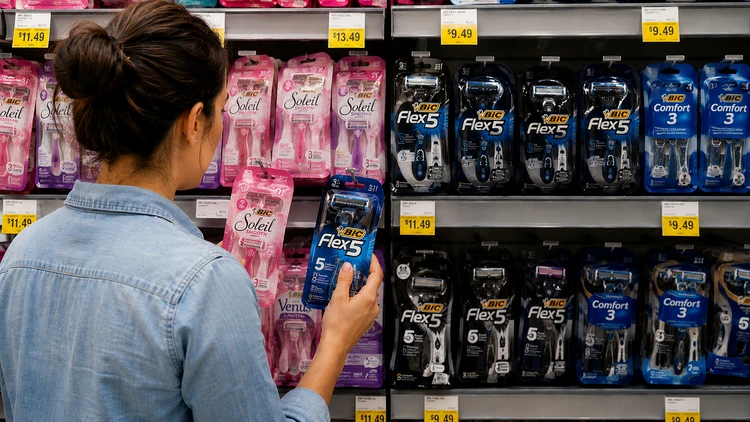

The Pink Tax is still real: Many products marketed to women cost more than similar men's versions — especially razors, deodorant, and personal care items.
Compare before you buy: Check the price per ounce, ingredient lists, and package sizes to avoid paying extra for marketing and packaging.
Some women's products are worth the premium: Specialized skincare, hair care, and health products may contain different ingredients that justify the higher price.
Most shoppers assume that if two products do the same thing, they should cost roughly the same amount. Unfortunately, that's not always the case.
For decades, consumer advocates have pointed to something commonly called the "Pink Tax," which is the tendency for products marketed toward women to cost more than nearly identical products marketed toward men.
It shows up in everyday purchases ranging from razors, deodorant, shampoo, clothing, and various personal care products.
Here's where the Pink Tax still exists today, which stores tend to be the biggest offenders, and most importantly, how to avoid overpaying.
What exactly is the Pink Tax?
The Pink Tax refers to situations where products marketed toward women cost more than comparable products marketed toward men despite offering nearly identical functionality.
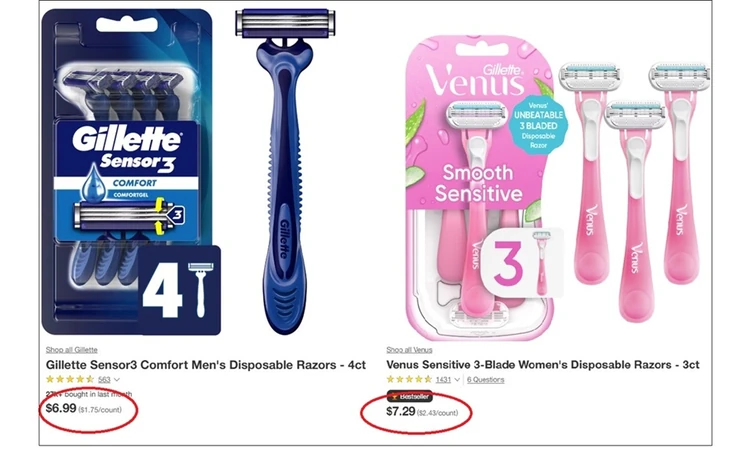
Sometimes the differences are obvious. A men's razor may cost $7.99 while the women's version sitting next to it costs $9.99. Other times the distinction is almost comical and the assumption is that women are fine with paying extra for these items marketed directly towards them.
The products may be identical except for:
- Pink packaging
- Floral scents
- Curved handles and edges
- Different branding
Yet the price is typically higher.
Consumer studies over the years have repeatedly found price differences across categories such as personal care products, clothing, toys, and grooming items.
Not every woman’s product costs more. But the pattern appears often enough that many shoppers have learned to actively compare men's and women's aisles before buying.
Razors are the poster child of the Pink Tax
If there's one place shoppers regularly spot the Pink Tax, it's the razor aisle.
Many women's razors are nearly identical to men's versions. The blades often come from the same manufacturer and the technology is usually very similar. Yet the women's version can cost you significantly more.
In some cases, shoppers pay extra simply for:
- Pink handles and fancy grips
- Moisturizing strips
- Gender-specific marketing
The easiest solution is to compare the cost per cartridge, or razor, rather than the package price. As you can tell from the screenshot above, manufacturers will often make the package prices similar, but the men's package will include four razors while the women's version includes only three.
Many women have completely switched to men's razors and report little or no difference in their performance. Many actually like them better, as they find them less flimsy and they tend to stay sharper longer.
Pro tip: The best value is often found in men's refill cartridges sold in warehouse clubs like Costco or Sam's Club. That’s where you’ll find the cost per shave to often be dramatically lower.
Personal care products deserve a closer look
Think things like shampoo, body wash, deodorant, and shaving cream. These are all categories where marketing frequently drives the pricing.
You’ll notice that women's products will often emphasize luxury things like ingredients, fragrances, or beauty benefits. Sometimes those differences are legitimate and sometimes they're mostly packaging.
A surprising number of consumers have discovered that men's body wash, deodorant, and shaving cream perform nearly identically while costing less. This is especially true for store brands.
Retailers often sell men's body wash, women’s body wash, and gender-neutral body wash all manufactured by the same supplier.
Pro tip: Get in the habit of comparing the ingredient lists on the products. If the active ingredients are identical, there's a good chance you're paying extra for branding rather than actual better performance.
Clothing can be surprisingly expensive
The Pink Tax doesn't stop at just personal care, as women's clothing often carries hidden costs too.
For example, many women already know about the infamous pocket problem, where smaller pockets (or no pockets) in women's clothing mean greater reliance on handbags and accessories.
But pricing differences also exist. Women's basics, such as t-shirts, hoodies, socks, and athletic wear can sometimes cost more than comparable men's versions despite using similar materials. This can especially be the case when the item has any sort of feminine pattern or design on it.
Also, women's clothing frequently uses thinner fabrics and less durable construction, which often leads to more frequent replacement purchases.
Pro tip: When shopping for oversized sweatshirts, hoodies, flannel shirts, and basic tees, don't ignore the men's section. Many women find better quality and lower prices hiding there.
Stores where shoppers frequently notice Pink Tax pricing
The Pink Tax isn't limited to just one retailer.
Shoppers commonly report seeing it at:
- Target
- Walmart
- CVS
- Walgreens
- Rite Aid
- Grocery stores
- Drugstores
The issue isn't necessarily that these stores intentionally charge women more.
Instead, they all stock products from manufacturers who often use gender-based pricing strategies.
Target and Walmart deserve some credit because their online shopping tools make comparison easier. Both of their apps and websites let you quickly compare price per ounce, ingredient lists, and customer reviews without having to solely rely on the packaging or design of the item.
The 'women's version' is sometimes worth it
When comparing women’s and men’s products, it’s important to realize that some items are genuinely different, and that difference may be worth the extra cost.
Examples include:
- Hair care products designed for specific hair types
- Certain skincare products
- Specialty cosmetics
- Women's-specific health products
In these situations, differences in ingredients and formulations can definitely justify the higher price. The goal isn't to buy men's products exclusively, but to compare your options before automatically assuming the men's version offers the better value.