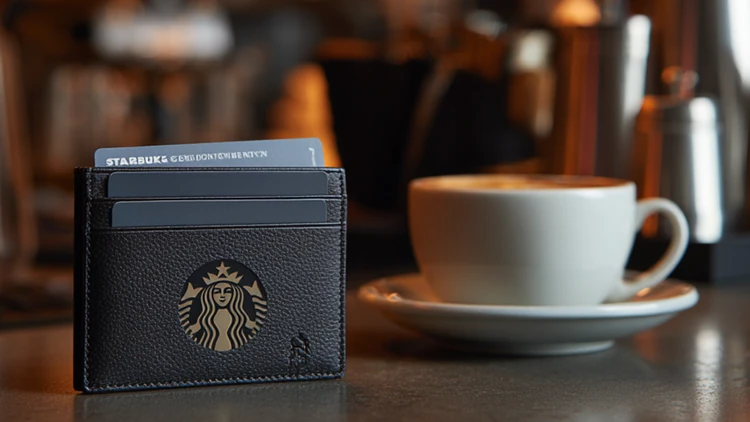

- Heavy users may get fewer Starbucks promos—WaPo found purchase frequency correlated with thinner offers
- Starbucks says it doesn’t change menu prices per person, but does personalize deals based on your history
- Protect yourself: compare prices logged-out/incognito, rotate loyalty/payment, and limit app tracking before you buy
Have you ever worried if scanning your loyalty card was a good idea? Are you giving up too much of your data and buying history? Interestingly, new evidence suggests that your gut instinct might be right.
A recent deep-dive by The Washington Post’s Geoffrey A. Fowler into his own Starbucks Rewards data showed that the more frequently he bought, the fewer promotions he received.
Starbucks responded by saying it doesn’t set individual prices based on behavior, but it does use “inferences” from your purchase history to personalize offers. In plain English this means that two people can buy the same $7 latte, and one will pay $4 with a targeted offer while the other pays full price.
A Starbucks spokesperson further explained that their rewards program actually encourages frequency of use and does not penalize someone for the amount they spend.
The conclusion here is much bigger than just coffee. Modern loyalty programs increasingly run on AI and personal data, and they can be used to sort shoppers by “willingness to pay.” That can mean fewer or smaller discounts for the most reliable customers, the opposite of what “loyalty” should actually mean.
What Starbucks says
While Starbucks told The Post it doesn’t adjust per-person menu prices, it does indeed tailor promotions based on your “preferences and purchase history.”
In other words, if you stop at Starbucks regularly, you start to look like a “sure thing” so why would they waste discounts and purchase incentives on you. Starbucks says that’s not the case—it uses Rewards data to tailor offers and remember your favorites, not to track how much you’ve spent.
But they did not clarify whether heavier purchasers are intentionally shown fewer deals. In response to this, a Starbuck representative did point out that they’ve reduced the number of offers to all members as part of their evolving business priorities.
How to fight “surveillance pricing” (without giving up savings)
You shouldn’t have to choose between your budget and your privacy. To that end, here are some practical steps to make sure you’re not being messed with:
Run a no-login price check. Before you buy, compare the price (and available promos) while logged in vs. logged out, in a private/incognito browser, and on the retailer’s public website vs. the app. If the logged-out or first-time session shows a better promo, grab it.
Rotate your loyalty. Don’t be too predictable. If you always buy at the same time/place, algorithms may learn you’ll pay full price. Mix in competitors and cash purchases so you’re not typecast as “inelastic.”
Change-up your payment patterns. Scan for stars, but then pay with a different card or mobile wallet that isn’t saved in your Starbucks account. You’ll still earn your Stars, but you won’t tie every card transaction to your rewards profile.
Limit app permissions. Turn off location access, Bluetooth, and ad tracking in your phone settings. Decline cross-app tracking and disable in-app personalized ads where possible.
Hunt general public deals first. Before you scan a loyalty barcode, check for published deals (in-app “Offers,” store email, or coupon sites). If a targeted promo doesn’t appear for you, a public code may level the field.