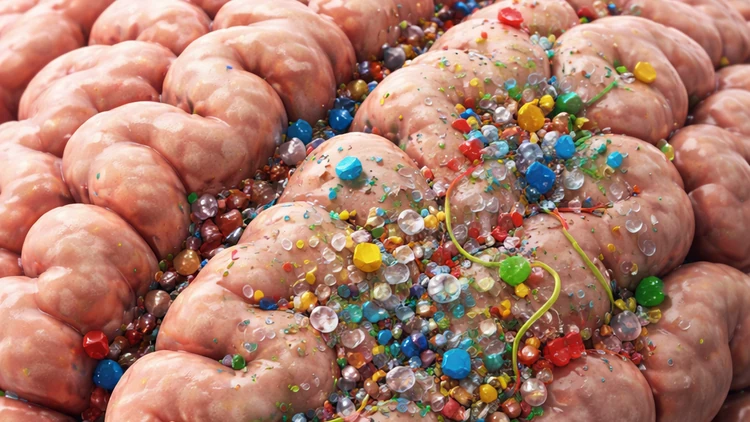
Researchers say some widely reported findings of microplastics in human organs may be false positives
Critics warn rushed methods and weak controls could mislead policymakers and the public
Scientists stress plastic pollution is real, but health impacts inside the body remain uncertain
Scientists are raising serious doubts about a wave of high-profile studies claiming to have found microplastics throughout the human body, warning that many results may be driven by contamination, flawed methods or false positives rather than real plastic particles.
The studies, which reported microplastics and nanoplastics in organs including the brain, blood, testes, arteries and placentas, were widely covered by global media, including the Guardian. But multiple researchers now say the evidence behind some of the most striking claims is far less solid than it appeared.
“There is no doubt that plastic pollution is everywhere in the environment,” scientists say. “But what we actually know about how much plastic ends up inside the human body — and what it does there — is still very limited.”
Race to publish raises concerns
Micro- and nanoplastics are extremely small, often near the detection limits of current analytical tools, especially when scientists are working with complex human tissue.
Researchers told the Guardian that while there is no suggestion of misconduct, the rapid expansion of microplastics research has led to mistakes. In some cases, teams with limited analytical chemistry experience may have rushed to publish results without applying basic quality controls.
The Guardian identified seven studies that have been formally challenged in scientific journals. A separate recent analysis flagged 18 studies that did not properly consider that human tissue itself can generate chemical signals that mimic common plastics.
Scientists warn that faulty evidence could have real-world consequences. Poor-quality studies could lead to misguided regulations — or allow industry lobbyists to dismiss legitimate concerns by pointing to unreliable data.
Brain study sparks backlash
One of the most prominent disputed studies reported rising levels of microplastics in human brain tissue over several decades, based on postmortem samples. The findings generated global headlines.
But months later, other scientists published a formal critique, citing weak contamination controls and missing validation steps. One of the critics, Dr Dušan Materić of Germany’s Helmholtz Centre for Environmental Research, was blunt.
“The brain microplastic paper is a joke,” he said, noting that brain tissue is around 60% fat and that fat can create false signals for polyethylene, a common plastic. He suggested rising obesity rates could explain the apparent trend.
The study’s lead author, Prof Matthew Campen, defended the work, saying the field is still young and that researchers are learning as they go. He acknowledged room for improvement but said critics have not produced data proving the findings are wrong.
Other studies also challenged
The brain paper is not an isolated case. A study linking microplastics in artery plaques to higher risks of heart attack and stroke was criticised for failing to test blank samples to measure background contamination.
Another study reporting microplastics in human testes was challenged by scientists who said the methods were not robust enough to support the conclusions. Campen, a co-author, responded that bioanalytical assays are never perfect and must improve over time.
Studies claiming plastic particles in blood, arteries and bottled water have also faced criticism, though authors have disputed those challenges.
Roger Kuhlman, a chemist formerly at Dow Chemical, called the growing doubts a “bombshell.”
“This is forcing us to re-evaluate almost everything we think we know about microplastics in the body,” he said. “Many extraordinary claims are being made without ordinary levels of evidence.”
Methods under scrutiny
A key source of concern is a technique called pyrolysis gas chromatography mass spectrometry, or Py-GC-MS, which involves vaporising samples and analysing the fumes.
Critics say chemicals released from fats and other biological material can be mistaken for plastics, especially if tissue digestion is incomplete. A January 2025 study concluded the method is currently unreliable for detecting some common plastics in human samples.
Dr Cassandra Rauert, an environmental chemist at the University of Queensland, said many reported concentrations are “completely unrealistic” and biologically implausible.
She added that while nano-sized plastic particles might cross biological barriers, current instruments cannot reliably detect them — making some bold claims even harder to justify.
A July review in a German medical journal summed up the problem: “At present, there is hardly any reliable information available on the actual distribution of microplastics in the body.”