
The CDC has recorded 13,895 laboratory-confirmed, domestically acquired Cyclospora infections since May 1, including 740 hospitalizations and two deaths.
U.S. lettuce prices plunged 16.4% in July, while salad chain Sweetgreen said the scare cut roughly six percentage points from its July comparable sales.
Investigators are examining parsley and cilantro as possible sources of illnesses not explained by the lettuce outbreak, but neither food has been confirmed.
One statistic stood out in the release of the July Consumer Price Index. While most food prices continued to edge higher or remained flat, the price of lettuce plunged more than 16%.
The largest identified cluster in this summer’s extraordinary surge of Cyclospora infections remains tied to iceberg lettuce, but federal and state health authorities are still trying to explain thousands of additional illnesses — and the uncertainty is taking a widening toll on lettuce and salad sales.
As of Aug. 10, the Centers for Disease Control and Prevention (CDC) had received reports of 13,895 laboratory-confirmed infections acquired in the United States since May 1. At least 740 patients were hospitalized and two died.
The CDC is also reviewing at least 10,455 additional cases that either lack laboratory confirmation or require more investigation. By comparison, only 1,180 domestic cases were reported during the comparable 2025 surveillance season.
Not just lettuce
Of the confirmed cases, 6,358 have been assigned to the multistate outbreak linked to iceberg lettuce sourced from central Mexico and processed by Taylor Farms de Mexico. That outbreak has produced at least 278 hospitalizations and two deaths across 15 states, according to the most recent outbreak-specific update, dated Aug. 5. Illnesses began between June 22 and July 31.
Taylor Farms recalled the implicated lettuce on July 17 after epidemiological interviews and supply-chain tracing converged on the company’s Mexican operation. The recall covered iceberg lettuce sold to restaurants and food-service customers, along with Marketside-branded iceberg salad and shredded lettuce sold at select Walmart stores.
The recalled products’ best-by dates have now passed, and officials say they should no longer be on store or restaurant shelves. The investigation remains open, however, partly because it can take as long as six weeks to connect a reported illness to the outbreak.
Observing the changes
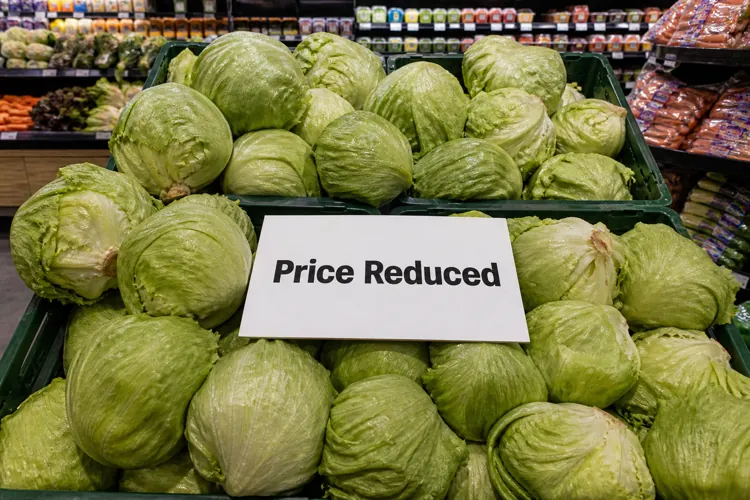
The commercial repercussions have extended beyond the recalled products. The Labor Department’s lettuce price index fell a seasonally adjusted 16.4% in July from June, an unusually steep decline that coincided with the recall and a broader drop in consumer demand.
A falling price is not the same as a direct measure of unit sales, and comprehensive national retail-volume figures have not been publicly released, but restaurant disclosures provide clearer evidence that customers have been avoiding salads and other fresh foods.
Sweetgreen, which does not serve iceberg lettuce and has not been linked to the outbreak, said Cyclospora headlines reduced its July comparable sales by about 600 basis points, or six percentage points. The company now expects same-store sales to fall 7% to 8% for all of 2026, compared with its previous projection of a 2% to 4% decline. Second-quarter comparable sales were already down 6.2%.
The spillover has not been uniform. Cava, which says it neither uses iceberg lettuce nor sources leafy greens from Mexico, reported only a temporary effect and said comparable-sales growth subsequently returned to the mid-single digits. The contrasting results suggest that the outbreak has damaged consumer confidence in fresh prepared food generally, while its effect on individual businesses depends on menu mix, customer base, and how clearly companies communicate their sourcing.
What about other foods?
Are investigators closer to finding other sources of the outbreak?
Only slightly — and there is still no confirmed answer.
The iceberg-lettuce outbreak accounts for fewer than half of the laboratory-confirmed domestic cases reported by the CDC. The agency says it is investigating multiple additional clusters, but it has not publicly identified a food source for most of them.
North Carolina has provided the strongest clue. State officials reported 906 cases since May as of Aug. 11, including 31 hospitalizations. Interviews show that patients ate parsley and cilantro more frequently than would normally be expected, making the herbs leading candidates in that state’s investigation. North Carolina officials say their increase does not appear to be associated with the Taco Bell-centered lettuce outbreak.
But the evidence remains circumstantial. Many North Carolina patients reported eating neither herb, suggesting multiple sources may be involved, and investigators have not traced contaminated parsley or cilantro to a particular farm, supplier, or product. No recall has been issued for either herb in connection with Cyclospora.