
Higher cancer risk: Women with elevated levels of two common “forever chemicals” had a significantly greater risk of developing an aggressive form of breast cancer, according to a new National Institutes of Health (NIH) study.
Nearly double the risk: Women with the highest levels of one chemical had a 93% higher rate of estrogen receptor-negative breast cancer, while another chemical was associated with a 67% increase.
Widespread exposure: The chemicals have been used in everyday consumer products and can remain in the human body for years, raising questions about their long-term health effects.
Two widely used chemicals found in consumer products and the environment may significantly increase women's risk of developing an aggressive form of breast cancer, according to new research from the National Institutes of Health (NIH).
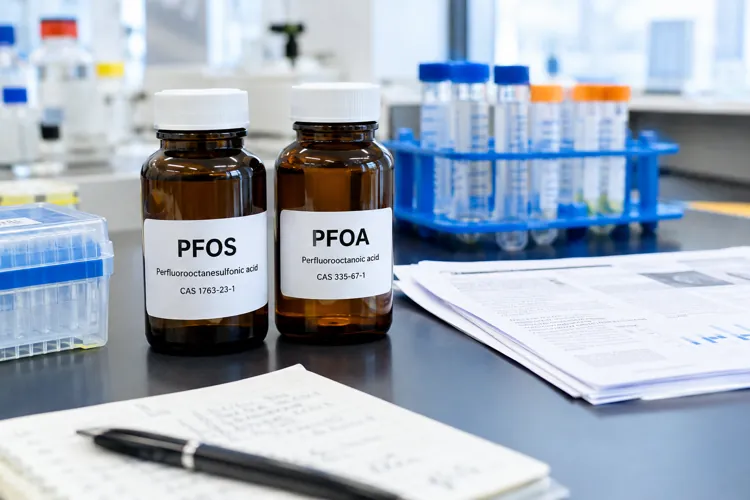
The study, published in the Journal of Clinical Oncology, found that women with higher blood levels of two chemicals known as PFOA and PFOS were more likely to develop estrogen receptor-negative (ER-negative) breast cancer.
This type of breast cancer is particularly concerning because it tends to grow more aggressively and has fewer treatment options than cancers that respond to estrogen-blocking therapies.
Researchers found that women with the highest levels of PFOA had a 67% higher rate of ER-negative breast cancer compared with women with the lowest levels. For PFOS, the increase was even greater — 93%, or nearly twice the rate.
Importantly, the researchers did not find a clear association between these two chemicals and breast cancer overall. The increased risk appeared to be concentrated in the more aggressive ER-negative subtype.
The findings also establish an association, not proof that exposure to the chemicals causes cancer.
What are forever chemicals?
PFOA and PFOS belong to a large family of synthetic chemicals called per- and polyfluoroalkyl substances, or PFAS. They are commonly called “forever chemicals” because they resist breaking down naturally and can accumulate in the environment and human body over time.
For decades, PFAS have been used in a variety of consumer and industrial products, including nonstick cookware, stain-resistant carpeting, water-repellent clothing and grease-resistant food packaging.
They have also been used in certain firefighting foams and industrial processes, contributing to contamination of drinking water supplies in some communities.
Although manufacturers have largely phased out PFOA and PFOS in the United States, the chemicals remain widespread because they persist for years. Many have been replaced by newer PFAS compounds whose long-term health effects are still being studied.
A closer look at the research
The NIH investigation drew on data from the Sister Study, a long-running research project involving 50,884 women between the ages of 35 and 74.
All participants had a sister who had previously been diagnosed with breast cancer, although none had the disease when they enrolled.
For the PFAS analysis, researchers examined blood samples from 1,609 women who subsequently developed breast cancer and a comparison group of 2,269 women.
Scientists measured concentrations of 17 different PFAS chemicals in blood samples collected years before cancer diagnoses, allowing them to examine whether earlier exposure was associated with later disease.
The researchers also reviewed findings from previous studies to determine whether their results were consistent with other scientific evidence.
"Our findings, which we confirmed using a meta-analysis of prior research, indicate that certain legacy PFAS, including PFOA and PFOS, are associated with a higher risk of ER-negative breast cancer, a more aggressive tumor type with few known risk factors," said Alexandra White, Ph.D., the NIH investigator who led the research.
Why this type of breast cancer is especially concerning
Breast cancers are often classified according to whether their cells contain receptors for hormones such as estrogen.
Estrogen receptor-positive cancers can often be treated with medications that block estrogen or reduce its production.
ER-negative tumors lack those receptors, meaning hormone-based treatments generally are not effective against them.
These cancers can be more difficult to treat and may have poorer outcomes, making the identification of potential environmental risk factors particularly important.
Researchers said the findings suggest PFAS may influence cancer development through biological mechanisms unrelated to hormones.
Possible explanations include changes in gene activity or the immune system, although the study did not directly investigate those mechanisms.
What people can do
While the study does not establish that PFAS exposure causes breast cancer, it adds to growing scientific concern about the health effects of these persistent chemicals.
Che-Jung Chang, Ph.D., the study's first author, said reducing exposure could eventually become an important part of cancer prevention.
"Although PFAS are persistent in the environment and in our bodies, exposure to them is still potentially modifiable," Chang said.
Consumers concerned about PFAS exposure can take several precautions, including checking local drinking water quality reports, using water filters certified to reduce specific PFAS chemicals, and limiting the use of products containing PFAS when practical.
Jane Meisel, M.D., a breast cancer specialist at Emory University's Winship Cancer Institute, said filtering drinking water and avoiding certain nonstick cookware and grease-resistant packaging may help reduce exposure.
However, researchers caution that it is not yet known whether reducing PFAS exposure will lower an individual's breast cancer risk.
The NIH team also emphasized the need to investigate newer PFAS chemicals that have replaced PFOA and PFOS in many products. Because exposure to these substances is widespread, researchers say even a modest increase in cancer risk could have important public health implications.