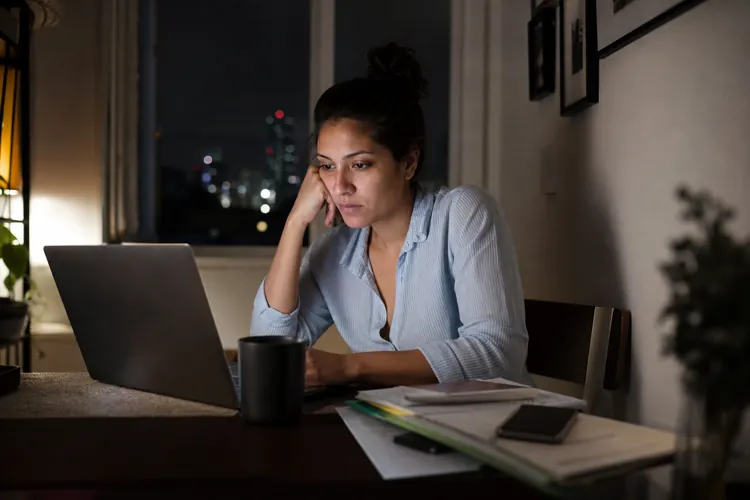

A new study found that people who prefer later sleep schedules reported higher levels of loneliness and anxiety.
Researchers surveyed 442 adults and examined how sleep timing, loneliness, and mental health are connected.
Feelings of loneliness at night appeared to play an important role in the relationship between later sleep schedules and anxiety.
Whether you're naturally a night owl or simply prefer staying up later, your sleep schedule may be connected to more than just when you feel tired.
New research presented at the SLEEP 2026 annual meeting found that people with an "evening chronotype" — those who naturally prefer to go to bed and wake up later — reported poorer mental health, higher levels of loneliness, and greater anxiety.
Researchers were particularly interested in a type of loneliness that occurs during nighttime hours, known as nocturnal loneliness. Previous research has suggested that people who stay up later may experience a mismatch between their preferred schedules and the schedules followed by much of society. This can sometimes leave late sleepers feeling more isolated, especially during nighttime hours when fewer people are awake and available for social interaction.
The study explored whether those feelings of loneliness could help explain why later sleep schedules are often linked to mental health challenges.
“People with later sleep patterns reported poorer mental health in part because they also experienced greater loneliness, including feelings of loneliness at night, and increased levels of anxiety,” lead author Alec Harlow said in a news release.
“The findings suggest that both daytime and nighttime social experiences appear to be relevant when examining mental health among evening chronotypes.”
How the study was conducted
The research team recruited 442 participants through the online platform Prolific and asked them to complete a series of surveys. The questionnaires measured several factors, including chronotype, or a person's natural preference for sleep and wake times.
Participants also completed established assessments that measured general loneliness, nocturnal loneliness, anxiety, and overall self-rated mental health. Researchers then used statistical models to examine how these factors were related and whether loneliness helped explain the connection between sleep timing and mental health outcomes.
Specifically, the team analyzed whether general loneliness and nighttime loneliness acted as mediators, meaning they could help account for the relationship between chronotype and mental health. The researchers used mediation analyses and structural equation modeling to evaluate those connections.
What the results mean for consumers
The findings showed that participants with later sleep schedules reported significantly higher levels of anxiety. The analysis also revealed that nocturnal loneliness appeared to be a key factor in that relationship.
People who preferred later sleep schedules also tended to experience greater loneliness at night, which in turn was associated with higher anxiety levels.
Researchers found that once nocturnal loneliness was taken into account, the direct link between chronotype and anxiety was no longer significant. This suggests that nighttime loneliness may be an important pathway connecting later sleep schedules and anxiety.
For consumers, the study highlights that social experiences — not just sleep habits themselves — may be relevant when considering mental well-being. The researchers noted that addressing feelings of loneliness, particularly during nighttime hours, could be a potential area of focus for clinicians and researchers working with people who naturally keep later schedules.
While the study does not prove that staying up late causes anxiety, it offers new insight into how sleep timing, social connection, and mental health may interact.
“Evaluating and addressing loneliness, including the challenges that arise at night, such as anxiety, may represent a meaningful intervention target for therapists, clinicians, and researchers to improve the well-being of people with later chronotypes,” Harlow said.