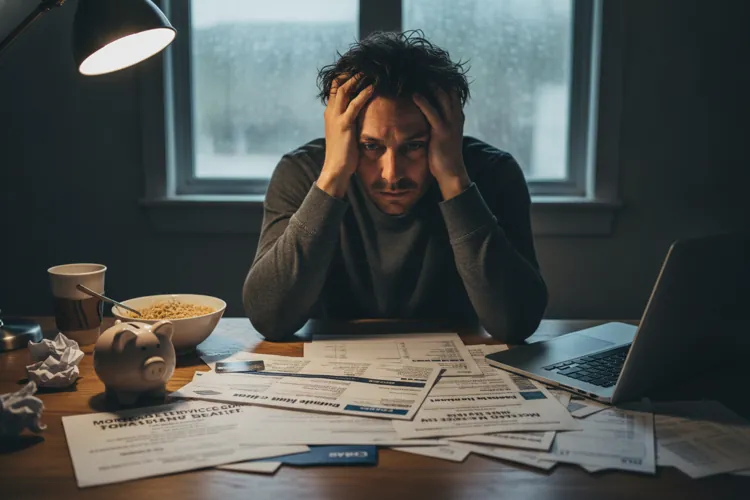

Rising costs are changing how Americans cope with stress, with 42% saying they've relied more heavily on stress-relief habits or activities as living expenses increase.
Younger Americans are feeling the pressure particularly strongly, with 59% of Gen Z respondents saying rising costs have pushed them toward coping behaviors, compared with 23% of baby boomers.
Financial strain can make both coping habits and professional help harder to manage, with 20% delaying or skipping therapy because of cost and 62% sacrificing other expenses to maintain their stress-relief habits.
When money is tight, the stress can affect more than just a household budget. A new study from Drug Rehab USA finds that rising living costs are also influencing how Americans cope with that stress, with many turning to habits like drinking, cannabis use, or nicotine for relief.
ConsumerAffairs spoke with Andrew McKenna, JD, an expert author and editor at Drug Rehab USA, who explained that the financial pressure can create a difficult cycle, particularly when people rely on coping habits that can become harder to control over time.
Methodology
Drug Rehab USA surveyed 1,200 U.S. adults through an online Pollfish poll about financial stress, coping behaviors, changes in spending and debt, and whether people substituted coping habits for professional support.
The results were analyzed by generation, income level, and gender. The survey categorized respondents as low-income if their household earned less than $50,000 annually, middle-income if they earned $50,000 to $100,000, and high-income if they earned more than $100,000. The findings are based on self-reported responses, and some questions allowed respondents to select more than one answer.
Key findings
The survey paints a picture of Americans trying to manage financial stress while still holding onto habits and activities that provide some relief.
Here’s a look at some of the key findings:
42% said rising living costs have pushed them to rely more heavily on coping habits or stress-relief activities.
Gen Z adults reported this most often at 59%, compared with 23% of baby boomers.
7% of respondents said they sought professional support when dealing with stress or emotional strain, while 53% said they used a coping behavior instead.
Alcohol was among the most common choices, followed by food delivery, gaming, cannabis and nicotine.
20% said they had delayed or skipped mental health therapy because of the cost.
43% said financial stress has made it more difficult to reduce, stop, or control a stress-relief habit.
62% said they had cut back somewhere else to continue spending on stress relief, including reducing grocery spending, delaying purchases, cutting back on savings or putting off healthcare.
The impact on younger people
McKenna explained why young people could be affected more than the older generation, and how this can impact them long-term.
“Younger adults are still building their financial footing, which can make rising costs and unexpected expenses harder to absorb,” he said. “When money is already tight and the future feels uncertain, it makes sense that people may gravitate toward things that offer some relief right now, even if they know they’re not helping in the long run.”
Access to mental healthcare
Getting access to proper mental healthcare is also a hurdle for many consumers across the country.
“Professional support is at odds with coping behaviors that can feel way more affordable, immediate, and always available, so even if your services aren’t as expensive, that’s not enough,” McKenna said.
“Another obstacle worth addressing is reducing the friction and difficulty that’s associated with getting professional help. It can be difficult to find a provider, understand the upfront costs, access virtual care, and receive support before someone reaches a tipping point and is in a full blown crisis situation.”
Start small and build
With 62% of respondents sacrificing essentials for stress-relief habits, McKenna recommends taking a look at your finances and evaluating what choices you’re making.
“When a habit starts taking money away from groceries, bills, or healthcare, it’s worth paying attention to what you’re actually getting from it and whether it’s still helping,” he said. “Instead of trying to cut it out overnight, find a cheaper way to decompress and start small, because even reducing the frequency can free up some breathing room in your budget.”
Another tip: Don’t make a budget so strict that you’re miserable trying to stick to it.
“Give yourself a set amount for the things you enjoy, take care of your bills first, and keep an eye on the little purchases that can add up before you realize it,” McKenna said. “Financial stress can become a vicious cycle when the things you turn to for relief end up putting even more pressure on your wallet. Getting out of that cycle isn’t just about cutting back, it’s also about having better ways to cope that people can actually afford and access.”