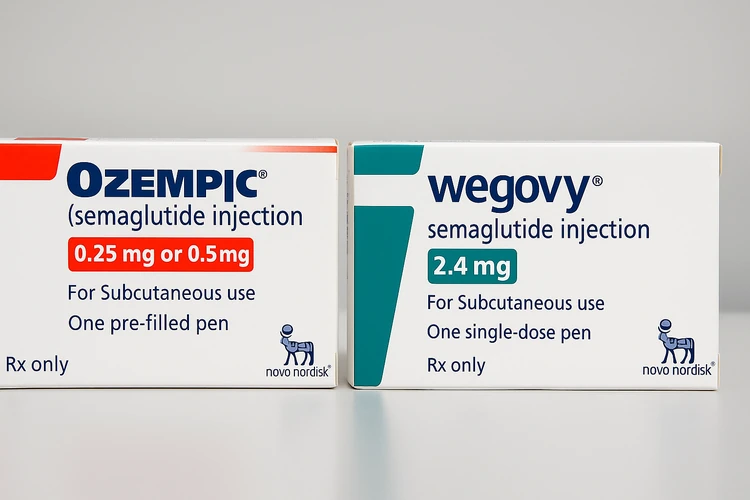

The Danish pharmaceutical giant Novo Nordisk has struck an agreement with the Centers for Medicare & Medicaid Services (CMS) to set a negotiated price for its blockbuster drug ingredient Semaglutide.
The deal will apply under the U.S. Medicare prescription drug program and comes under the price-negotiation framework created by the Inflation Reduction Act.
For consumers, this means that when the new price takes effect in 2027 under the current schedule, Medicare beneficiaries using Ozempic, Wegovy or other semaglutide-based medications may see improved access and potentially lower out-of-pocket costs.
Novo Nordisk has reached an agreement with the U.S. government for the negotiated price of its popular weight loss drugs, such as Ozempic and Wegovy, that contain the active ingredient semaglutide.
The drugs, approved for type 2 diabetes and weight loss, are expensive – in some cases more than $1,000 a month.
Because of its popularity and high cost, Medicare Part D flagged semaglutide for negotiations under the Inflation Reduction Act’s drug-pricing provisions.
CMS indicated that for negotiation purposes, all formulations of semaglutide – Ozempic, Wegovy, the oral form Rybelsus – would be treated as a single product based on the active ingredient (“active moiety”) concept.
What the deal means for consumers
Better bargaining power: Because Medicare now has the authority to negotiate with manufacturers, medications like semaglutide may be priced more affordably (at least for Medicare beneficiaries) than the original list price.
Access issues to follow: If you’re on Medicare and your doctor prescribes Wegovy or Ozempic, this deal could help reduce cost barriers, but only if your plan covers the medication for your indication and if your prescription aligns with eligibility rules.
Plan design still matters: Even with a lower negotiated price, how much you end up paying depends on your Part D plan’s formulary, tier placement, co-pays/coinsurance, and whether your indication is covered (for example, Medicare historically has had limitations around covering weight-loss drugs under certain conditions).
Timing is important: The new price is scheduled to take effect in 2027 under the current guidance. This means that until then, you may still face higher prevailing list prices (or coverage restrictions) and savings may be limited to whatever manufacturer and insurer discounts exist today.
Watch for ripple effects: A negotiated price sets a benchmark. That may influence how private insurers, other federal/state programs, or pharmacies set their pricing or negotiation strategies for semaglutide. Over time, this could affect cash-pay patients, coverage for non-Medicare populations, and competition.
Why the company agreed and what it signals
From Novo Nordisk’s perspective this deal offered a path to stability. By agreeing now, the company may be managing risk: unpredictable policy outcomes, potential tax/penalties for non-participation, or delay in market access issues.
It also signals that even high-demand blockbuster drugs aren’t immune to policy pressure and public scrutiny over drug pricing. For consumers, this shift may reflect a growing emphasis on affordability and access—especially for treatments that millions rely on.
For patients and advocacy groups, this is a win in principle: a major manufacturer agreeing to work within the Medicare negotiation framework may help reduce one major barrier – cost. But it’s not a guarantee of low cost yet, and you’ll still need to engage proactively. Patients should consult their doctor, check plan coverage and ask about generics/alternatives and manufacturer assistance programs.