
Has the U.S. Department of Agriculture flipped everything you thought you knew about nutrition on its head?
At first glance, the newly released dietary guidelines featuring a new food pyramid may seem like a protein-first approach to eating well.
However, registered dieticians and public health experts say the basics are largely the same as the advice author Michael Pollan shared in his book Food Rules.
The U.S. has flipped the food pyramid, and all of a sudden, protein is having a moment. From protein-fortified cereals and snack bars, to high-protein coffee drinks and even soda, grocery store shelves reflect America’s growing fascination with the macronutrient.
Social media influencers tout high-protein meal plans for weight loss, muscle gain, and metabolic health. And now, updated federal dietary guidelines appear to reinforce the trend, raising the recommended daily protein intake from 0.8 grams per kilogram of body weight to between 1.2 and 1.6 grams per kilogram.
But nutrition experts caution against mistaking the shift for a green light to load up on steak and cheese.
“The increase in protein recommendations doesn’t mean we’ve abandoned everything we know about healthy eating,” said Dr. Susan Veldheer, associate professor of family and community medicine and public health sciences at Penn State College of Medicine.
“The guidelines still limit saturated fats to 10% of daily calories, still recommend five servings of fruits and vegetables each day, and emphasize whole grains.”
Eating better-quality food
In fact, she says, the new pyramid isn’t about eating more protein so much as it’s about eating better-quality foods — especially whole foods — while minimizing ultra-processed products.
Ultra-processed foods — industrially manufactured products made mostly from refined ingredients and additives — include sodas, chips, cookies, candy, lunch meats, and frozen meals. Many are now marketed as high-protein options.
But Americans already exceed recommended limits for saturated fat, Veldheer says, meaning red meat and full-fat dairy can’t be the only answers.
“You need to find protein sources that are leaner and lower in saturated fat or plant-based,” she said. “This is particularly important if you are concerned about heart health, managing diabetes, or trying to lose or maintain weight — which most people are.”
Plants are important
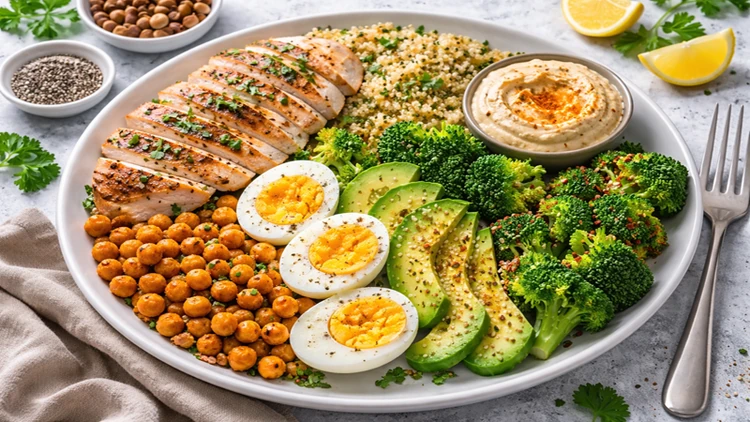
That’s where beans, lentils, chickpeas, nuts, quinoa and soy come in. Even leafy greens, whole grains, and fruit contain smaller amounts of protein that add up over the course of a day.
Veldheer likens amino acids — the building blocks of protein — to coins in a bank.
“It doesn’t really matter if some amino acids come from broccoli and whole grains and some from steak and yogurt,” she says. “When you eat steak and yogurt, you get all the different types of amino acids at once, but plants have these protein building blocks too.”
While the new guidelines increase general recommendations, experts stress they are just that — general.
“Individual protein needs vary greatly based on age, health status, medications people are on, and specific conditions they may have,” said Angelina Sickora, a registered dietician and clinical nutrition manager at Penn State Health St. Joseph Medical Center. “What works well for one person may not work well for everyone.”
Both Sickora and Veldheer say most Americans already get more than enough protein, even under the updated guidelines. The bigger issue, they say, is where that protein comes from.
Natural, whole-food sources are easier to digest and don’t come packaged with added sugars, sodium, or artificial ingredients.
The takeaway? Despite the buzz, the recently revised food pyramid doesn’t represent a radical shift. It reinforces a familiar message: prioritize whole foods, limit ultra-processed products, balance protein with fiber, and keep saturated fat in check. In other words, even in a protein-obsessed era, the foundation of healthy eating remains largely unchanged.