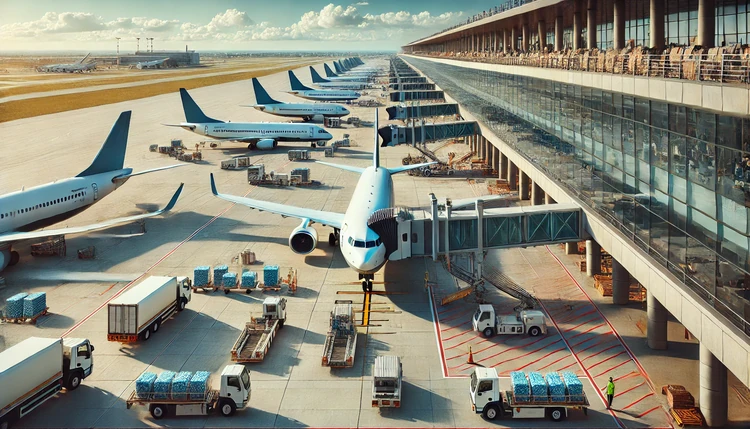

The government shutdown is over but it will take time for air travel to recover.
Industry leaders say operational stability will require better crew availability, modernized technology, and clearer communication with travelers.
Experts caution that even with improvements, aviation recovery will remain vulnerable to sudden weather events and peak-season demand.
President Trump has signed legislation reopening the federal government after the longest shutdown in history. Federal employees are returning to work, including air traffic controllers, who have been working without pay since Oct. 1.
But a note of caution to travelers: After weeks of heavy delays and scattered cancellations due to staffing shortages, airlines across the U.S. are still working to restore smooth operations.
What’s already improving
Once agencies are funded, frontline aviation personnel like air-traffic controllers and checkpoint staff can resume full schedules, jump-start training, and restore staffing levels. Some major airlines and regulators are already seeing signs of lower absenteeism among controllers and fewer cancellations tied to staffing stress.
Because flights were still operating – though at reduced efficiency – during the shutdown, there isn’t a complete system collapse to rebuild — just a recovery of capacity and smoothing of the backlog.
What still needs to happen, and why it takes time
Even once pay and staffing are restored, airlines must re-table their schedules, reposition crews and aircraft, and manage backlog connections. Analysts estimate seven to14 days or more for schedules to largely normalize.
The system already had underlying staffing and capacity constraints (especially in air-traffic control) that pre-dated this shutdown; those don’t vanish with a funding bill.
The holiday travel surge at Thanksgiving and weather factors will test the system’s resilience as it recovers, meaning disruptions may linger longer than in simpler scenarios.
Pre-existing issues
Even before the shutdown, airlines faced mounting challenges. While the causes vary by region and carrier, a familiar combination of weather challenges, staffing limitations, and aircraft bottlenecks has placed sustained pressure on the system.
Passengers have felt the effects at major hubs, where rolling delays have become a near-daily reality during peak travel periods. Aviation analysts say the issue is not one single breakdown but a series of interconnected vulnerabilities that leave airlines with little margin for error.