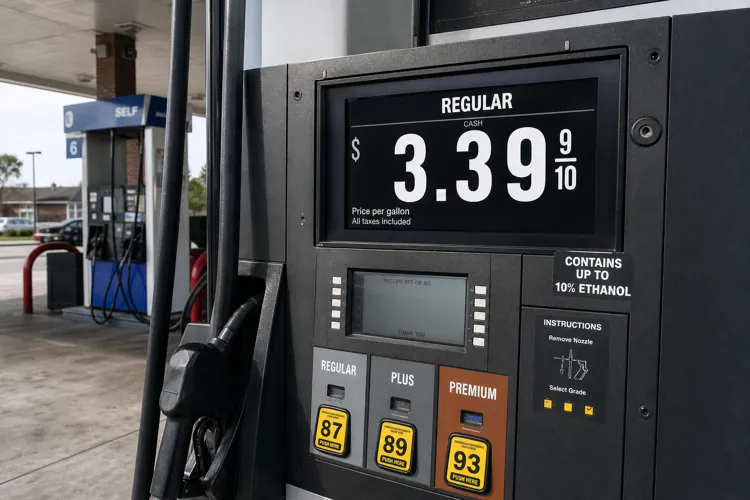

National average gasoline prices fell below $4 a gallon late Sunday for the first time since mid-April.
Oil prices dropped sharply after reports of an emerging U.S.-Iran agreement that could restore crude flows through the Strait of Hormuz.
Analysts say motorists could see additional price relief in the coming weeks, though risks remain if the agreement falters.
Gasoline prices had been declining for days in anticipation of an Iran deal. When one was announced, the price declines gained momentum.
According to GasBuddy, the national average price of gasoline fell 9.3 cents over the past week to $3.99 per gallon, marking the first time prices have dipped below the $4 threshold since mid-April. The decline comes as oil markets reacted positively to news that the United States and Iran are moving toward a deal that could ease tensions in the Middle East and restore disrupted energy supplies.
The agreement, while still preliminary, has fueled expectations that the Strait of Hormuz — a critical shipping route for roughly one-fifth of the world's oil supply — could reopen fully, allowing more crude oil to reach global markets. Oil prices responded immediately, with benchmark crude falling more than 5% Monday as traders priced in the prospect of increased supply.
"Gas prices are now declining in most states, and the national average has finally fallen below $4 per gallon," GasBuddy petroleum analyst Patrick De Haan said in the company's weekly market update.
The drop extends a multi-week trend that has already pushed gasoline prices lower across much of the country.
Turbulent spring
The recent decline follows a turbulent spring in which gasoline prices surged, as conflict involving Iran disrupted global oil supplies and threatened shipping through the Strait of Hormuz. At one point, the national average climbed above $4.50 per gallon before beginning a steady retreat as hopes for diplomacy emerged.
More relief could be ahead. Energy analysts say lower oil prices should eventually translate into cheaper gasoline, although consumers may need to wait a bit longer to see the full benefit.
While crude oil markets react almost instantly to geopolitical developments, gasoline prices typically take days or weeks to catch up, as existing inventories move through refineries and distribution networks. Experts say the restoration of shipping routes and oil production will gradually improve supply conditions throughout the summer.
Some analysts believe the national average could fall into the upper-$3 range within the next two weeks if crude prices remain near current levels. However, the pace of decline will vary by region depending on local fuel taxes, refinery capacity, and transportation costs.
Risks remain
Despite the optimism, analysts caution that the situation remains fragile. Details of the U.S.-Iran agreement are still being finalized, and unresolved issues — including future security arrangements and broader diplomatic negotiations — could create renewed volatility in energy markets.
GasBuddy has previously warned that while prices have been falling, relief could prove temporary if geopolitical tensions flare again or if oil supply disruptions re-emerge. AAA has likewise noted that crude prices remain highly sensitive to developments in the Middle East.
Motorists are benefiting from the market's belief that the worst of the energy shock may be over. With oil prices at their lowest levels in months and gasoline averaging less than $4 per gallon nationwide, the outlook for summer driving costs appears considerably brighter than it did just a few weeks ago. But that all depends on the next few days.