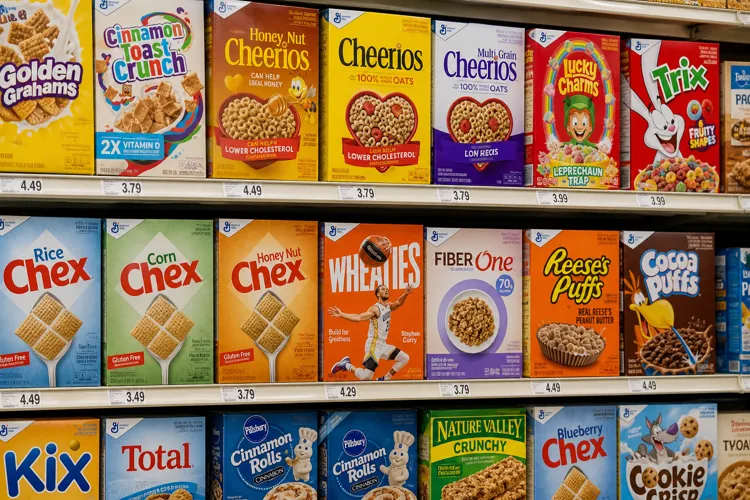

General Mills says all of its cereals sold in the U.S., including Lucky Charms and Trix, are now made without certified colors.
The company met the goal on schedule after removing certified colors from all of its foods supplied to K-12 schools earlier this year.
About 90% of General Mills’ U.S. retail products have now made the transition, with fruit snacks and baking products next in line.
General Mills has completed the removal of certified colors from its entire U.S. cereal portfolio, changing the recipes of some of the most colorful products in the breakfast aisle.
The company said Wednesday that all its cereals sold in the United States — including Lucky Charms and Trix — are now made without the synthetic dyes subject to Food and Drug Administration (FDA) batch certification.
“As the leader in cereal, General Mills is focused on giving people what they are looking for from the brands they know and love,” Bethany Quam, president of Big G Cereal at General Mills, said in the company’s announcement.
Quam said the reformulations are intended to meet changing consumer preferences while preserving taste, quality, and value. The FDA encourages manufacturers to eliminate six petroleum-based dyes by the end of 2027.
The company did not identify all the replacement ingredients used in the reformulated cereals in its announcement. Packaging shown by General Mills states that the cereals now contain “colors from natural sources.” Consumers who want to know what is used in a particular product should check its current ingredient label because older packages may remain on store shelves during the transition.
What are certified colors?
“Certified colors” is a regulatory term generally covering synthetic dyes and pigments that must undergo FDA batch testing before manufacturers may use them. Common examples include Red 40, Yellow 5, Yellow 6, Blue 1, and Blue 2.
Certification is intended to verify that each batch meets federal identity and purity requirements. The term does not mean that natural color additives are unregulated; the FDA must also authorize those ingredients for their intended uses.
The agency says most children do not experience adverse effects from approved color additives, although evidence suggests that certain children may be sensitive to them. Research into possible behavioral effects continues, according to the FDA.
The cereal changes come amid a broader government and industry effort to move away from petroleum-based synthetic dyes. In 2025, the Department of Health and Human Services and FDA announced plans to work with manufacturers to phase out several such dyes and expand the availability of alternatives from other sources.
A wider change is underway
General Mills announced its color-removal goals in June 2025. It completed the first major step in March 2026, when it said all foods it supplies to K-12 schools were being made without certified colors.
Completion of the cereal overhaul brings the company closer to its larger goal of removing certified colors from its full U.S. retail portfolio by the end of 2027.
General Mills said 90% of that portfolio has now completed the transition. Remaining categories include fruit snacks and baking products.
The food maker is also expanding its selection of products with more protein, fiber, and familiar ingredients. General Mills said it plans to introduce more than twice as many products reflecting changing nutrition preferences during the current fiscal year as it did two years ago.
For shoppers, the most visible difference could be in brightly colored cereals. The company’s announcement emphasizes that the products will continue to offer familiar taste and quality, but it does not promise that their appearance will be identical to the previous versions.