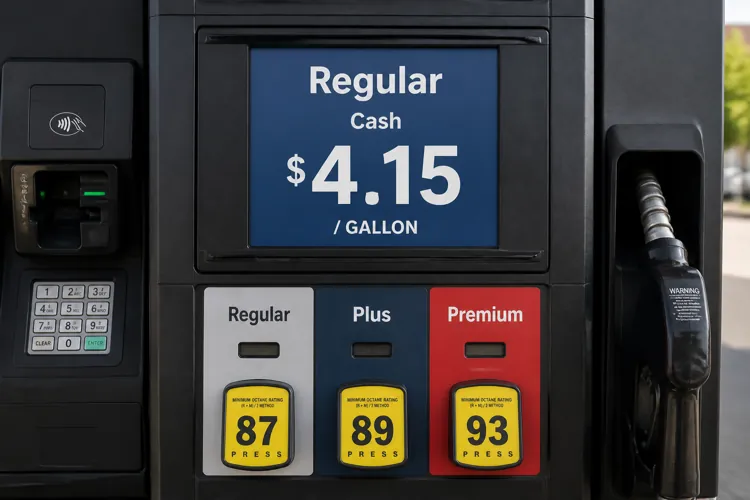

The national average price of regular gasoline reached about $4.15 a gallon on Labor Day, the highest price ever recorded for the holiday.
Drivers paid nearly $1 a gallon more than a year ago, largely because the conflict with Iran and disruptions in the Strait of Hormuz have pushed crude oil prices higher.
Some relief could arrive this fall as driving demand declines and cheaper winter-blend gasoline returns, but geopolitical and refinery risks could keep prices elevated.
Americans returning from Labor Day trips encountered a painful reminder at the gas pump: The unofficial end of summer brought the highest gasoline prices ever recorded for the holiday.
AAA reported the national average for regular gasoline at approximately $4.15 a gallon on Labor Day, up from about $3.19 a gallon a year earlier. The previous Labor Day record was about $3.82 a gallon, set in 2012.
While gasoline remains below its all-time national record of roughly $5.02 a gallon reached in June 2022, AAA said this was the first Labor Day when the national average topped $4.
The increase has been particularly noticeable because gasoline normally becomes cheaper as summer winds down. Demand falls after the summer vacation season, and refiners eventually switch from more expensive summer-grade gasoline to cheaper winter blends.
This year, however, those seasonal forces have been overwhelmed by higher oil prices.
The Iran conflict is driving prices
The biggest factor is the continuing conflict involving Iran and the disruption of oil shipments through the Strait of Hormuz, one of the world's most important oil transportation routes.
Crude oil prices have climbed back into the $90-a-barrel range as traders worry about supplies. Since crude oil represents the largest component of the retail price of gasoline, higher crude costs generally work their way quickly to consumers at the pump.
Gasoline inventories have also tightened. The Energy Information Administration (EIA) reported that U.S. gasoline supplies recently declined to 205.7 million barrels, even as gasoline demand slipped to 8.92 million barrels a day.
Meanwhile, U.S. refineries have been running close to their limits. Reuters reported refinery utilization at about 98%, leaving relatively little capacity to quickly increase fuel production if supplies are disrupted.
A nearly $1 a gallon increase
For consumers, the year-over-year comparison is significant. AAA's national average just before Labor Day was $4.14, compared with $3.19 at the same time last year.
For a driver filling a 15-gallon tank, that difference works out to roughly $14 more per fill-up.
And prices vary widely depending on location. AAA reported averages of $5.78 in California, $5.47 in Washington, and $5.41 in Hawaii heading into the holiday. Indiana had the nation's lowest average at $3.44, followed by Texas at $3.69.
Consumers could also feel higher energy costs even if they don't drive very much.
Diesel prices reached a record $5.85 a gallon heading into Labor Day and moved even higher on the holiday. Since diesel powers much of the nation's trucking and freight system, sustained high prices can increase transportation costs for groceries, merchandise, and package deliveries.
When could prices come down?
There are reasons to think motorists could see some relief this fall.
Gasoline demand normally drops after Labor Day, and the transition to cheaper winter-grade fuel tends to put downward pressure on prices. Energy Secretary Chris Wright also said gasoline futures suggest prices could be about 35 cents a gallon lower by November.
But that forecast comes with a large caveat.
Continued disruption in the Strait of Hormuz, further escalation in the Middle East, refinery problems, or a major Gulf Coast hurricane could keep gasoline prices elevated or send them higher again.
That means the normal post-Labor Day decline in gasoline prices may depend less on Americans driving fewer miles this year and more on what happens thousands of miles away in global oil markets.