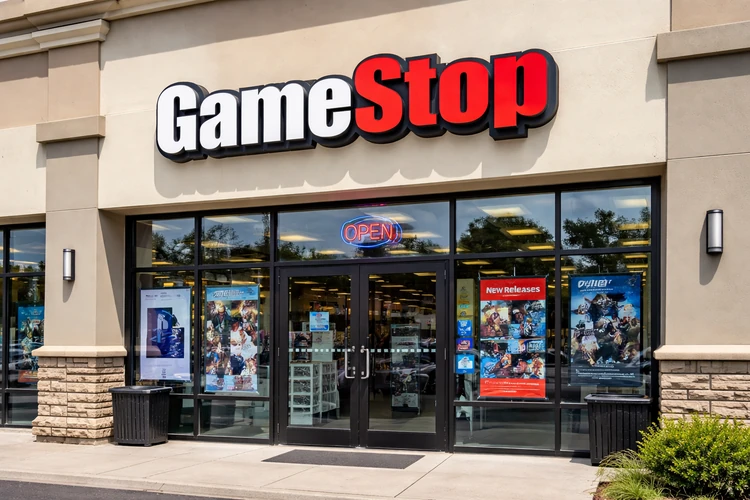

GameStop says it plans to close roughly 400 retail locations as part of a broad restructuring effort
The move reflects ongoing shifts toward digital game sales and cost-cutting across brick-and-mortar retail
Employees and local communities are bracing for the impact as the company evaluates its physical footprint
GameStop, which became a meme stock during the early days of the COVID-19 pandemic, has announced plans to close approximately 400 retail stores, marking one of the most significant contractions in the video game retailer’s long and turbulent history.
The closures are expected to take place over the coming months as the company works to streamline operations and adapt to changing consumer habits.
The Texas-based company has struggled for years with declining in-store traffic as gamers increasingly buy digital downloads, subscribe to cloud-based services, or purchase hardware online. While GameStop gained renewed public attention in recent years due to dramatic stock market activity, its core retail business has continued to face structural challenges.
In a statement, the company said the planned closures are intended to “optimize the store portfolio” and focus resources on locations that remain profitable. GameStop did not immediately release a full list of affected stores, noting that decisions are being made based on lease terms, local performance, and market conditions.
Pressure on specialty retailers
Industry analysts say the move underscores the pressure facing specialty retailers that rely heavily on physical sales. “This isn’t just about GameStop,” said one retail analyst. “It’s a reflection of how quickly digital distribution has reshaped the video game industry.”
For employees, the announcement brings uncertainty. Store closures typically result in layoffs, though GameStop said it is exploring opportunities to relocate some workers to nearby locations where possible. Labor advocates have called on the company to provide clear timelines and support for affected staff.
Despite the cutbacks, GameStop has said it remains committed to maintaining a physical retail presence, particularly for collectibles, hardware, and in-person customer engagement. Whether that strategy will be enough to stabilize the business remains an open question as the company navigates a rapidly evolving marketplace.
Stock surge
GameStop’s stock surged in 2020 and early 2021 not because the company’s business suddenly improved, but because of an unusual convergence of market mechanics, online investor behavior, and timing.
For years, hedge funds and other institutional investors had bet against GameStop, viewing its mall-based retail model as outdated in a world moving rapidly toward digital game downloads. By 2020, GameStop had one of the highest short interests in the U.S. market, meaning a large percentage of its shares had been borrowed and sold by investors expecting the price to fall.
Users on Reddit’s WallStreetBets forum began publicly arguing that GameStop was undervalued and, more importantly, that its extreme short interest created the conditions for a potential “short squeeze.” Many individual investors started buying the stock and call options, coordinating their enthusiasm through social media posts and memes.
A short squeeze and options trading amplified gains
As the stock price rose, short sellers were forced to buy shares to cover their positions, which pushed the price even higher. At the same time, aggressive options buying triggered a “gamma squeeze,” requiring market makers to buy additional shares to hedge their exposure. These feedback loops sent the stock soaring despite weak fundamentals.
During the COVID-19 pandemic, stimulus checks, low interest rates, and stay-at-home orders brought a surge of new retail traders into the market. Easy-to-use trading apps lowered barriers to entry, fueling speculative trading and rapid price swings.
The rally also gained momentum from hopes that activist investor Ryan Cohen could help reinvent GameStop into a more e-commerce–focused business. While those plans were still uncertain at the time, the story helped sustain enthusiasm during the peak of the rally.