

$10.5 million settlement resolves allegations of false wealth promises
Defendants permanently banned from selling trading-training programs
Regulators say scheme preyed on young people with flashy social media marketing
Federal regulators have shut down two of the top promoters behind the IM Mastery scheme, ordering them to pay a combined $10.5 million and permanently banning them from pushing financial training or multi-level-marketing programs that mislead consumers.
The Federal Trade Commission and the State of Nevada said Alex Morton and Brandon Boyd used false promises of quick wealth to persuade people—mostly young adults—to spend money on trading “education” and recruitment-based business ventures. The scheme, operating under names such as IM Mastery Academy, IM Academy, iMarketsLive and IYOVIA, relied on Instagram-style marketing showing exotic cars, luxury trips and high-end lifestyles supposedly funded by trading profits.
In reality, regulators said, those promises were baseless. Boyd, who earned nearly $6 million from the operation despite having no trading credentials, was promoted as a “Master Instructor” in recruiting videos. Morton, a top executive, allegedly coached sales leaders on how to post deceptive income claims online in ways that avoided company oversight.
“These kinds of scams exploit people’s hopes of financial independence,” the FTC said in announcing the settlement. “Instead, they leave consumers with empty wallets while enriching a handful of insiders.”
$10 million fine for Morton
Under the proposed orders, Morton must pay $10 million and Boyd $500,000; both could owe more if they misrepresented their finances. Beyond the financial penalties, both men are permanently barred from promoting trading-training programs, making misleading earnings claims, or deceiving consumers through subscription “negative option” billing practices.
The case is part of a broader enforcement push. Just last month, regulators obtained $2.5 million from other IM Mastery promoters and secured an injunction to halt the companies’ operations.
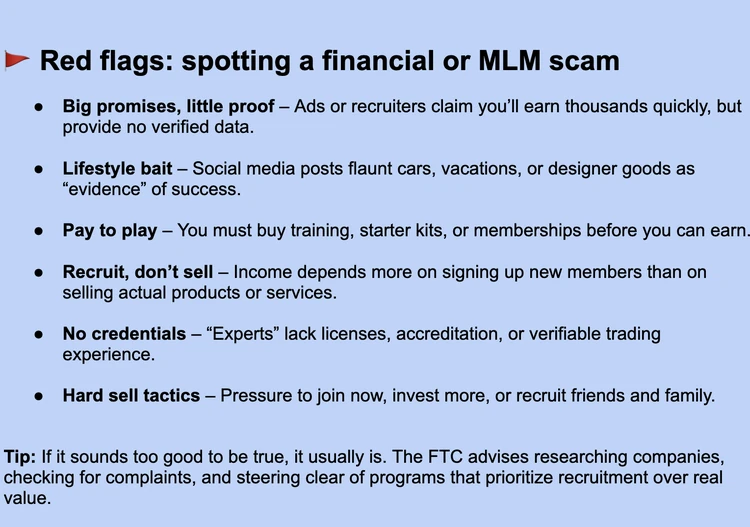
Consumer takeaway: The FTC urges people to be skeptical of online programs that promise quick riches from trading or recruiting others. Signs of a scam include high upfront fees, pressure to recruit friends or family, and social media posts showing extravagant lifestyles.