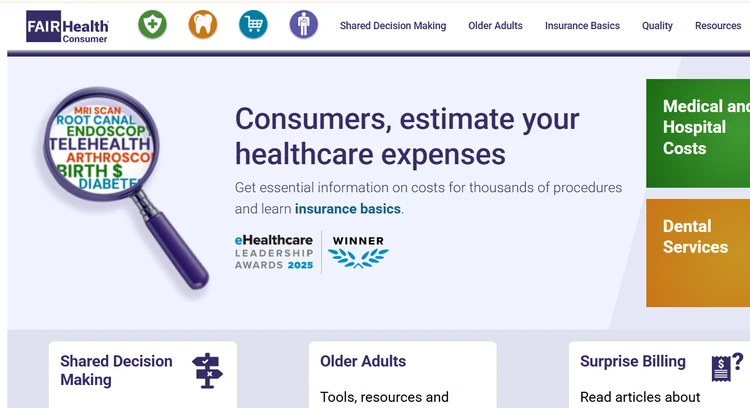

FAIR Health has added interactive sliders to its consumer website, allowing users to view a wider range of healthcare procedure costs.
The new feature displays prices from the 20th to 90th percentile, including both provider charges and insurer-negotiated rates.
The update aims to make cost data more accessible and easier for consumers to interpret when planning care.
Hospitals don’t always make it easy to compare prices for procedures. A mammogram may cost one price at one facility but cost a lot less at a facility six miles away. But how would you know?
FAIR Health has rolled out enhancements to its free consumer website designed to give patients a clearer picture of what medical procedures may cost. The nonprofit said the updates add interactive sliders to its medical, dental, and hospital cost lookup tools, enabling users to see a broader range of prices for specific procedures in their local area.
By adjusting the sliders, consumers can now view typical costs spanning from the 20th to the 90th percentile, offering insight into both lower and higher-end charges providers may bill, as well as insurer-negotiated in-network rates. Average costs are also displayed alongside the range.
A clearer picture
Previously, this percentile-based data was available but less prominently displayed. The new design places the information directly on the main results page, making it easier for users to understand the variability in healthcare pricing, according to FAIR Health.
The enhancements build on FAIR Health Consumer, a longstanding online tool that allows users to estimate healthcare expenses and compare costs by procedure and location. The platform draws on one of the nation’s largest repositories of healthcare claims data to provide estimates of what providers charge and what insurers typically pay.
Healthcare prices can vary widely depending on provider, location, and insurance arrangements, and FAIR Health said the new interface is intended to better reflect that range. By presenting costs across percentiles, the tool aims to give consumers a more realistic sense of what they might encounter when seeking care.
The organization, an independent nonprofit focused on healthcare cost transparency, said the update is part of its broader mission to help consumers make informed decisions and better plan for medical expenses.