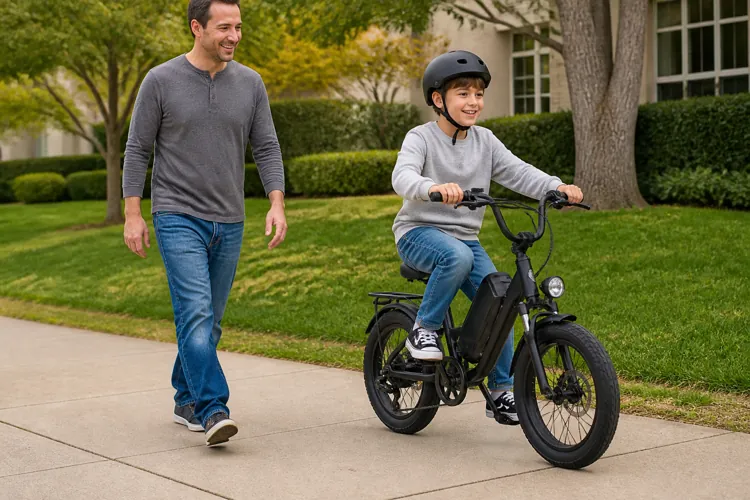

Children injured on e-bikes were nearly three times more likely to need surgery or hospitalization than those hurt on e-scooters.
Researchers found that pediatric injuries involving both types of devices nearly quadrupled between 2019 and 2025.
Speed, acceleration, and the weight of e-bikes may help explain why crashes involving these devices tend to cause more severe injuries.
Electric bikes and scooters have become increasingly common among young riders, but new research suggests the two devices may carry different risks when accidents happen.
A study from Children’s Hospital Los Angeles (CHLA) found that children injured while riding e-bikes were more likely to experience serious injuries than those involved in e-scooter accidents. The findings highlight the importance of understanding the potential dangers associated with each type of device, particularly as more young people use them.
“As these devices have become more common, we are seeing more injuries,” researcher Bianca Edison, MD, MS, FAAP, FAMSSM, said in a news release. “We wanted to better understand what those injuries looked like and put data behind what we were seeing.”
How researchers studied e-bike and scooter injuries
To examine the differences, researchers analyzed 379 injuries involving children treated at CHLA between 2019 and 2025. The team compared injuries associated with electric bikes with those involving electric scooters to understand how often riders experienced serious outcomes.
The researchers also examined changes in injury cases over time and considered whether young riders were following California’s age and helmet laws.
The total number of injuries involving both types of devices climbed from 33 cases in 2019 to 124 in 2025, nearly quadrupling over the six-year period. Although e-scooters accounted for more than three-quarters of all injuries in the study, e-bike injuries represented an increasing share of cases.
The study was designed to compare injury patterns, not establish exactly why e-bike crashes tend to result in more severe injuries.
What the findings mean for families
The differences in outcomes were notable. Nearly half of the children injured on e-bikes sustained fractures, compared with 36% of those injured on e-scooters. More than one in four e-bike riders required surgery or hospitalization, compared with one in 10 e-scooter riders.
Potentially life-threatening injuries were also more common among e-bike riders, affecting nearly 9% of that group, compared with 2.8% of e-scooter riders.
Researchers suggested that speed could be one explanation. E-bikes can travel faster and accelerate more quickly than e-scooters. They are also heavier than traditional bicycles, and riders may travel longer distances on them, increasing their exposure to traffic and other hazards.
More than half of the injured riders in both groups were violating California age or helmet laws. However, following those laws alone was not associated with less-severe injuries in this study.
For families, the findings underscore the importance of considering the specific risks of each device rather than treating e-bikes and e-scooters as interchangeable.
“Preventing these injuries will require safety strategies that account for the different risks associated with each type of device, rather than a one-size-fits-all approach,” Dr. Edison explains. “Our hope is that these findings can lead to more proactive ways to keep young people and our communities safe.”