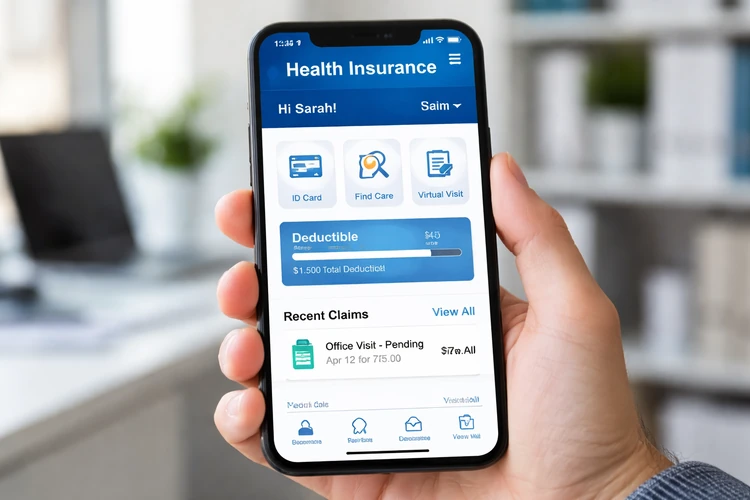

- Mobile app use among commercial health plan members rose to 38%, while Medicare Advantage usage fell to 20%.
Customer satisfaction increases significantly with familiarity and long-term use of digital tools.
High-quality digital experiences strongly drive member loyalty and continued app usage.
Nearly every industry offers an app to deal with customers, but some are more effective than others. The health insurance industry continues to develop digital tools, and a new survey shows customer satisfaction is growing.
But there is a caveat — customers must invest the time necessary to learn how to use them.
J.D. Power’s 2026 U.S. Healthcare Digital Experience Study found that repeated use of mobile apps and websites leads to a noticeably better overall customer experience, highlighting both progress and ongoing challenges for insurers trying to modernize digital engagement.
“Health care can be an incredibly complex world to navigate,” said Eric McCready, director of digital solutions at J.D. Power, noting that members approach digital tools with varying levels of comfort and a wide range of needs.
Adoption rises, but unevenly
Mobile app adoption is growing among commercially insured members, with 38% now using their plan’s app, up from 31% a year ago. However, adoption among Medicare Advantage members has slipped to 20%, continuing a decline after a pandemic-era surge.
The divergence underscores a key challenge for insurers: reaching older or less digitally engaged populations, even as younger or employer-based members increasingly rely on mobile tools.
Familiarity drives satisfaction
The study shows a strong link between experience and satisfaction. Members who have used their health plan’s digital tools for longer periods report significantly higher satisfaction scores.
For example, Medicare Advantage members with more than five years of tenure scored their app experience 102 points higher (on a 1,000-point scale) than those with less than one year.
This suggests that onboarding and education may be critical weak points. Many users do not immediately benefit from digital tools, but satisfaction improves once they become familiar with features and navigation.
Digital performance also plays a major role in customer retention. Among members who rate their digital experience highly (scores of 800 or above), roughly three-quarters say they “definitely will” continue using their plan’s app.
By contrast, poor digital experiences significantly reduce the likelihood of continued use, signaling a direct connection between usability and long-term engagement.
Who’s the best?
Cigna Healthcare ranked highest in digital experience among commercial health plans, while UPMC Health Plan led in the Medicare Advantage category.
The study — based on responses from more than 7,600 members and conducted in late 2025 — evaluates digital performance across five key areas: visual appeal, navigation, information/content, speed, and telehealth.
For insurers, consumers are sending a clear message. Investing in simpler design, stronger onboarding, and targeted education could be just as important as adding new digital features.