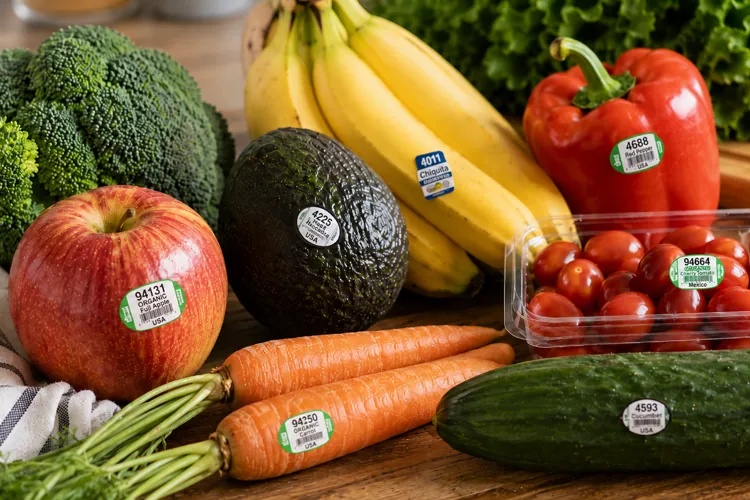

Four digits generally mean conventional: PLU codes in the 3000 and 4000 series are used for conventionally grown produce.
Shopping organic? Look for a 9: Five-digit PLU codes beginning with 9 identify organic produce, so a conventional 4011 banana becomes 94011 when organic.
Forget the old “8 means GMO” trick: That system was never implemented and is now obsolete, so an 8 at the beginning does not mean it's genetically modified.
You've probably peeled hundreds of those annoying little stickers off apples, bananas, and avocados without giving the numbers on them a second thought.
Turns out, they're worth a closer look.
They're called Price Look-Up, or PLU, codes, and retailers have been using them since 1990 to identify bulk produce at checkout and keep track of inventory. Today, more than 1,500 PLU codes have been assigned to fresh fruits, vegetables, and related items such as herbs and nuts.
And while they're primarily designed for retailers rather than shoppers, you can learn something from them.
You just need to know which produce-sticker advice is legitimate — and which is an outdated internet myth.
The produce-sticker code cheat sheet
When it comes to produce stickers, fortunately, you don't need to memorize much.
Four digits: Conventionally grown produce.
Five digits beginning with a 9: Organically-grown produce.
Five digits beginning with an 8: This used to mean that the produce was genetically modified. But that is an old rule which is now obsolete (more on this below).
No sticker: Don't assume anything. PLU stickers are voluntary.
Knowing what these numbers mean can help you verify exactly what you're buying.
Let’s break it all down.
Four digits generally means conventional

The easiest code to recognize is a four-digit PLU.
According to the International Federation for Produce Standards (IFPS), conventional produce uses four-digit codes within the 3000 and 4000 series.
Don't try to decipher each individual digit. The numbers are assigned within those ranges and don't contain a hidden code where, say, a three means one growing method and a four means another. Instead, the entire number identifies attributes of that particular produce item, which can include its commodity, variety, and size.
One of the most familiar examples is the banana: 4011 is the standard PLU you'll commonly see on a conventionally grown banana.
But there's something those four digits don't tell you: whether pesticides were used.
You'll sometimes see claims online that a four-digit PLU means the produce was "definitely sprayed with pesticides." That's simply not true. Regardless of the PLU, though, it’s smart to wash fresh produce before eating it.
Shopping organic? Look for a 9 at the beginning

Here's the produce-sticker trick that really does work.
When a standard four-digit PLU gets a 9 added to the front, it identifies the organic version of that produce.
So that conventional banana coded 4011 becomes 94011 when it's organic. IFPS confirms that five-digit organic PLUs use the 9 prefix.
This can be especially useful at checkout. If you're paying the higher price for organic apples or avocados, take a quick look at the sticker and make sure the PLU begins with 9. Conversely, if you're buying conventional produce, don't accidentally select the more expensive organic version when using self-checkout.
Pro tip: When buying organic produce, don't rely solely on a loose sticker. Look for the USDA Organic label or store signage as well. USDA organic claims are regulated and must meet federal certification requirements.
It’s time to forget the old '8 means GMO' trick
This is where produce-sticker advice gets messy.
For years, shoppers were told: 5 digits beginning with 8 = genetically modified produce.
You'll still find that claim all over the internet, but it's outdated.
While the 8 prefix was originally set up for genetically modified produce, the system was never actually implemented that way. IFPS subsequently used the 83000 and 84000 ranges to create additional PLU numbers for conventionally grown produce.
In other words, an 8 at the beginning of a PLU does not mean GMO. That's important because shoppers who rely on that old trick could easily come to the wrong conclusion.
So how can you identify bioengineered food?
You'll need to start looking beyond the PLU sticker.
The U.S. now has a National Bioengineered Food Disclosure Standard requiring manufacturers, importers, and certain retailers to disclose foods meeting the federal definition of bioengineered.
Depending on the product, that information can appear as text saying "Bioengineered Food," a USDA-approved symbol, a digital link, or text-message instructions. For bulk foods, disclosure can appear on signage near the product.
USDA's current list of foods available in bioengineered forms includes certain apples, corn, papaya, potatoes, pink-flesh pineapple, and summer squash, among others.
So if avoiding bioengineered produce matters to you, USDA Organic certification is far more useful than hunting for an 8 on a fruit sticker.
Organic doesn't mean pesticide-free
Here's another misconception worth clearing up while we're decoding the produce aisle: "Organic" doesn't mean no pesticides were used.
USDA rules generally prohibit synthetic substances in organic crop production unless they're specifically allowed, while natural substances are generally permitted unless specifically prohibited.
But organic growers can use certain approved substances for pest and disease control when other methods aren't sufficient.
So don't treat that 9 prefix as a reason to skip washing your produce.
The Food and Drug Administration (FDA) recommends washing all fresh produce under running water, including organic produce and fruits and vegetables where you don't plan to eat the peel. Don't use soap, detergent, or commercial produce washes; FDA says they're unnecessary and can potentially leave substances behind that you don't want to consume.
The Environmental Protection Agency (EPA) also notes that running water helps remove dirt, bacteria, and some chemical traces, although washing won't remove every pesticide residue.
One last catch: the stickers aren't mandatory
Perhaps the biggest limitation of the whole PLU "hack" is that the system itself is voluntary.
IFPS says no government regulatory agency requires loose produce to carry a PLU sticker. Retailers and suppliers use the system largely because it makes checkout and inventory management easier.
And since the stickers are typically already attached when the produce arrives at the store, there's really no incentive for employees to spend time removing them.
If you're unsure whether something is organic or bioengineered, check the store's signage or packaging rather than trying to draw conclusions from a missing sticker.
What the stickers on your produce ACTUALLY mean