2024 Health Risks and Cancer

Article Image

Deadly skin cancer rates vary between men and women, study finds

Melanoma -- the deadliest form of skin cancer -- isn't an equal opportunity cancer. A new study points up some important differences, finding that melanoma rates vary significantly between men and women, with differences in age of onset and the location of the melanomas on the body.

The study, published in the Journal of Investigative Dermatology, analyzed over 40 years of melanoma data and found these differences across different populations.

“Invasive melanomas are potentially lethal cancers that are increasing rapidly in incidence. We need to understand how these cancers arise, and what drives their development, if we are to find better ways to prevent them," said David C. Whiteman of the University of Queensland, Brisbane, Australia.

"Studies like this one suggest that we may need to target our prevention efforts differently for men and women if we are to be effective in our attempts to control this cancer,” Whiteman said.

Key Findings

  • Age and Sex: Women are more likely to develop melanoma earlier in life (up to around 45 years old), while men have higher rates later in life (from 65 years and older).

  • Body Site: In women, melanomas occur most often on the limbs. In men, the trunk and head/neck are the most common locations.

  • Trends Over Time: Melanoma rates have increased in both sexes, but faster in women. Melanomas on the head and neck have steadily increased with age in both sexes.

Implications:

  • The study highlights the need to tailor melanoma prevention strategies differently for men and women.

  • Understanding the biological differences in how melanomas develop in different body sites could provide important clues about the causes of this cancer.

Most serious skin cancer

While not the most common skin cancer, melanoma is the deadliest, accounting for the majority of skin cancer deaths. It develops from melanocytes, the cells that produce melanin, the pigment that gives skin its color.

While it most commonly occurs on skin exposed to the sun, it can also develop in the eyes, mouth, intestines, and other areas. As the study noted, it is increasing in incidence, especially among women. 

As with many cancers, early detection is important and can significantly improve the chances of survival.  

People of all colors are vulnerable

People of all skin tones can get melanoma. It's a misconception that only white people are at risk.

While individuals with lighter skin tones are at a higher risk due to less melanin (the skin's natural protection from the sun), melanoma can still affect people of color, and it's often diagnosed at a later, more dangerous stage due to this misconception.

It's crucial for everyone, regardless of skin tone, to practice sun safety, get regular skin checks, and be aware of the signs of melanoma.

Rates vary by country

Not surprisingly, some countries have significantly higher rates of melanoma. 

Countries with the Highest Rates:

  • Australia and New Zealand consistently have the highest reported rates of melanoma globally.

  • Other countries with high rates include:

  • Denmark

  • Norway

  • The Netherlands

  • Switzerland

Factors contributing to high rates:

  • High UV radiation levels: Countries closer to the equator or with high altitude tend to have stronger UV radiation from the sun, increasing the risk of skin damage and melanoma. Australia and New Zealand, for example, have high UV levels.  

  • Predominantly fair-skinned populations: Populations with lighter skin tones are more susceptible to UV damage and melanoma.  

  • Outdoor lifestyle: Cultures that promote outdoor activities and sun exposure may have higher melanoma rates.

Melanoma treatment

Treatment for melanoma varies depending on the stage of the cancer and other factors, but common options include:

  • Surgery: This is the primary treatment for early-stage melanoma. It involves removing the cancerous tissue along with a margin of healthy skin.  

  • Immunotherapy: This helps the body's immune system fight cancer cells.  

  • Targeted Therapy: This uses drugs that target specific vulnerabilities in melanoma cells.  

  • Chemotherapy: This uses drugs to kill cancer cells, but it's generally less effective for melanoma than other treatment options.  

  • Radiation Therapy: This uses high-energy rays to destroy cancer cells. It's often used to treat melanoma that has spread to other parts of the body.  

Remember: Early detection is key in fighting melanoma. Regular self-exams and visits to a dermatologist for skin checks are crucial for identifying any suspicious moles or changes in your skin.  

---

Sources for this story include the Mayo Clinic, American Academy of Dermatology, Biomed Central and the American Cancer Society. 

Article Image

Cell phones cleared of brain cancer risk but heart disease is another matter

For years, there've been fears that frequent and longstanding use of cell phones posed a risk of brain cancer. Now, after decades of studies and disputed claims, the World Health Organization (WHO) says they don't. 

But don't rush to pick your phone up just yet. A new Canadian study finds that regular cell phone use is "positively associated" with heart disease, especially in smokers and patients with diabetes.

In the WHO review, researchers said that even though the phones are generally held next to the head, there was no evidence of increased risk of brain cancer in regular mobile phone users. The latest study is based on a large base of studies and could put to rest fears raised by earlier studies that seemed to suggest the possiblity of harm. 

The review considered more than 5,000 studies, of which 63, published between 1994 and 2022, were included in the final analysis. No association between mobile phone use and brain cancer, or any other head or neck cancer, was found.

Heart disease in phone users

The Canadian study, on the other hand, found evidence suggesting that radio frequencies emitted by mobile phones "cause dysregulation of the hypothalamic-pituitary-adrenal axis, inflammatory responses, and oxidative stress, and are therefore expected to affect a variety of organs such as the heart and blood vessels," according to Yanjun Zhang, MD, Division of Nephrology, Nanfang Hospital, Southern Medical University, Guangzhou, China

"However, whether mobile phone use is associated with the risk of cardiovascular diseases remains uncertain," Zhang added.

The large study included 444,027 individuals from the UK Biobank without a history of cardiovascular diseases who self-reported on the frequency of their mobile phone use from 2006 to 2010. Regular mobile phone use was defined as at least one call per week.

The association was partly attributed to poor sleep, psychological distress, and neuroticism

Using linked hospital and mortality records, the composite outcome of incident stroke, coronary heart disease, atrial fibrillation, and heart failure was ascertained over a median followup time of 12.3 years. Researchers also investigated the role of sleep patterns, psychological distress, and neuroticism.

So what's the message to consumers? As is so often the case, it may come down to using moderation in all things.

"Maintaining responsible mobile phone habits should be a valuable component of an all-encompassing approach to supporting cardiovascular health," said Nicholas Grubic of the Dalla Lana School of Public Health, University of Toronto, in an editorial accompanyiing the study. "Before diving into hours of mindless ’doom-scrolling’ on your smartphone today, consider redirecting this time toward a more heart-healthy activity."

Article Image

Commonly used flame retardant linked to cancer risk

Polybrominated diphenyl ethers (PBDEs) are a class of flame-retardant chemicals that can be found in thousands of consumer products. Everything from carpets, drapes, computers, and small appliances contain PBDEs. On top of that, they can get into the air, water, and soil. 

Now, a new study, for the first time, is linking exposure to these chemicals with a higher risk of cancer. PBDEs were found to increase the risk of all cancers and cancer-related mortality. 

“In this nationally representative cohort study, PBDE exposure was significantly associated with an increased risk of cancer mortality,” the researchers wrote. “Further studies are needed to replicate the findings and determine the underlying mechanisms.” 

What are the health risks? 

To better understand how PBDEs can impact health, the researchers analyzed data from people over the age of 20 who participated in the National Health and Nutrition Examination Survey from 2003 to 2004. The researchers analyzed the blood test results of the 1,100 participants to determine the levels of PBDE exposure.  

Ultimately, participants who had the greatest exposure to PBDE also had the highest risk of death from cancer. Compared to those with the lowest levels of PBDE, the researchers found that those with the highest serum PBDE levels had a 300% higher risk of death from cancer. 

The researchers also found that this statistic held up regardless of several factors, including age, race, sex, physical activity, diet quality or obesity status. It was unclear from the study if certain types of cancer carried a greater risk than others. 

'Major public health implications'

Greater exposure to the chemical was not linked with higher increases in death from any cause or cardiovascular-related death. 

“Our findings have major public health implications,” the researchers wrote. “Although PBDEs are mostly banned today under the Stockholm Convention on Persistent Organic Pollutants, their production and use are still ongoing in some regions. For example, only 13 states in the U.S. have applied limitations on using PBDEs in certain goods, but no federal restrictions are in place.” 

The researchers hope more research is done in this area to get a more in-depth understanding of how these chemicals are harmful to consumers’ health and longevity. 

Article Image

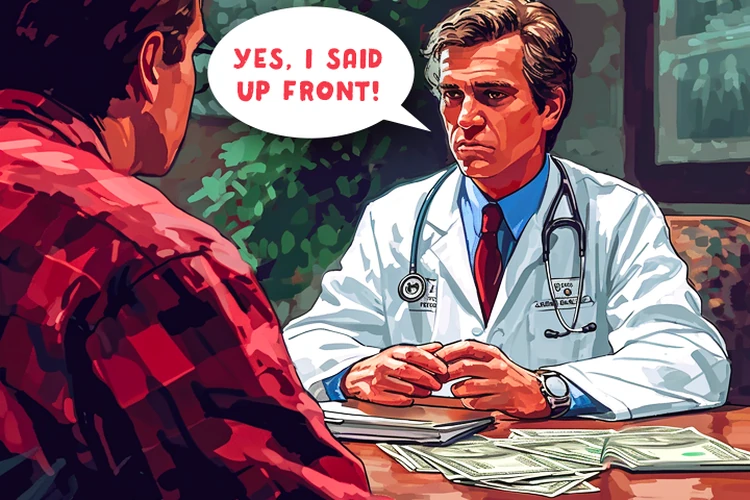
'This is a stick-up!' is the last thing you’d expect a doctor to say

Pretend you’re a cancer patient. You have health insurance and assume that when you show up for your next round of chemo, you’ll be taken care of.

Except this time, the typically nice person at the front desk tells you that unless you pay the entire cost of the procedure – $14,000 – up front, you should just turn around and go home because you’re not getting through any door to see any doctor to get any treatment.

As outlandish as a scenario like that seems, Marshall Allen, the author of, "Never Pay the First Bill: And Other Ways to Fight the Health Care System and Win,” says those nightmares happen far more often than they should.

“I’m hearing more and more about patients with health insurance arriving for appointments where they are told that they won't be treated until they have paid the full price out-of-pocket — including the insurance plan’s portion — before any claim is sent to their insurance plan,” Allen said. 

Your money or your life

Deb Ault, founder of Ault International Medical Management, doesn’t mince words when asked about these situations. She calls them real life “your money or your life” scenarios.

As Ault explained, the upfront payment demands run the gamut, depending on the type of service. If it’s a typical, “Hey, I can’t stop coughing” visit, it could be a couple of hundred dollars. If it’s surgery, then the upfront demand could be in the tens of thousands of dollars.

She said the sneaky part is that the medical providers usually don’t demand payment until the patient shows up for the appointment, so then they’re under pressure to pay up or pound sand.

Unethical, unreasonable, illegal? 

Allen says that the American healthcare system has a moral problem. “It exploits people’s sickness for profit. … It’s unethical to wait until a patient shows up for an appointment to demand full payment. It’s unreasonable to make the patient front the insurance company’s cost. It’s predatory and blocks patients from getting the care they need.”

But, Allen says the “pay up or go home” approach is not illegal in most cases.

“Clinicians are only required to provide emergency treatment to patients regardless of their ability to pay," Allen said. "If it’s a scheduled or elective appointment, the law doesn’t prohibit demanding payment up front.”

On the other hand, given the state of the economy and the cost of insurance, doctors have their reasons for asking to be paid upfront. Mostly because they’re trying to keep the lights on.

According to the Academy of Healthcare Revenue, if providers request payment at the time of service, they have a 70% chance of receiving it – but only 30% after a patient leaves the building. 

Unfortunately, the Consumer Financial Protection Bureau (CFPB) can’t do anything about this. At least not yet.

Since the CFPB regulates providers of consumer financial products and services, it only oversees the relationship between medical providers and patients when the medical provider also provides a consumer financial product or service.

However, Allen answered a reader’s question by saying “If this continues I do think it will need to be regulated. It also may be violating what's stated in the insurance plan documents, but those are not always adhered to and can be difficult to enforce.”

Five ways patients can protect themselves 

Allen laid out ways that any patient who’s forced into this situation can protect themselves, as well as what you can do if your medical provider demands payment in full when you show up. Here are five suggestions he has for anyone before they head off to see their doctor. 

“Know your health insurance plan. Understand what your plan covers and what it does not. Be clear about your out-of-pocket obligations,” he suggests.

“Find out if your plan prohibits a billing department demanding full payment upfront.”

Call your health plan’s “nurse navigator” – a person who helps a patient from their initial diagnosis to their end-of-life treatment –  if you have one. They can usually help you stay on a good and fair path without having to worry about the pitfalls and money monsters.

Share your complete health insurance information when you make the appointment. Ault suggests a) sending a photo of your insurance card so there’s no question, and b) asking whether you need to bring any money to the appointment. 

Confirm the financial details in advance with your health plan. "Call your health plan and make sure the services are in-network and covered. Know in advance whether you’ll be asked to pay anything upfront,” Allen said.

Have a Plan B – a back-up. As ConsumerAffairs found out recently, there is an app that can give you prices for procedures at many of the doctors offices where you live. Ault said patients need to keep their options open – going as far as changing doctors, even if they’ve been going to the same doctor for a long time. 

And if things go wrong?

You have to be prepared if your best-laid plans go awry, Allen says. And when that happens, his first line of defense for people who are on an employer-sponsored plan is to call their HR person.

“They might be able to enlist your benefits broker for help, or get you connected to some other resource,” he said.

But whatever you do, don’t take the bait if the physician offers you a payment, loan, or credit plan. Be cautious about entering into a payment plan.

If you agree to take them up on that offer, Ault says it's tough to get it corrected on the back end and the interest rates on the credit offers are through the roof – like 26.99% compared to 16% for a typical credit card, warns the CFPB.