2025 Car Ownership and Maintenance

Article Image

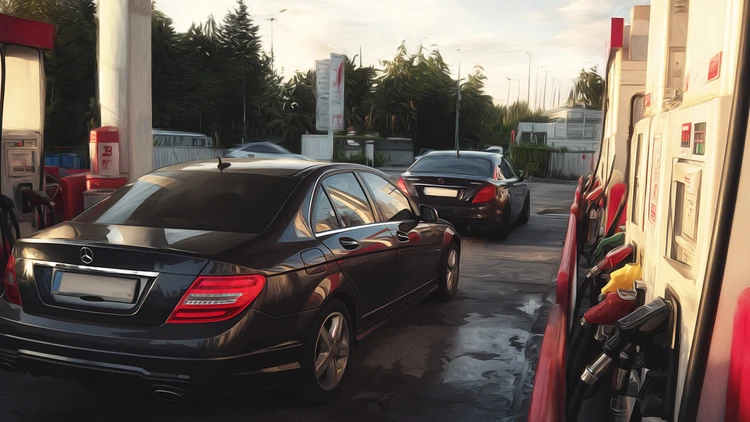
Gas prices hold steady as summer drifts by

  • National average for gas sits at $3.16, holding flat for the week and down sharply from a year ago.

  • Stable crude oil prices and rising gasoline supply keep pump prices subdued.

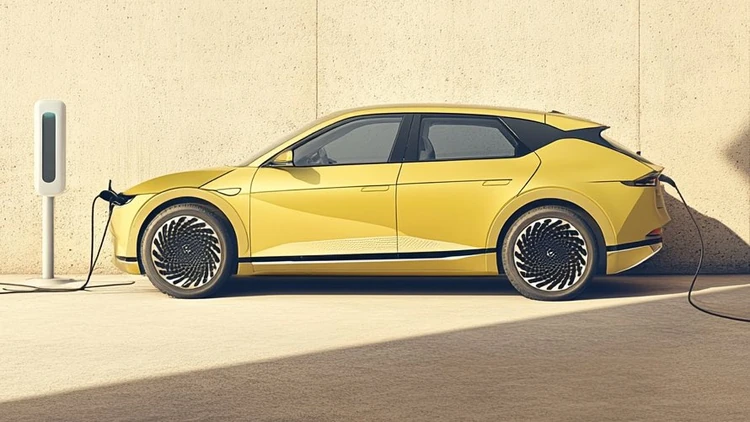
  • EV charging costs remain unchanged, with state-by-state variations continuing to shape the affordability map.


Drivers across the U.S. are enjoying a calm, steady stretch at the gas pump this summer, with the national average for a gallon of regular gas ticking in at $3.16 — virtually unchanged from a week ago and significantly below 2024 levels.

Gas prices, which historically fluctuate in summer months, have shown little volatility in 2025. Crude oil remains relatively cheap, averaging about $65 per barrel. Compared to last month, when gas averaged $3.22, and a year ago, when it was $3.51, this summer’s fuel landscape is notably easier on the wallet.

Fuel demand rises, but prices stay grounded

According to the latest data from the Energy Information Administration (EIA), gasoline demand rose last week from 8.48 million to 8.96 million barrels per day. Despite this uptick, prices have not spiked — a reflection of an ample domestic gasoline supply and increased production, which averaged 9.4 million barrels per day.

Crude oil inventories, meanwhile, saw a modest decline of 3.2 million barrels last week. Total U.S. crude reserves now stand at 419 million barrels — about 9% below the five-year seasonal average. Even with this dip, oil prices remain stable, with West Texas Intermediate (WTI) crude settling at $65.25 per barrel as of Wednesday.

State-by-state

Price differences between states remain stark. California leads the pack with the highest average gas price at $4.48 per gallon, followed closely by Hawaii ($4.46), Washington ($4.38), and Oregon ($3.98). On the other end of the spectrum, Mississippi drivers pay just $2.70 per gallon — the cheapest in the nation — with Louisiana, Oklahoma, and Texas close behind.

Electric vehicle drivers also saw no change in pricing, with the national average at public charging stations remaining at 36 cents per kilowatt hour. However, regional differences continue to matter. West Virginia tops the list for the highest average charging rate at 52 cents/kWh, while Kansas offers the most affordable rate at just 25 cents/kWh.

Planning Ahead

For travelers mapping out summer road trips, the AAA TripTik Travel planner remains a helpful tool for identifying current gas and EV charging prices along any route — a useful feature in a season marked by cost-conscious driving.

With pump prices flat and no major oil shocks on the horizon, the summer of 2025 is shaping up to be one of the calmest fuel-wise in recent memory.
Article Image

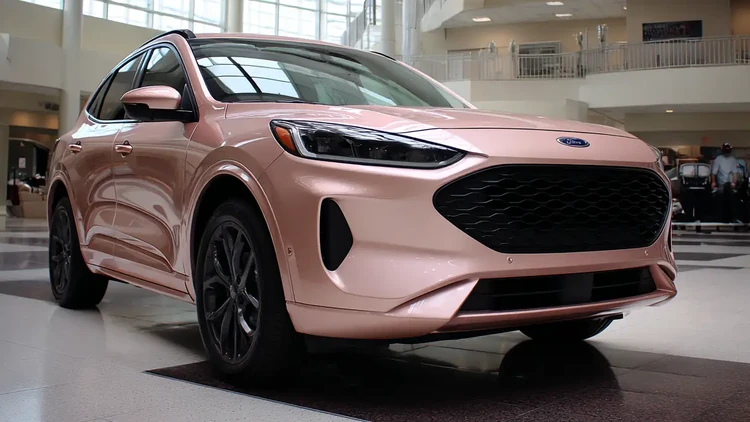
Ford rolls out “Zero, Zero, Zero” deal after strong first half

  • Ford’s employee-pricing-for-all promo boosted first-half sales, helping offset tariff impacts.
  • The new “Zero, Zero, Zero” deal offers no money down, no payments for 90 days, and 0% interest for 48 months on many 2024 and 2025 models.

  • Popular trucks, Broncos, and electric models like the F-150 Lightning remain excluded from the new offer.


After a strong first half of 2025, Ford is shifting gears from its successful employee-pricing-for-all program to a fresh sales incentive called the “Zero, Zero, Zero” offer.

Kicking off July 8, the campaign gives customers a chance to get into eligible Ford and Lincoln vehicles with zero down payment, zero percent financing for 48 months, and no payments for the first 90 days.

The strategy, according to Ford’s U.S. sales and dealer relations director Rob Kaffl, aims to help buyers facing squeezed budgets from high mortgage rates and summer expenses.

Some exceptions

However, while the deal covers a broad lineup—including the Escape, Explorer, F-150, Mustang, and several Lincoln SUVs—Ford has carved out significant exclusions.

Models like the 2024 and 2025 Raptors, Maverick, Ranger, Super Duty trucks above XL trim, Transits (except ICE cargo and passenger vans), 2025 Broncos and Bronco Sports, Expeditions, Lincoln Navigators, and electric vehicles like the F-150 Lightning and Mustang Mach-E won’t qualify for the new promotion.

In addition, Ford is sweetening the pot for EV shoppers by extending its Ford Power Promise through September 30. Buyers or lessees of eligible electric vehicles will continue to receive a complimentary SAE Level 2 home charger along with free installation, reinforcing the automaker’s bid to maintain EV momentum despite a cooling market.

Article Image

Long-term auto loans hit record as car buyers struggle with costs

Key takeaways:

  • 84-month auto loans hit a record 19.8% of new-car financing in Q1 2025

  • Affordability remains a top concern amid $1,000+ payments and high APRs

  • Experts warn tariffs and limited 0% deals could worsen affordability crisis


Nearly one in five Americans who bought a new car in the first quarter of 2025 committed to an 84-month loan — the longest common auto financing term — signaling growing financial strain in the car market, according to a new report by Edmunds.

In its latest quarterly analysis, the automotive research firm revealed that 19.8% of new-vehicle buyers signed up for seven-year loans, up from 15.8% in Q1 2024 and 13.4% in 2019. The trend highlights a shift toward financial extremes as consumers either stretch out payments to lower monthly costs or shorten terms to take advantage of targeted incentives.

“The auto finance market showed signs of steadiness in Q1, but that stability doesn’t mean affordability has improved,” said Jessica Caldwell, head of insights at Edmunds. “When one in five new-car buyers are taking on seven-year loans, it’s clear how many consumers are still financially stretched.”

$1,000+ monthly payments are common

Despite slightly easing from Q4’s holiday-fueled luxury buying surge, 17.7% of new-car buyers in Q1 2025 agreed to monthly payments of $1,000 or more, a level that remains historically high. In Q1 2024, the number was 17.3%.

Meanwhile, the average amount financed was $41,473, only a modest decline from Q4’s $42,113, showing little relief for buyers.

Mid-ground financing shrinks

While long loans surge, short-term financing also saw some growth among creditworthy shoppers: 10.2% of buyers took loans of 48 months or less, up from 7.1% in 2019. However, traditional loan terms of 60 to 75 months are fading, now making up 67.4% of loans — down from nearly 78% six years ago.

This polarization reflects a market where buyers are increasingly making tough choices to afford their vehicles, whether through extended debt or selective short-term deals.

0% financing fades away

The once-popular 0% finance offer has nearly disappeared, accounting for only 1.0% of all new-car loans — a record low. These incentives made up 3.0% of loans just a year ago, but have vanished in today’s 7.1% average APR environment.

“The era of ‘free money’ car loans is over,” analysts noted.

Potential policy lifeline

In the face of tightening budgets, some relief may come from Washington. President Trump has floated a proposal to allow interest paid on loans for American-made vehicles to be tax deductible. While the policy’s details are still unclear, Edmunds estimates that the average new-car buyer in Q1 paid $9,231 in interest over the life of their loan.

“If implemented, a deduction could offer meaningful savings — the kind that covers a vacation or home upgrade,” said Caldwell. “But without specifics on how ‘American-made’ is defined or who qualifies, its true impact is hard to predict.”

Tariffs add uncertainty

Adding further tension to the market is the new round of auto tariffs, which officially went into effect on April 3. Caldwell warned these could “add fuel to the fire,” potentially making new vehicles even less affordable and further increasing reliance on ultra-long-term financing.

Bottom line: With both interest rates and vehicle prices remaining stubbornly high, affordability remains the defining challenge for new-car shoppers in 2025 — and it’s pushing more consumers to the financial edge.

Article Image

The tariff bell tolls for Volvo's last U.S. sedan, the s90

Key takeaways:

  • Sources indicate Volvo will cancel U.S. orders for the S90 next year, citing the low sales volume of the model in the American market.
  • In response to the Trump administration's tariffs, Volvo is also reducing incentives on existing U.S. inventory and exploring increased production at its South Carolina plant.
  • The decision highlights the growing impact of the escalating trade war on global automakers with production in China and underscores Volvo's strategic shift towards its higher-volume crossover models in the U.S.

If you've always dreamed of having a big, luxurious Volvo S90, dream on but you'll soon have to confine your shopping to the used-car lot. 

Volvo is reportedly planning to discontinue U.S. sales of the S90, which is manufactured in China, as trade tensions between the United States and China intensify and as the automaker grapples with newly imposed tariffs on Chinese goods, including vehicles.

​Automotive News quoted a person familiar with Volvo’s strategy, who wished to remain anonymous, as saying that the S90 is a "low-volume car for the U.S.," with only 1,364 units sold in 2024.

"Rather than deal with [the tariffs], they are just going to cut it out," the source explained. The company will reportedly focus on its more popular XC90, XC60, and XC40 crossover SUVs in the American market. A Volvo spokesperson declined to comment, Automotive News said.

President Trump on Wednesday significantly escalated trade tensions by slapping a 125 percent tariff on goods made in China, a fivefold increase from the 25 percent levy applied to vehicles from other countries on April 3rd. Those tariffs will remain in effect even after a temporary pause on reciprocal duties with most other nations.

A slow but steady retreat

Discontinuing the S90 would mark Volvo's further retreat from the shrinking U.S. sedan market. Last summer, the automaker ceased U.S. sales of the S60, which was produced in South Carolina.

Despite a 7.5 percent increase in U.S. sales during the first quarter, reaching 33,285 vehicles, Volvo's global deliveries saw a 5.7 percent decline, with slumps in key markets like Europe and China. The heavy reliance on imports – 96.8 percent of Volvo's U.S. sales in the first quarter were imported from Europe or China – exposes the company to significant risks from the Trump administration's aggressive trade policies.

In addition to the S90, Volvo's new EX30 subcompact crossover is also sourced from China, although production of that model is slated to expand to Ghent, Belgium, later this year.

Volvo said, however, that it is "ramping up" production of the electric EX90 crossover at its currently underutilized Ridgeville, S.C., assembly plant to boost volumes and reduce costs.

To deal with the increasing costs of importing vehicles into the U.S., Volvo is also adjusting its incentive strategy. While sticker prices are not expected to change for now, the automaker plans to implement "minor incentive changes," a company executive said. This includes reducing discounts on imported vehicles already in the U.S. before the tariffs took effect. The company intends to use these savings to offset the financial burden of future imports subject to the higher tariffs.

Article Image

Are Americans losing interest in electric cars?

Key Points:

  • Interest in electric vehicles (EVs) in the U.S. has dropped from 59% in 2023 to 51% in 2024, according to a new Gallup poll.

  • Support for EVs declined most sharply among young adults and upper-income households, though it fell across party lines.

  • Hybrid vehicles now show stronger consumer interest than EVs, with 65% of adults open to owning one.


American enthusiasm for electric vehicles has dimmed over the past year, with just over half of adults now saying they own or are open to owning an EV — a sharp decline from a high point in 2023, according to new data from Gallup’s annual Environment survey.

Only 3% of U.S. adults say they currently own an EV, while another 8% say they’re seriously considering a purchase. An additional 40% say they might consider one in the future. That brings total interest in electric vehicles to 51%, down from 59% last year, and marks a cooling trend that cuts across income levels, age groups, and political affiliations.

The percentage of Americans firmly opposed to buying an EV has remained steady at 47%, up from 41% in 2023. Meanwhile, the most enthusiastic supporters — those who either own or are seriously considering purchasing one — have dropped from 16% to just 11% over the past year.

Source: Gallup

Why the drop in interest?

While the exact reasons for the decline are unclear, Gallup notes that the survey period coincided with several developments that may have influenced public opinion.

Among them were protests and vandalism targeting Tesla — spurred by dissatisfaction with CEO Elon Musk’s controversial role as head of the Department of Government Efficiency — and former President Donald Trump’s purchase of a Tesla vehicle on March 11, a move that made headlines and reportedly boosted Tesla’s stock by $56 billion.

Hybrids offer a middle ground

At the same time, Gallup introduced a new question measuring consumer interest in hybrid vehicles, and the results suggest Americans may be pivoting toward options that combine gasoline and electric power.

A significant 65% of adults said they already own (8%), are seriously considering (10%), or might consider (47%) a hybrid vehicle — outpacing EV interest in every category. The preference for hybrids may reflect growing concerns about the charging infrastructure and reliability of fully electric cars.

Looking ahead

While EV adoption may still grow with policy support and technological improvements, the latest data highlight a cooling in consumer sentiment — and a need for automakers and policymakers to reassure the public about the convenience and sustainability of electric mobility. Meanwhile, hybrids appear to be gaining favor as a more flexible, less controversial alternative.

Article Image

Consumer Reports ranks 10 best used cars for April 2025

In brief ...

  • 🚗 Consumer Reports names top 10 used vehicles under $20,000 offering safety, reliability, and fuel savings.

  • 💰 Picks span sedans, SUVs, hybrids, and trucks, based on performance, owner satisfaction, and crash safety.

  • 🛑 List aims to guide budget-conscious buyers who don’t want to sacrifice quality for affordability.

Details

Nonprofit Consumer Reports has released its 10 Top Picks for used cars in April 2025, highlighting reliable and safe pre-owned vehicles that offer strong performance without breaking the bank. With new car prices still historically high, and likely to go higher thanks to stiff new tariffs on imports, the report offers smart alternatives across various categories—from sedans to hybrids to pickups.

To qualify, each vehicle had to perform well in CR’s road tests when new, show multiple years of above-average reliability, and include electronic stability control. The picks focus on the newest model year available under each price cap.

Highlights:

  • Under $10K: 2016 Mazda6 – sporty, efficient, and updated for better ride comfort.

  • Under $15K: 2018 Toyota Corolla – roomy, reliable, and packed with standard safety tech.

  • Hybrid under $20K: 2019 Toyota Camry Hybrid – an ultra-efficient sedan with 52 mpg and advanced safety features.

  • SUVs under $20K: 2021 Kia Sportage, 2018 Mazda CX-5, and 2018 Toyota RAV4 Hybrid offer style, space, and value.

  • Pickup: 2015 Toyota Tacoma – known for its off-road ability and rugged reliability.

  • Sports Car: 2019 Mazda MX-5 Miata – fun to drive and newly boosted to 181 horsepower.

The full list offers something for every type of driver—without compromising on safety, longevity, or affordability.

Article Image

Consumer satisfaction with car dealers' service ranks high: J.D. Power

Do you just love taking your car to the dealer for service? J.D. Power says consumer satisfactiong with service visits "remains strong for a second consecutive year."

But don't break out the champagne just yet, because it adds that "wait times for appointments, communication shortfalls and gaps in fixing vehicles correctly limit the industry’s progress." That's according to the J.D. Power 2025 U.S. Customer Service Index (CSI) Study, released today.

The survey found that dealers continue to battle with ongoing capacity challenges as the average number of days that customers must wait for an appointment is longer than was tracked from 2018 to 2022, and only nominally better than 2023 and 2024. Addressing this—and other opportunities—could improve service satisfaction and increase loyalty to dealerships.

“While it’s no surprise that customers gravitate to operations that serve them well, the study clearly shows that good service leads to loyal customers,” said John Tenerovich, director of automotive retail at J.D. Power. “This phenomenon proves true across all service types—oil changes, repair, tires and brakes.”

Gas is still king

The study finds that customer satisfaction with the service of electrified vehicles—both battery-electric (BEV) and plug-in hybrid (PHEV) vehicles—continues to trail satisfaction among owners of internal combustion engine (ICE) vehicles by a wide margin.

Satisfaction (on a 1,000-point scale) among mass market BEV owners is 51 points lower than among owners of mass market ICE vehicles, and satisfaction among premium BEV owners is 57 points below that of premium ICE vehicle owners. The ongoing lack of well-trained EV technicians and frontline personnel is a key factor in the shortfall.

Following are some other key findings of the 2025 study:

  • Fixed right first time: Surprisingly, 12% of repairs are not completed correctly on the first visit. 
  • Satisfaction improves when maintenance items are combined with recalls.
  • Communication helps deliver satisfying service experience: Among the 10 most influential key performance indicators measured in the study, four are communication-related.
  • Trust in service personnel and overall service varies by generation. While Boomers express a great deal of trust in dealer service, younger generations have progressively less.

Highest-Ranking Brands and Segments

Porsche ranks highest in satisfaction with dealer service among premium brands with a score of 912. Lexus (900) ranks second and Cadillac (888) ranks third.

Subaru ranks highest in satisfaction with dealer service among mass market brands with a score of 896. MINI (888) ranks second and Honda (881) ranks third.

Subaru (886) ranks highest in the mass market car segment, followed by Honda (879) and MINI (879).

Subaru ranks highest among mass market SUVs/minivans with a score of 897. Honda (884) ranks second and Buick (878) ranks third.

Porsche ranks highest in the premium car segment with a score of 906, followed by Lexus (891) and BMW (887).

Porsche ranks highest in the premium SUV segment with a score of 917. Lexus (902) ranks second and Cadillac (891) ranks third.

Chevrolet ranks highest in the truck segment with a score of 877. GMC (876) ranks second and Nissan (873) ranks third.

The U.S. Customer Service Index (CSI) Study is now in its 45th year and has been redesigned for 2025. Along with traditional Voice of the Customer survey data, the study index now includes, for the first time, repair data drawn from individual in-dealership repairs. This repair information, secured from individual dealership service transactions, allows the study to offer an unprecedented level of granularity of both service quality and customer retention.

The study measures satisfaction with service at franchised dealer and aftermarket service facilities for maintenance or repair work among owners and lessees of one- to three-year-old vehicles. It also provides a numerical index ranking of the highest-performing automotive brands sold in the United States, which is based on the combined scores of five measures comprising vehicle owner service experience data and actual repair data. These measures are (in order of importance): service quality; service advisor; vehicle pick-up; service facility; and service initiation. In 2023, model segment rankings were added to the study to differentiate between the service needs for cars, trucks, SUVs and minivans.

The 2025 study is based on responses from 55,210 verified registered owners and lessees of one- to three-year-old vehicles. J.D. Power goes to great lengths to ensure that survey respondents are true owners of the brand for which they are surveyed. The study was fielded from July through December 2024.

For more information about the U.S. Customer Service Index (CSI) Study, visit https://www.jdpower.com/business/us-customer-service-index-csi-study.


Article Image

Car thieves like pickup trucks too

Hyundai and Kia models have acquired a reputation for being easy to steal, thanks to the "Kia Challenge," which enticed social media mavens to try their hand at grand larceny. But in fact, it's the No. 1-selling vehicle in the U.S. that is the most-often stolen.

Yes, we're talking about the Ford F-150 pickup truck. It's been the top-selling truck in the country for more than 47 years. And Ford cars and trucks have outsold every other brand for over 40 years, so with all those Fords out there, it's not surprising a few of them get nicked every year. 

How many? Well, it works out to 1,815 thefts per 100,000 F-150s. The Hyundai Elantra is second with 1,296. Another hefty pickup -- the Chevrolet Silverado -- is third at 1,207, according to Insurify.  

Hyundai-Kia models are still in the running but thanks to a quick fix of the feature that made the cars easy to steal, they now are more apt to stay put. If you look just at brands and not individual models, the Koreans still top the list.

center>

How to prevent theft

Unfortunately, you can't completely prevent theft but there are steps you can take to reduce your risk. Here are some suggestions, admitedly pretty obvious ones, from the National Insurance Crime Bureau:

  • Park in well-lit areas.
  • Close and lock all windows and doors when you park.
  • Hide valuables out of sight, such as in the glove box or trunk.
  • Do not leave your keys in your vehicle.
  • Do not leave the area while your vehicle is running.
  • If your vehicle is stolen, call law enforcement and your insurer immediately because reporting a vehicle as soon as possible after it is stolen increases the chance of recovery.

When reporting your car stolen, you should be ready to provide the following information:

  • The make/model of the vehicle, color, license plate number, as well as the vehicle’s VIN number.  (The VIN can be found on your insurance policy documentation or on the Proof of Insurance card.)
  • The process for filing a stolen vehicle report to your insurer could be over the phone, online, or even directly to your insurance agent.

Article Image

Heat pumps are warming up electric vehicles

When you think of heat pumps -- which, admittedly you might not do very often -- you probably picture a large device that admits a roaring sound in backyards throughout the land.

But not all heat pumps are big and noisy. Some are small and quiet, and they're also mobile. Yep, they're maybe in your electric vehicle if you have a new model.

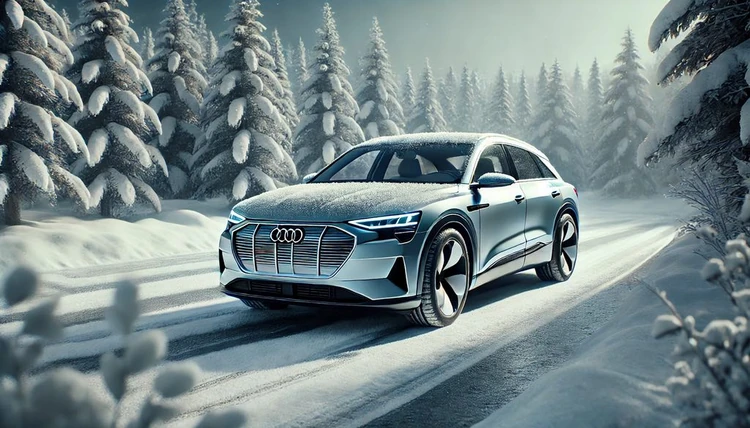
It's not really surprising. Heat pumps save a lot of energy in homes and they can do the same in EVs, making electric cars more practical in cold climates. They're replacing resistance heaters, which burn up a lot of energy in the process of warming the air in your car's cabin. 

Key Points

  • Efficiency: Heat pumps can improve EV range in freezing temperatures by 8–10%, according to research from Recurrent. Tests showed EVs like Tesla’s 2021 Model 3 and Model S with heat pumps perform better in cold weather than older models without them.
  • Performance: Heat pumps reduce range losses at 32°F to 11–13% for vehicles like the Tesla Model X and Audi E-Tron. However, their efficiency drops below 15°F.
  • How They Work: Heat pumps transfer heat from the car’s electric motors or outside air to the cabin, operating like reverse air conditioning. This process is more energy-efficient than traditional resistive heating.

Adoption

Heat pumps are found in many newer EVs, including Tesla models since 2021, the Polestar 2, Rivian vehicles, and upcoming models like the 2025 Ford Mustang Mach-E.

Older EVs with smaller batteries and no heat pumps, like the 2017 Ford Focus Electric, experience significant range losses in freezing weather.

Tips for Winter EV Use

  • Precondition your car while plugged in before driving.
  • Regularly brush snow off your vehicle. It won’t melt as it does on gas-powered cars.