

- A sweeping new study finds daily pleasure reading in the U.S. has fallen more than 40% over the past two decades.
- The decline is sharpest among Black Americans, rural residents, and people with lower income or education, raising concerns about widening inequities.
- Experts warn the trend could harm mental health, empathy, and academic outcomes — but simple interventions like reading with kids or joining a book club can help.
Americans are reading for fun far less than they did 20 years ago, according to new research from the University of Florida and University College London. The study, published in iScience, analyzed time-use diaries from more than 236,000 Americans between 2003 and 2023. The results point to a cultural shift: the proportion of people who read daily has dropped steadily, about 3% per year.
“This is not just a small dip — it’s a sustained, steady decline,” said Jill Sonke, Ph.D., of UF’s Center for Arts in Medicine. “It’s significant, and it’s deeply concerning.”
Why fewer people are reading
While the study didn’t probe causes, researchers and outside experts point to a mix of factors:
Digital distractions — social media, streaming and games compete for attention.
Shrinking leisure time — more Americans are juggling multiple jobs.
Access gaps — rural communities and households with lower income often lack easy access to libraries or affordable books.
“Our digital culture is certainly part of the story,” Sonke said, “but there are also structural issues, like economic insecurity and transportation barriers that make library trips impractical.”
Why it matters
Reading isn’t just entertainment — it’s linked to mental health, empathy, creativity and lifelong learning. Research from the EpiArts Lab has shown that creative engagement, including reading, supports well-being and even acts as a low-cost public health tool.
The study also found that while reading to children has remained steady, it’s far less common than solo reading — despite its strong ties to literacy, school success and family bonding.
“Reading with children is one of the most promising interventions,” said Jessica Bone, Ph.D., of University College London. “It supports language, empathy, and school readiness.”
What you can do
Experts say there are steps individuals, families, and communities can take to push back against the decline:
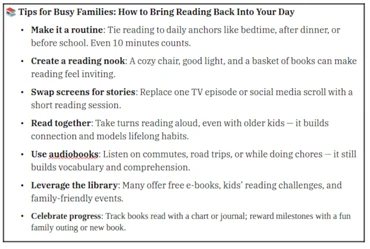
Read with kids: Even 10–15 minutes a day supports literacy and bonding.
Join or start a book group: Social connections can make reading feel less solitary and more sustainable.
Use local libraries: Many now offer digital lending, community events and family programs.
Set aside “tech-free” time: Protecting even short daily blocks for reading can help rebuild the habit.
Bottom line: Reading is more than a pastime — it’s a low-cost, high-impact habit that supports both brain and body. As study co-author Daisy Fancourt, Ph.D., put it: “Reading is a vital health-enhancing behavior for every group in society. Seeing this kind of decline is concerning — but it’s also an opportunity to reinvest in one of our simplest tools for well-being.”