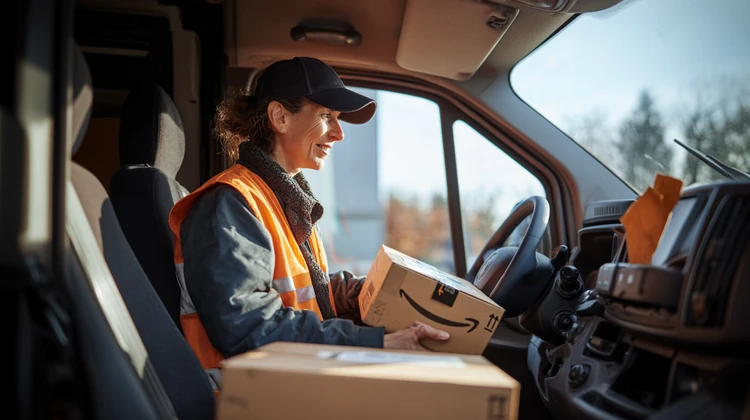

It’s flexible work, but you’re running your own business: Amazon Flex lets you pick shifts, but you cover gas, maintenance, and taxes.
Once you factor in costs and unpaid time (waiting, driving to pickups), your true hourly earnings can drop quickly.
Focus on higher-paying “surge” blocks, track your real profit, and prioritize deliveries (like groceries) that can include tips.
Amazon is quietly expanding its gig economy footprint through a delivery program called Amazon Flex. They’re pitching it as a flexible way to earn extra cash using your own car.
On the surface, it sounds simple: deliver packages on your own schedule and get paid.
But like most side hustles, the reality is a little more complicated. Here’s what you need to know.
What Amazon Flex actually is
Amazon Flex is a delivery program where you act as an independent contractor, using your own vehicle to deliver packages, groceries, or retail orders.
Here’s how it works:
- You download the app.
- Pick “delivery blocks” (shifts) that fit your schedule.
- Show up at your nearest Amazon delivery station, grab the packages, and deliver them.
Most drivers earn about $18–$25 per hour before expenses, depending on location and demand.
Why Amazon is pushing this now
Amazon is racing to speed up delivery times and lower costs, especially to more rural addresses.
Programs like Flex help the company:
- Deliver more packages faster.
- Avoid hiring full-time drivers.
- Scale up quickly during peak demand.
Translation: It’s great for Amazon’s logistics…but you’re essentially running your own mini delivery business.
The real costs most people overlook
Keep in mind that your hourly rate isn’t your take-home pay.
As a Flex driver, you’ll be responsible for the following:
- Gas
- Car maintenance
- Insurance
- Taxes
And you’re not paid for:
- Time waiting for delivery blocks
- Driving to pick-up locations
- Slow delivery routes
Also, it’s worth noting that smaller cars and open-bed trucks do not qualify. You must have a 4-door, mid-sized sedan or larger vehicle.
Here’s how you apply to be a driver
The entire system runs through the Amazon Flex app and the onboarding process also takes place through the app.
According to Amazon, “Most people complete all onboarding documents in less than an hour and can start delivering with Amazon Flex in less than a week.”
Once approved, you:
- Open the app and browse available delivery blocks.
- See upfront pay and time commitment before accepting.
- Show up, pick up packages, and follow the app’s route.
Most blocks last three to five hours, and Amazon says drivers typically earn about $18 to $25 per hour before expenses.
You’re also fully in control of your schedule which means you can work as little or as much as you want, depending on availability.
Smart tips before applying
- Focus on “surge” blocks only. Pay increases when demand spikes (holidays, early mornings, bad weather). The more experienced drivers wait for higher-paying blocks instead of grabbing the first one available.
- Track your real hourly earnings. Don’t just look at your gross pay, as that only tells part of your income story. Be sure to track gas costs, mileage, and your overall time spent, as this tells you your true profit — and whether driving for Amazon is worth it.
- Choose the right delivery type. Not all blocks are equal. Grocery deliveries (like those from Whole Foods) can include some fairly healthy tips. However, standard package routes usually don’t get tips unless it’s around Christmas-time. The difference between these two routes can significantly impact your earnings.