
A potentially powerful El Niño is developing: NOAA says there's more than an 83% chance of a strong-to-very strong El Niño lasting into early 2027.
Your homeowners insurance may have major gaps: Standard policies generally don't cover flooding, and separate flood insurance typically takes 30 days to become effective.
A little preparation can go a long way: Reviewing your policy, documenting your belongings, and checking your home's drainage could help prevent expensive surprises.
A potentially historic El Niño is taking shape, and homeowners may want to spend a little time preparing before winter storms arrive.
NOAA's latest forecast puts the odds of a strong-to-very strong El Niño lasting into early 2027 at more than 83%. And even if you have homeowners insurance, some types of storm damage might not be covered.
Tom McLaughlin, founder and CEO of Finch, a platform that helps public insurance adjusters analyze property claims, says homeowners should use the coming weeks to get ahead of potential problems.
"A storm season this well forecast is a rare head start," McLaughlin told ConsumerAffairs.
Here are five things he recommends doing now.
1. Find out what your homeowners insurance actually covers
This might be the most important 15 minutes you spend preparing for winter.
Pull up your homeowners insurance policy and look specifically for exclusions involving flooding, mudflow, landslides, and earth movement.
"A lot of people think they're covered for things they're not," McLaughlin said.
For example, a standard homeowners insurance policy generally doesn't cover flood damage. And while certain types of mudflow may qualify for coverage under flood insurance, landslides generally don't.
What to do: Call your insurance agent and ask a simple question: "If heavy rain causes water or mud to damage my house, exactly what would my policy pay for?" Then be sure to ask for the answer in writing.
2. Don't wait until a storm is coming to buy flood insurance
Here's a detail that could cost homeowners thousands: Most standard homeowners policies don't cover flooding. And a separate policy through the National Flood Insurance Program typically has a 30-day waiting period before coverage begins.
So, if you end up waiting until a major storm is in the forecast to get coverage, it may already be too late.
Now it’s worth mentioning that there are some exceptions to the waiting period, including certain mortgage-related purchases, so ask your agent about that.
What to do: Visit FloodSmart.gov to learn about coverage and find an insurance provider. You can also ask your agent about private flood insurance, which may offer different coverage limits and waiting periods.
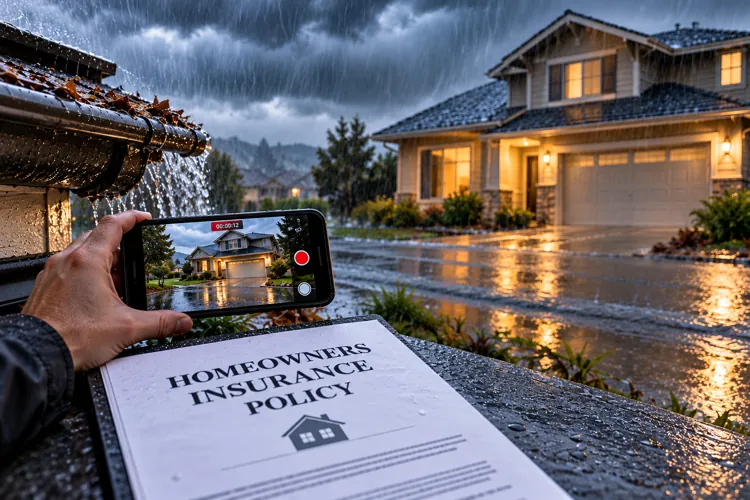
3. Make a 20-minute video of your entire house
This might be the easiest tip on the list, and it costs absolutely nothing.
McLaughlin recommends taking your smartphone and walking through every room, recording furniture, electronics, appliances, and other valuables.
Don't forget the garage, exterior of your home, and any expensive equipment. Then upload the footage to cloud storage so you can access it even if your phone is damaged or lost.
Finch says it has analyzed more than 15,000 insurance claims, and McLaughlin says homeowners who documented their property beforehand generally had a much easier time settling their claims.
What to do: Record one continuous walkthrough, then take close-up photos of expensive items, serial numbers, and receipts if possible. This is just a smart practice, as it’ll help with other potential issues like theft and fire damage.
4. Check these three things outside your house
You don't necessarily need to spend hundreds of dollars getting ready for a wet winter.
McLaughlin recommends starting with three relatively simple maintenance tasks:
Clean your gutters: Remove leaves and debris so rainwater can flow freely.
Check drainage: Make sure downspouts carry water away from your foundation and that the ground slopes away from the house.
Inspect your roof: Take a close look for any missing or lifted shingles, and have a professional handle any repairs.
What to do: Walk around your home during the next rainfall and look for overflowing gutters or water pooling near the foundation. At that point you can fix any problems before the next major storm.
5. Check how much your insurance would actually pay
Being covered doesn't necessarily mean you'll receive enough money to replace everything you lose.
McLaughlin says homeowners should understand the difference between two common insurance terms:
Actual cash value: This is when your insurance company factors in the age and condition of your damaged property when determining how much money you'll receive.
Replacement cost: Your insurance company covers the cost of replacing damaged property with a comparable new item, subject to your deductible and policy limits.
For example, consider a television that originally cost you $1,500, but is now worth only $400 because of its age. An actual cash value policy will give you about $400 for the TV, while replacement cost coverage would give you enough money to get a similar new TV.
What to do: Check whether your dwelling and personal belongings have replacement cost coverage, and ask your agent about your deductible and coverage limits.
One last tip if you ever have to file a claim
McLaughlin also recommends keeping a written record of every conversation with your insurance company.
In an analysis of 900 California claims, Finch found that a typical claim involved at least three different insurance company adjusters. That can mean explaining your situation repeatedly.
His advice? After every phone call, send a short follow-up email documenting what was discussed and any agreements reached. It creates a paper trail that could prove valuable if questions or disputes arise later.
The bottom line: You obviously can't control what El Niño might bring this winter. So it’s smart to focus on the things you can control.
Specifically, you can spend an afternoon making sure your insurance is adequate, your property is documented, and your house is better prepared for whatever comes next.