

Why donate furniture?
If your furniture is in relatively good condition, donating it is a great alternative to recycling, throwing it out or letting it sit in a storage unit. Here are some reasons why donating may be advantageous:
- Easy donations and pickup: Many charitable organizations accept furniture donations, and some of them may also pick furniture up for you, saving you the hassle of heavy lifting and transportation.
- Tax benefits: Donations to 501(c)(3) organizations are tax-deductible. Itemizing deductions of donations when you file your taxes could save money.
- Direct community impact: Your donated pieces are either sold in local thrift stores to fund community programs or given directly to families in need within your area.
Where to donate furniture
When choosing an organization, look for one whose operations align with your timeline and values. The following major charities regularly accept furniture donations:
Habitat for Humanity
Habitat for Humanity is a 501(c)(3) nonprofit that builds and provides affordable housing for families. It funds its mission through donations and proceeds from its network of thrift stores called Habitat for Humanity ReStore.
You can donate home goods, appliances and large furniture pieces, which are then resold to the public at a discount. Habitat for Humanity offers free donation pickup for large items, which you can schedule directly through its website.
Goodwill
Goodwill Industries is a prominent 501(c)(3) organization focused on providing job training, employment placement services and career counseling programs. Goodwill funds these community programs by selling gently used donated clothes, electronics and household furniture across more than 3,400 thrift stores in the U.S.
While Goodwill doesn’t offer free donation pickup, it partners with ReSupply, a third-party logistics company that will pick up your furniture directly from your home for a fee.
Donation Town
Donation Town coordinates donation pickups on behalf of specific charities. Currently, the platform focuses on booking free pickups for the Vietnam Veterans of America (VVA) and the Veterans’ Voice of America (VVOA).
You can schedule pickup online through the Donation Town website. The participating veteran organizations accept many types of items, and generally restrict furniture donations to smaller home furnishings, such as headboards, nightstands and accent pieces.
The Arc
The Arc is a 501(c)(3) that advocates for the human and civil rights of individuals experiencing intellectual and developmental disabilities. The organization operates through a network of local chapters. Because each chapter manages its own thrift stores or physical donation programs independently, you’ll need to check with your chapter for accepted furniture donations.
AMVETS
AMVETS (American Veterans) provides assistance, job training and support programs for military veterans, their families and their survivors. The organization sells its donated goods through dedicated thrift stores to fund these initiatives.
Physical pickup is limited and only available in specific states, so check the AMVETS website for more details and to confirm availability in your ZIP code.
PickupPlease
PickupPlease is a dedicated donation collection program available in 15 states. The organization provides free donation pickup services through an online scheduling portal. The program directly benefits several charities, including the Vietnam Veterans of America, Veterans’ Voice of America, Special Olympics Texas, Teen Challenge of Southern California and Clean International.
The Salvation Army
The Salvation Army is an international charity that operates a wide variety of social services, including disaster recovery, rehabilitation programs and food pantries. While its direct furniture pickup services are limited by region, you can check the Salvation Army’s website to see if it's available in your area.
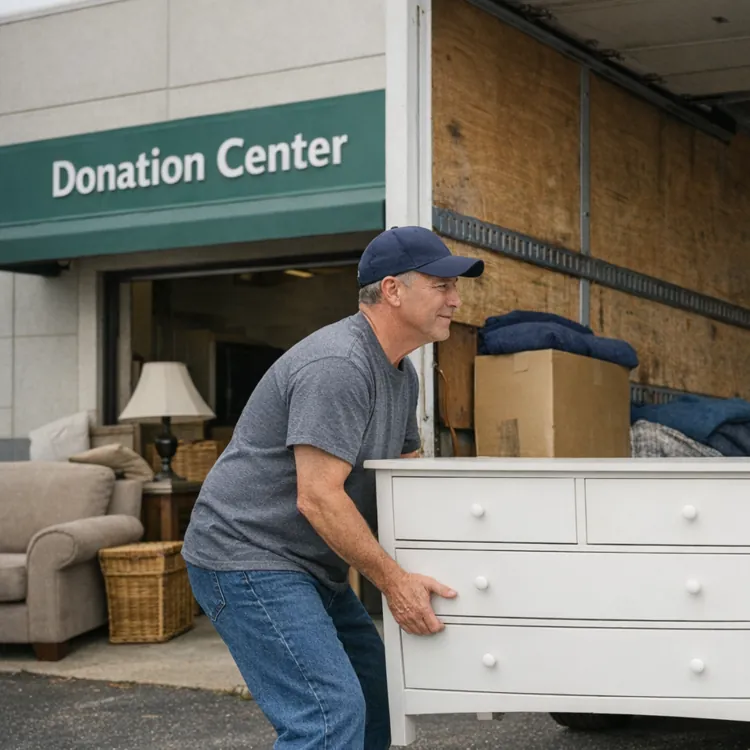
You may also be able to drop off furniture donations at one of its donation centers or thrift stores.
GreenDrop
GreenDrop, a for-profit company, manages the collection, logistics and transport of donated goods on behalf of partner nonprofits, including the American Red Cross and Big Brothers Big Sisters. GreenDrop pays its nonprofit partners for the items it collects and then resells them to local thrift stores.
GreenDrop accepts only small furniture weighing 50 pounds or less, so check the website for donation details.
Furniture Bank Network
Furniture Bank Network provides a directory of all furniture banks in your area. Unlike thrift store operations, furniture banks give items directly to individuals transitioning out of homelessness, domestic violence shelters or foster care, so they can furnish their homes at little to no cost. Many independent local furniture banks within the network provide free pickup services for large household items.
Foster Youth of America
Foster Youth of America provides support and resources for young people aging out of foster care and transitioning into adulthood on their own. You can donate furniture pieces directly to these young adults as they move into their first independent apartments, or donate cash to help them purchase their own home goods.
Other local charitable organizations
If national organizations don’t service your area, local operations likely need furniture donations for families in need. Crisis shelters, halfway houses, religious organizations and community resettlement programs often seek furniture, linens and clothing.
Reaching out to these smaller organizations directly is a great way to keep your donation's impact entirely within your immediate community.
4 tips for donating furniture
Donating furniture requires some thoughtful planning and consideration. Keep the following tips in mind for a smooth experience.
1. Be mindful of the furniture’s condition
Not all facilities will take furniture in any condition, so check with specific charities for their donation guidelines. Organizations that resell furniture in thrift stores are often more picky than furniture banks giving the items away for free. Regardless of the charity, take the time to vacuum pet hair from fabric and clean off any visible dust or grime.
» RELATED: How to dispose of a mattress
2. Ask for a receipt
If you plan to itemize your deductions on your tax return, request a tax deduction receipt and keep it for filing purposes. Because 501(c)(3) organizations are legally barred from assigning a cash valuation to non-cash items, you must establish the fair market value yourself.
Check the donation guidelines put out by the Internal Revenue Service (IRS) or ask your accountant to help determine the value. It’s also good to take clear photos of the furniture from different angles to document its real condition.
3. Consider dropping the donation off
Charities experience ongoing volunteer and staff shortages, so dropping off the donation yourself may be faster and easier if you have access to a truck and can transport it safely. Depending on where you live and the time of year, waiting for an open pickup window can take several weeks.
4. Find a charity that’s aligned with your values
Consider donating your items to charities supporting causes important to you, whether that’s veteran support, housing security, disability rights or foster youth advocacy. Not only will donating help advance causes you care about and fund organizations’ missions, but it can also feel good to improve the lives of those in your community.
Alternatives to donating furniture
If your items don’t meet local donation guidelines or if you can’t coordinate a pickup, you’ve got several alternative ways to clear your space:
- Sell items online: List your furniture on online marketplaces like Facebook Marketplace, OfferUp or Craigslist at reasonable prices based on the items’ condition and demand.
- Consign your pieces: Furniture consignment stores will sell your pieces for a portion of the sale price. They typically require items to be in very good condition. Before choosing this option, review store policies on pricing, time frames and unsold item handling.
- Store them: If you plan on moving again soon or think you may need the items in the near future, you can place them in a self-storage unit. Be sure to factor in monthly storage costs relative to the furniture's actual value to avoid paying long-term storage fees for pieces you no longer want.
- Upcycle: Refinish, repaint or repurpose old furniture into new functional pieces through do-it-yourself (DIY) projects. You can transform an old item into a functional, modern piece that you can keep, sell or donate later.
- Recycle or professionally dispose: For heavily worn, broken or stained furniture, look into bulk item pickup services or hiring a professional junk hauling company. Some charities will also recycle or repurpose your items.
» RELATED: How much does junk removal cost?
FAQ
How do I know if my furniture piece is in good enough condition to donate?
You’ll need to consult the charity's specific donation guidelines. Thrift stores that resell items to the public typically enforce stricter structural and aesthetic standards than local furniture banks or shelter networks that distribute items directly to those in need.
How can you tell if an organization offers pickup services?
Most charitable organizations feature a dedicated "Donate Goods" or "Schedule a Pickup" link directly on their homepage if the service is available. However, you can always call the charity if you can’t find the information online.
How can I get rid of furniture that can’t be donated quickly?
Giving the furniture away for free may be the fastest way. Take a clear photo of the item and post it on a local online marketplace, neighborhood social media group or a local "buy nothing" group. Someone looking for a project or cheap furniture will often pick it up quickly.
How do I know if an organization is a nonprofit?
Check out an organization’s website to see if it explicitly states its 501(c)(3) tax-exempt status. Your local city or county government may also maintain a public registry of local nonprofits on its website.
Article sources
ConsumerAffairs writers primarily rely on government data, industry experts and original research from other reputable publications to inform their work. Specific sources for this article include:
- Habitat for Humanity, “Does Habitat ReStore Pick Up Furniture Donations?” Accessed May 18, 2026.
- Goodwill Industries International, “Find a Thrift Store.” Accessed May 18, 2026.
- Donation Town, “Schedule a Free Donation Pickup Now.” Accessed May 18, 2026.
- The Arc, “Donate Physical Items.” Accessed May 18, 2026.
- AMVETS, “Donation Guidelines - How To Support Veterans Through AMVETS.” Accessed May 18, 2026.
- PickupPlease, “Acceptable Donations.” Accessed May 18, 2026.
- PickupPlease, “Our Donation Program.” Accessed May 18, 2026.
- The Salvation Army, “Donate Goods.” Accessed May 18, 2026.
- GreenDrop, “What We Accept.” Accessed May 18, 2026.
- Furniture Bank Network, “Find a Furniture Bank.” Accessed May 18, 2026.
- Foster Youth of America, “Ways To Give.” Accessed May 18, 2026.
- Internal Revenue Service, “Publication 526 (2025), Charitable Contributions.” Accessed May 18, 2026.