


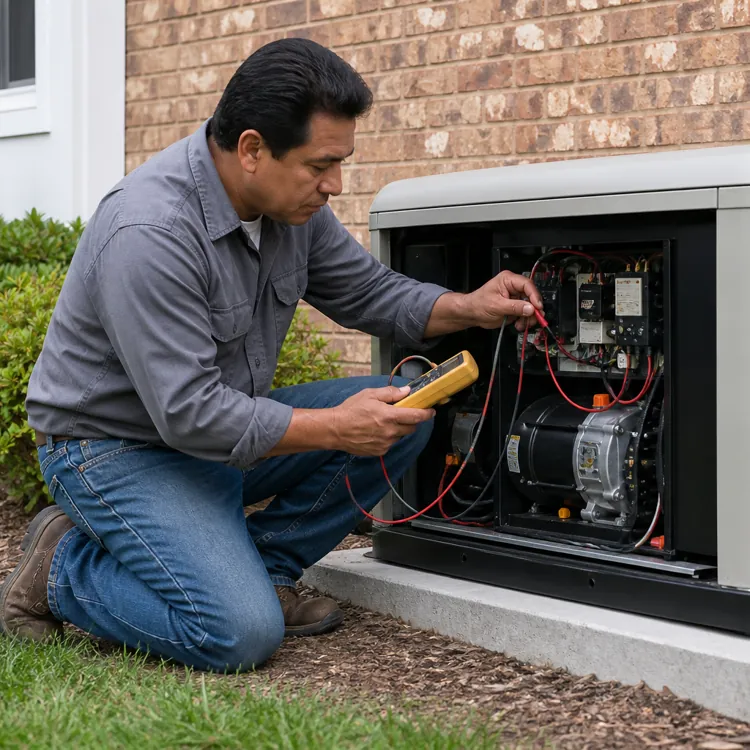
Portable vs. standby generator differences
The key difference between a portable generator and a standby generator is that a portable generator doesn’t require installation and instead sits on a mobile metal frame with wheels, while a standby generator demands a concrete pad and permanent installation.
They also function a bit differently. You have to fuel and start a portable generator manually before plugging individual appliances or devices into it to get power. Standby generators work automatically during an outage and can power your entire home. They must be permanently attached to your home’s electrical system and a fuel source.
Whole-house standby generators cost significantly more, largely because they require higher output capability, professional installation and annual maintenance. However, they’re more convenient because they turn on automatically when you need them, they have a permanent fuel source and they can power your entire home for multiple days.
Comparing portable vs. standby generators
Here’s a quick breakdown of how portable generators and standby generators stack up:
| Portable generator | Standby generator | |
|---|---|---|
| Average upfront cost | $300 to $3,000 | $10,000 to $25,000 |
| Installation | None required | Professional installation required |
| Storage | Shed or garage | Permanently affixed in yard |
| Capabilities during outages | Select appliances and devices | Entire home |
| Fuel source | Gasoline or diesel | Propane or natural gas |
| Fueling | Manual | Continuous with natural gas; occasional deliveries required for propane |
| Starting | Manual | Automatic, often within 30 seconds of an outage |
| Run time | Less than 24 hours before refueling | Several days with propane or longer with natural gas |
| Noise | Generally louder | Generally quieter |
| Maintenance | Minimal | $200 to $500 per year |
| Best for | Lower-cost emergency power | Automatic essential-load or whole-home backup |
Portable generator pros and cons
Some advantages of portable generators are their lower cost, mobility and minimal maintenance requirements. Some disadvantages are limited power and run time, manual operation and the need to manage fuel and extension cords.
Pros of a portable generator
Here are some of the advantages to owning a portable generator:
- Lower upfront cost: Portable generators cost between $300 and $3,000, so even the most expensive models cost a fraction of what you’d pay for a standby generator.
- No installation required: Portable generators don’t require permanent installation, so they don’t take up space in your yard when you’re not using them.
- Portability: Portable generators come self-contained on a metal frame with wheels, so you can take them wherever you need them and store them when not in use.
- Flexible use: Since the units are portable, you can also use them for utility-free power on job sites or if you’re camping or tailgating.
Portable generators cost less and work best for lower-wattage backup during occasional outages.
- Longer lifespan: Portable generators typically last for 20 to 25 years with proper use and maintenance.
- Lower risk of gas leaks: Natural gas and propane for standby generators can leak and cause explosions. You may deal with occasional fuel spillage with a portable generator, but generally, the risk is lower.
- Easier maintenance: Portable generators require routine maintenance, such as oil changes and spark plug replacements. But owners can often complete these tasks themselves.
Cons of a portable generator
Here are some of the disadvantages to owning a portable generator:
- Manual fueling: You’ll need to add fuel when an outage occurs, which means it will take some time and effort to get your power back on.
- Manual startup: Portable generators won’t start automatically during an outage, so you may need to set up and start the unit outdoors, in the dark or during severe weather.
- Limited power output: Portable generators generally produce less power than standby models, making them better suited to run select appliances or essential circuits than back up an entire home.
- Limited fuel storage: You can store gasoline or diesel for portable generators for only six months to a year before you need to replace it, even with fuel stabilizers.
- Limited run time: Portable generators typically run for less than 24 hours before they need to be shut down and refueled, with shorter run times under heavier loads.
- Carbon monoxide risk: Portable generators produce carbon monoxide and must be operated outdoors. The Consumer Product Safety Commission recommends placing them at least 20 feet from doors, windows and vents to prevent exhaust from entering your home.
- Extension cord management: You may need several long extension cords to power appliances in different rooms, which can become expensive and difficult to manage.
Standby generator pros and cons
Standby generators are usually best for homeowners who want minimal interruption to their daily routine during outages and whole-home backup for comfort and convenience.
Pros of standby generators
Here are some of the advantages to owning a standby generator:
- Ready fuel supply: Standby generators have a supply of fuel that’s always at the ready, so you’ll never have to trek outside to add fuel before starting. If your generator runs on propane, you’ll need to schedule deliveries relatively infrequently.
- Automatic startup: Standby generators have automatic transfer switches (ATS) that detect power outages and turn your generator on to provide power. That means maximum convenience and minimal interruption to your daily routine.
- Whole-home backup: Standby generators come in much larger sizes and can provide backup power for your entire home.
- Easier fuel storage: Unlike gasoline and diesel, propane lasts indefinitely in storage, so it’s much easier to remain prepared for an emergency. Natural gas standby generators can operate without refueling as long as utility gas service remains available.
Standby generators cost more and work best for automatic, whole-home backup during frequent or prolonged outages.
- Longer run time: Standby generators can run longer without refueling, which may make a whole-house generator worth it for homeowners who experience long or frequent outages. Propane run time depends on the tank size and power demand, while natural gas models can operate as long as utility gas service remains available.
- Home integration: You don’t have to manage extension cords with a standby generator. The unit connects to your electrical system, so you can use outlets, fixtures and appliances as normal.
- Remote monitoring: Many standby generators give you remote control and diagnostic information through an app.
Cons of standby generators
Here are some of the disadvantages of owning a standby generator:
- Upfront cost: A whole-house standby generator usually costs between $10,000 and $25,000, which is three to 10 times the cost of a portable generator.
- Professional installation: Qualified professionals must connect standby generators to your home’s electrical system and fuel supply, which increases the upfront cost.
- Yard space requirements: Standby generators require permanent installation, so they’ll take up some yard space.
- Limited portability: Since they’re not portable, standby generators can’t provide power on remote job sites or campsites.
Standby generators cost $200 to $500 a year to maintain.
- Shorter lifespan: Standby generators tend to last for 15 to 25 years, so they have a shorter lifespan than portable units. This is partially because standby generators run weekly maintenance cycles and see more ongoing use.
- Gas leak and explosion risk: Propane tanks have a small risk of exploding, and natural gas lines have a risk of leaking.
- Higher maintenance costs: Expect to pay $200 to $500 per year for ongoing maintenance for a standby generator, plus fuel costs for weekly automated maintenance cycles.
Choosing the right generator
Once you decide between a portable and a standby generator, you’ll still have a few choices to make regarding generator size, installation location, transfer switches and more.
Generator size
Sizing your generator properly means assessing your backup power needs and choosing a unit that can accommodate them. Break down everything you’ll need power for at the same time, and add about 20% to ensure your unit isn’t running at maximum capacity for extended periods.
Starting watts vs. running watts
You’ll need to consider running watts, which is the power used by all the appliances and devices running at the same time, as well as surge (starting) watts, which is the momentary power needed to start compressors in refrigerators and HVAC equipment.
It’s best to consult a professional, especially if you’re investing in a standby generator. However, you can get a rough idea of your energy needs by adding the running wattage of everything you intend to use simultaneously, then accounting for the largest startup surge.
Essential load vs. whole-home power
Not every homeowner needs or wants to be able to power their entire home during emergencies, so you can significantly downsize a whole-home system if you’re comfortable with essential loads.
Essential loads often include the power you’ll need to run well pumps, lights and heating and cooling systems, but you can define your own essentials and size your generator accordingly.
Standby generators can handle everything from dedicated essential-load circuits to whole-home backup power. Portable generators can sometimes handle essential loads if you have the necessary connections, but more often, they only power what you plug into them.
Automatic vs. manual transfer switches
Automatic transfer switches detect an outage and automatically switch your home to generator power. They’re used with standby generators that remain connected and ready to start.
An interlock kit offers a less expensive, manual option for connecting a portable generator to your electrical panel. It prevents utility and generator power from entering the home at the same time and keeps generator power from flowing back into utility lines.
» COMPARE: Top-ranked whole-house generators



FAQ
Can a portable generator be used as a standby generator?
A portable generator can provide backup power, but it can’t function as a true standby generator because it won’t start automatically when an outage occurs. You must move it outdoors, connect it and start it manually.
Are portable generators worth it?
Yes, portable generators can be worth it for homeowners who want to remain prepared for emergencies but don’t need immediate power or whole-home backup. Portable generators can be great for maintaining the basics during outages, like well water access, lighting and even heating and cooling.
Do standby generators increase home value?
Yes, standby generators can increase your home’s value, especially in areas that are prone to frequent power outages.
However, they won’t appeal to all buyers equally. Some won’t like that they take up yard space or run noisy maintenance cycles once a week. Ongoing costs for upkeep, maintenance and fueling can also be deterrents.
What size generator do I need to power my whole house?
Most homes need a 12- to 20-kilowatt generator for whole-home backup. However, the size you need depends on many factors, including your home’s square footage, your daily power consumption, the type of HVAC equipment you have and more.
Is a portable generator enough to power an oxygen concentrator during an outage?
A portable generator might be enough to power an oxygen concentrator, but when choosing a generator, it’s important to consider the wattage of everything you intend to use during an outage. You can calculate your power needs by consulting the concentrator’s manual or contacting its manufacturer, then determine the generator size you need.
Remember that the generator’s fuel supply will determine how long it can provide power. If someone relies on continuous oxygen, a generator shouldn’t be the only backup plan since any generator can fail or run out of fuel. The American Lung Association recommends arranging backup oxygen that doesn’t require electricity and keeping extra batteries and a car charger for portable concentrators. If you or someone in your home depends on an oxygen concentrator, you’ll need to make an emergency plan with a health care provider or oxygen supplier.
Portable vs. standby: Which generator is right for you?
Portable generators are a good choice for homeowners who don’t experience frequent outages but want affordable backup power for essentials. Standby generators are usually best for homeowners who want whole-home backup with minimal interruption during an outage.
Choose a portable generator if you want lower-cost upfront backup power for essentials only, like lights, well pumps and a fridge. Go with a standby generator if you have a larger budget and want backup for your entire home. It’s also a better choice if you want greater emergency preparedness with a larger or continuously supplied fuel source.
Article sources
ConsumerAffairs writers primarily rely on government data, industry experts and original research from other reputable publications to inform their work. Specific sources for this article include:
- U.S. Consumer Product Safety Commission, "Portable Generator Safety Alert." Accessed Sept. 3, 2026.
- American Lung Association, "Preparing for a Power Outage as a Medical Device User." Accessed Sept. 3, 2026.