

Double-hung windows: Cost overview
You’ll likely pay between $400 and $900 for a new double-hung window, including installation, with the average cost around $650. Window installation costs can vary based on many factors, so it’s always a good idea to get a formal estimate for your project to budget as accurately as possible.
If you’re looking to buy a new window and plan to install it yourself, materials alone will average between $160 and $540. That would include just the window, while a materials and labor package from a reliable window installer usually includes the following:
- Removal and haul-away services for your old window
- New window, often including delivery
- New window installation and shimming
- Spray foam insulation installation around the interior opening
- New window flashing tape and siding reinstallation
- Reinstalling trim around your new window
Double-hung window costs by installation method
Here’s a quick look at what your double-hung window costs will look like, depending on whether you hire a professional to install it.
| Products and services | Average cost |
|---|---|
| Materials only (DIY installation) | $160 to $540 |
| Materials and labor (professional installation) | $400 to $900 |
DIY installation can save you 40% to 60% on labor costs, but it comes with risks that could lead to expensive property damage and energy losses, so professional installation is usually worth it.
Double-hung window prices by material
The materials you choose for your double-hung windows will affect your costs more than any other factors. Consider both frame and glass options for the most accurate estimate.
Double-hung window frame material costs
Frame material can have a big impact on your window’s cost, energy efficiency, maintenance needs and lifespan. Vinyl is the most affordable and offers good value, while fiberglass, composite and wood can provide additional benefits at a higher price. Aluminum is another affordable option, particularly where vinyl may warp.
Compare the cost, energy efficiency, maintenance and lifespan of common double-hung window frame materials
| Average cost per window | Energy efficiency | Maintenance requirements | Average lifespan (years) | Best for | |
|---|---|---|---|---|---|
| Aluminum | $400 to $900 | Low to moderate | Moderate | 15 to 20 | Affordability where vinyl may warp |
| Composite | $600 to $1,200 | Very high | Low | Varies | Durability |
| Fiberglass | $700 to $1,500 | Very high | Low | 20 to 40 | Energy efficiency and longevity |
| Vinyl | $300 to $800 | High | Low | 20 to 40 | Value |
| Wood | $800 to $1,500 | High | High | 30+ | Curb appeal |
Double-hung window glass material costs
The type of glass you choose can affect your window’s energy efficiency, noise reduction and privacy. You can also add coatings and other upgrades for specific performance benefits.
Here’s what you can expect to pay for common glass options and upgrades.
| Typical added cost (per window) | Benefits | |
|---|---|---|
| Double-pane glass | Most common option; included in average window cost | Better insulation and noise reduction than single-pane |
| Triple-pane glass | $100 to $200 | Greater energy efficiency and noise reduction |
| Low-emissivity coating | $50 to $150 | Reduces solar heat gain in summer and heat loss in winter |
| Window tinting | $75 to $150 | Reduces solar heat gain and helps prevent fading |
| Frosting or etching | Varies | Improves privacy, especially in bathrooms |
Factors affecting the cost of double-hung windows
You’ll typically pay between $400 and $900 for each double-hung window, but many factors can bring your total well below or above that range. Consider the following to get an accurate estimate for your window replacement project.
Frame materials
As mentioned above, frame materials can bring the cost of a double-hung window down to $300 or up to $1,500 or more. Fiberglass and wood are the most expensive options, while aluminum and vinyl tend to be on the lower end. Composite windows typically fall somewhere in between.
Glass materials
Glass options generally affect the overall cost of a double-hung window less than frame materials, but energy-efficiency and performance upgrades can add $200 or more per window.
Window size
Window size is normally a major factor to consider, but most double-hung windows are close to a standard size, with most falling between 24 inches by 36 inches and 48 inches by 72 inches. Larger double-hung windows will always cost more if all other factors remain equal, both because material prices are higher and because maneuvering bulkier windows into place may require more laborers.
Common size vs. custom windows
You’ll usually find common window sizes in stock or readily available from manufacturers and home improvement stores, and the mass production helps keep costs low. If you need custom windows for nonstandard wall openings, you’ll likely pay a few hundred dollars more.
Retrofit vs. new construction windows
Installing new construction windows is usually more affordable because the wall is already open and requires less maneuvering around siding, drywall, trim and other finishing materials during installation.
Replacement windows require a bit more work, and you’re more likely to replace a single window than an entire home’s worth of windows, so you may not get a per-window discount for a bulk order.
Location in your home
An easily accessible first-floor window with no outside obstructions will cost less than a window that’s hard to access, like one on a second story or one obscured by landscaping and hardscaping features. Expect to pay an additional $50 to $150 for a second-story window replacement, especially if your installers need a crane or window lift to access the area.
Removal and disposal
The best window companies include the cost of removing and hauling away your old window in their estimates. If yours doesn’t, expect to pay an extra $50 to $100 per double-hung window you need to replace.
Trim repairs
Many window installers will also include the cost of reinstalling your trim around your window in their initial estimates. Double-check with your professional, and prepare to budget extra if the service isn’t included.
Permits
Permits for window replacement can add $100 to $400 to your total if you need them. Some municipalities don’t require permits if you’re replacing an existing window, but most will require them if you’re creating a new wall opening where one didn’t already exist.
Ask your professional or local building department whether your project requires permits.
Hidden damage
You may need to pay an additional $300 to $1,200 to repair major damage if your installer finds structural issues around your window when they remove the old one. You could see higher charges if you have extensive water damage or pest issues caused by window leaks.
Local labor rates
Finally, where you live will affect how much you’ll pay for labor to install a new double-hung window. Most homeowners pay between $360 and $540 per window for labor alone, but costs can be higher in major metropolitan areas or high-cost states, where labor fees rise to reflect a higher cost of living.
Why choose double-hung windows over single-hung?
On average, you can expect to pay between $300 and $700 to install a single-hung window, while double-hung windows cost between $400 and $900 each. Double-hung windows are more expensive in almost all cases for a few key reasons:
- Improved functionality: You have two moving sashes, giving you more ventilation options and overall flexibility. For example, you can add privacy by covering the bottom sashes with window treatments while still ventilating through the top sash.
- Better ventilation: You have an extra sash to move for ventilation, and you can also partially open both to create airflow into and out of your home — bringing in fresh air and naturally cooling your living space.
- Easier cleaning: Both sashes usually tilt inward independently, making the window easier to clean from inside. With a single-hung window, you may need to lean out to reach the top sash or use a ladder to clean it from outside.
Double-hung windows are more common than single-hung windows because they’re more convenient to operate, clean and ventilate.
However, because both sashes move, they have more components that can develop air leaks over time, which may reduce energy efficiency. Single-hung windows may be a better option if you’re on a tight budget or want a simpler design with fewer moving parts.
FAQ
Is it cheaper to replace all windows at once?
Yes, it’s almost always cheaper to replace all of your windows at once. Most manufacturers will offer bulk discounts when you order multiple windows at the same time, and many window installers will give you a small break on installation costs if you promise them more work.
How long do double-hung windows last?
On average, double-hung windows last for 20 to 40 years, assuming they have vinyl frames, which are the most common. Frame material drives window lifespan more than style, so you could get just 15 years out of an aluminum double-hung window, while vinyl and fiberglass double-hung windows can last up to 40 years.
What is the difference between double-hung and single-hung windows?
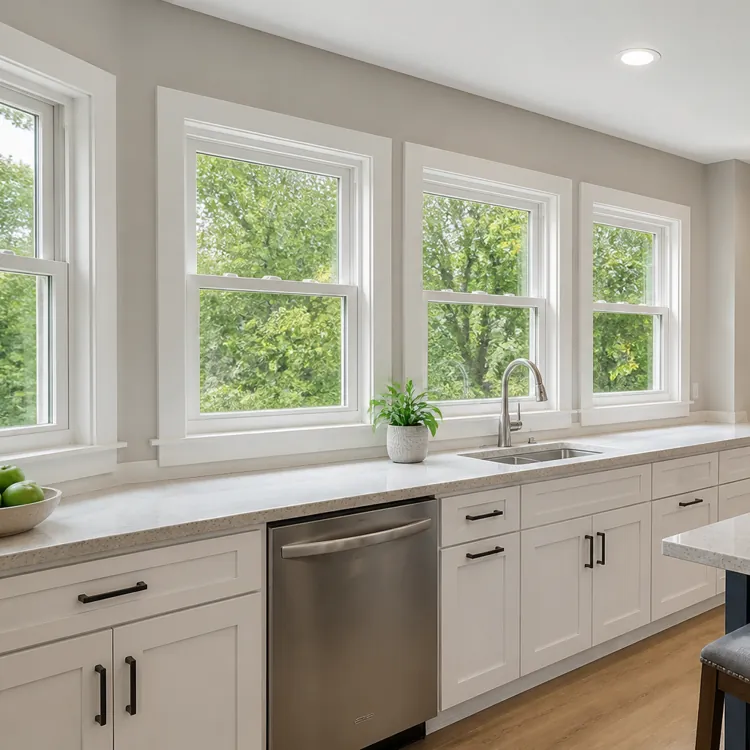
A double-hung window has two movable sashes, a top sash and a bottom sash, which move independently. A single-hung window has one stationary top sash and one operable bottom sash. Although more expensive, double-hung windows are more popular because they provide easier access for cleaning and maintenance and offer more ventilation options.
Do double-hung windows increase home value?
Yes, new double-hung windows can increase home value because they improve your home’s curb appeal. Savvy buyers will also often be willing to pay more for a home with new double-hung windows, as they improve energy efficiency, help reduce heating and cooling costs and reduce wear and tear on your HVAC equipment, leading to a longer lifespan.
Bottom line
On average, you’ll pay between $400 and $900 to replace a double-hung window. While costs vary, the benefits — like improved home value, energy efficiency and easier maintenance — often justify the investment. If your windows are old or drafty, upgrading is likely worth it, especially if you plan to stay in your home for years.
Article sources
ConsumerAffairs writers primarily rely on government data, industry experts and original research from other reputable publications to inform their work. Specific sources for this article include:
- College of Earth and Mineral Sciences, The Pennsylvania State University, "10.12 Frame and Spacer Materials for Windows." Accessed Sept. 14, 2026.
- International Association of Certified Home Inspectors, "InterNACHI's Standard Estimated Life Expectancy Chart for Homes." Accessed Sept. 14, 2026.
- APRO, "Double-Hung Window Sizes: Charts & Rough Opening Guide." Accessed Sept. 14, 2026.
- Keystone Window, "Common Window Sizes Explained: Finding the Perfect Fit for Your Home." Accessed Sept. 14, 2026.