
Compare the best wireless security systems
To narrow down our picks, we looked at 27 home security companies and compared 30 features, including availability, installation, monitoring options and cost. We also looked at customer reviews and ratings on ConsumerAffairs, performed hands-on tests and consulted security experts. All prices are accurate as of publication.
| Company | Starting monitoring fee | Required contract | DIY installation | Trial period | |
|---|---|---|---|---|---|
 Vivint | Get a Quote | $24.99 per month | Month-to-month or length of financing | No | No |
 ADT | Get a Quote | $24.99 per month | 36 months for monitored; 1 month for DIY | Optional | 6 months |
 Link Interactive | Learn More | $30.99 per month | 12 to 36 months | Yes | 30 days |
 SimpliSafe | Learn More | $9.99 per month | Month-to-month | Yes | 60 days |
 Ring | Learn More | $4.99 per month | Month-to-month | Yes | 30 days |
- Smart Sentry feature
- Contract or month-to-month options
- Professional installation

Vivint offers professionally installed wireless security systems with flexible service options, including financing or month-to-month plans to avoid long-term commitments. Its home automation options include full security systems, smart locks, cameras, thermostats and other connected devices that can be controlled and monitored through an app. These can work alongside other smart devices like Philips Hue, Kwikset smart locks, Alexa and Google Home.
What we like
Habas continued: “My second-favorite Vivint feature isn't nearly as exciting, but it's a small detail that other companies don't necessarily offer: guest logins for the Vivint app. You can let other people use key features in the Vivint app without giving them your personal login information.”
What reviewers say

ADT offers monitored home security with packages starting at $24.99 per month. Equipment bundles start at $269, and the company promotes deal-based discounts on its website. Your final total still depends on equipment, installation and monitoring choices.
What we like
What reviewers say
- Tamper-proof technology
- Affordable equipment
- DIY installation

Link Interactive offers the flexibility of one-, two- and three-year contracts. The company also offers affordable equipment and DIY installation.
What we like
What reviewers say
“We looked at Vivint and what that would cost, and then looked at [Link Interactive] and decided that it was a better way to go. I … told them what equipment I wanted," John of Nebraska said. "They ordered it and I received it about seven days later, as promised. I set it up myself. There were instructions in the box on what to do and when to do what. I like what I got. It's a two- or three-panel and I also have the recessed door sensors, which are nice. Then the camera is good out front.”
- Easy to use
- Affordable equipment
- DIY installation

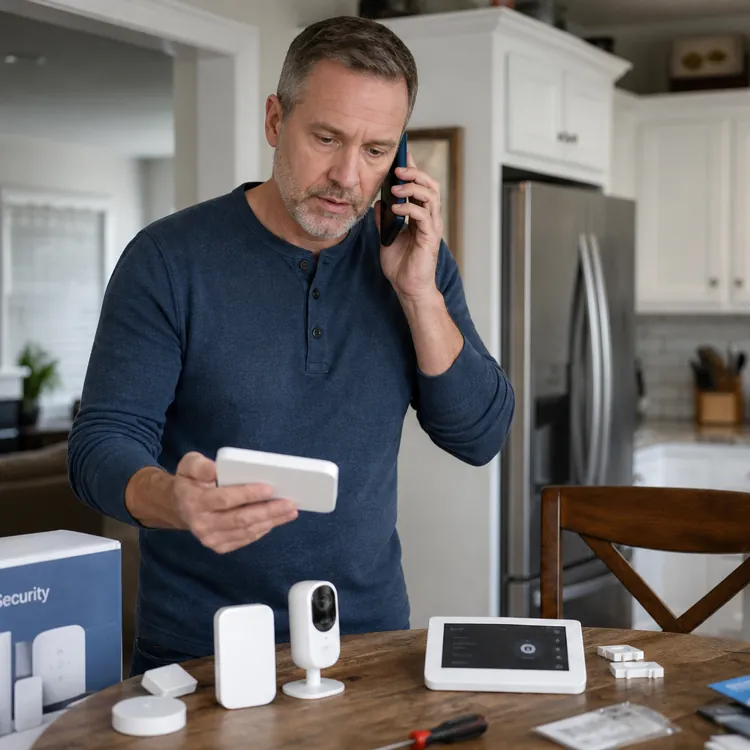
SimpliSafe is an ideal solution for renters and homeowners who want a tool-free security system. The hardware is designed for simplicity, and the company offers various monitoring tiers, from basic self-monitoring to high-end plans with live guard intervention.
What we like
What reviewers say
- Large equipment selection
- Affordable equipment
- DIY installation

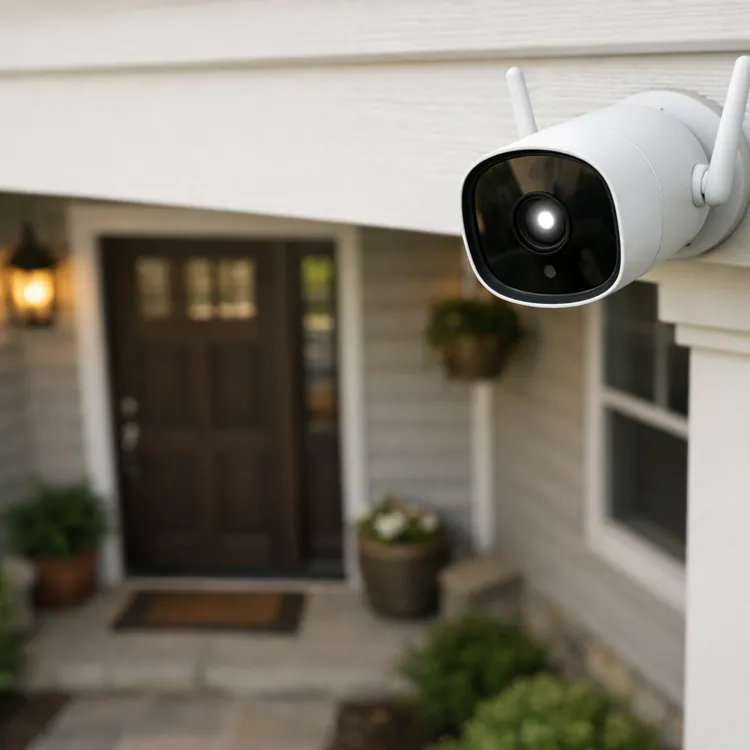
Ring has one of the largest equipment selections among the home security companies on our list. Ring is a strong pick for affordable, camera-focused home security. It offers a wide range of camera options, including solar-powered and floodlight cameras, giving you flexibility in how you power and position your outdoor surveillance system.
What we like
What reviewers say
How wireless security systems work
When wireless security sensors or cameras detect unusual activity, they transmit the information to the control panel, the system's central hub. Once the control panel analyzes the information, it triggers the appropriate response (like sounding an alarm or notifying the authorities).
... They communicate with the control panel, the monitoring center and your smartphone with wireless technology (Wi-Fi, 4G LTE, etc.) as opposed to an Ethernet cable or a phone line.”
How the devices communicate determines whether the system is wireless. “Virtually all home security systems these days are (or can be) wireless because they communicate with the control panel, the monitoring center and your smartphone with wireless technology (Wi-Fi, 4G LTE, etc.) as opposed to an Ethernet cable or a phone line,” Habas explained.
Some security systems also rely on battery- or solar-powered equipment, making them "wireless" in this regard, meaning they aren't hardwired into your home's electrical panel. When a company refers to its system as “wireless,” though, it typically means the devices communicate without a wired connection.
Pros and cons of wireless security systems
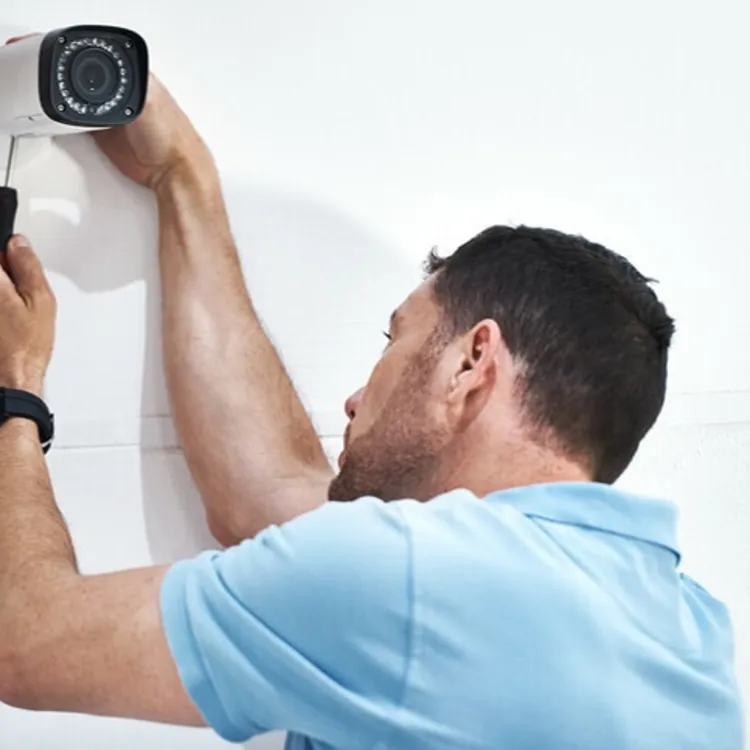
One of the primary benefits of wireless security systems is that installation is faster and more flexible because no wires are involved. Often, systems can be installed in as little as an hour, whether or not they’re installed professionally. Another benefit is that you can easily expand the system as your security needs evolve, without drilling holes or fiddling with your home’s electrical system.
Pros
- Easy to install
- Easy to expand
- Reliable in a power outage
Cons
- Vulnerable to hacking
- Possible unstable connections
» LEARN: Security system installation: DIY vs. professional
Security and connectivity concerns
Most wireless devices run on batteries, so you can also rest assured they’ll still work in a power outage. (Even systems that need to be plugged into an outlet typically have battery backups in case of an emergency.)
Always being connected to the internet, though, can leave you vulnerable — hackers may be able to access your system through your Wi-Fi. To ensure the security of your wireless system, follow best practices: use strong passwords, regularly update firmware and enable encryption to protect your data. Select a reliable provider that can offer guidance and support to ensure your system is secure and dependable.
Another drawback is that because many wireless devices use Wi-Fi, they’re prone to instability. Other Wi-Fi devices (like your phone) can disrupt your security system’s connection. This can make security camera footage, for example, jumpy or pixelated.
Wireless vs. wired home security systems
One of the first decisions you need to make in choosing a home security system is whether to go with a wired or wireless system. Both have their pros and cons.
Wired systems are generally more reliable but easier to physically tamper with, while wireless systems are more vulnerable to hacking.
Wireless systems are popular because they're easy to install and can be set up quickly without any professional assistance. This can be a huge selling point for people who want a security system without the hassle of running wires and drilling holes in their walls. Plus, wireless systems are often more customizable and versatile, and you can add or remove components as needed.
Wired systems can offer a more stable and reliable connection because they're not affected by interference from other wireless devices. They can also be a better choice for larger homes or businesses; they can cover more area without losing signal strength.
Wired systems can be more difficult to install, though, because they require running wires throughout your home or business. This can be a major inconvenience, especially if you're not handy or don't want to deal with the mess and expense of wiring.
Another consideration is system security. While wireless systems are harder to physically disable, they can be more vulnerable to hacking and external attacks. Wired systems, on the other hand, are less susceptible to hacking, but an intruder can disable them by cutting the wires.