

Key insights
Behind-the-ear models accommodate all hearing loss levels, from mild to profound, while in-the-ear styles typically suit mild to moderate loss.
Jump to insightBTE devices offer superior power, durability and advanced features, in part because their larger cases accommodate bigger components.
Jump to insightITE hearing aids are more discreet and can reduce wind noise, but their smaller design limits amplification compared with many BTE models.
Jump to insightWhen comparing BTE vs. ITE hearing aids, balance your hearing loss severity, dexterity, cosmetic concerns and other factors to choose the right option for you.
Jump to insightComparing BTE and ITE hearing aids
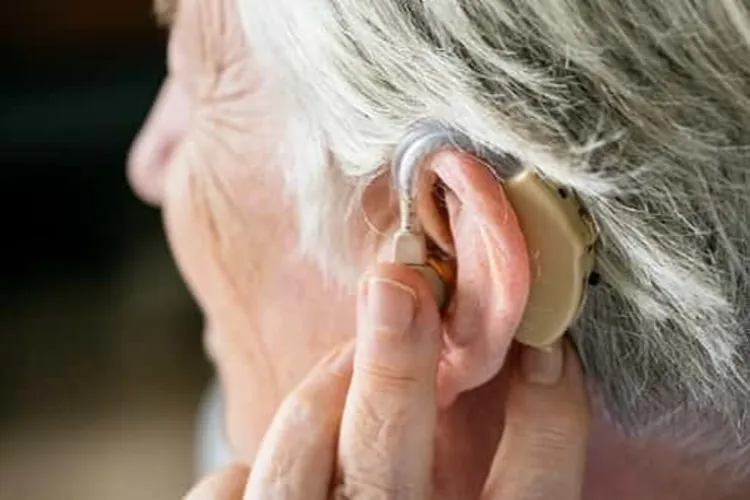
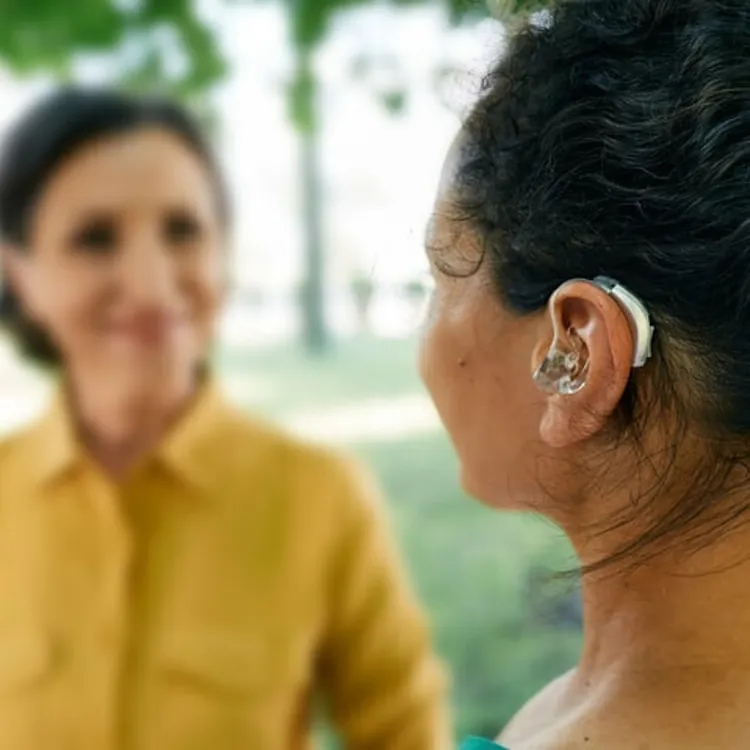
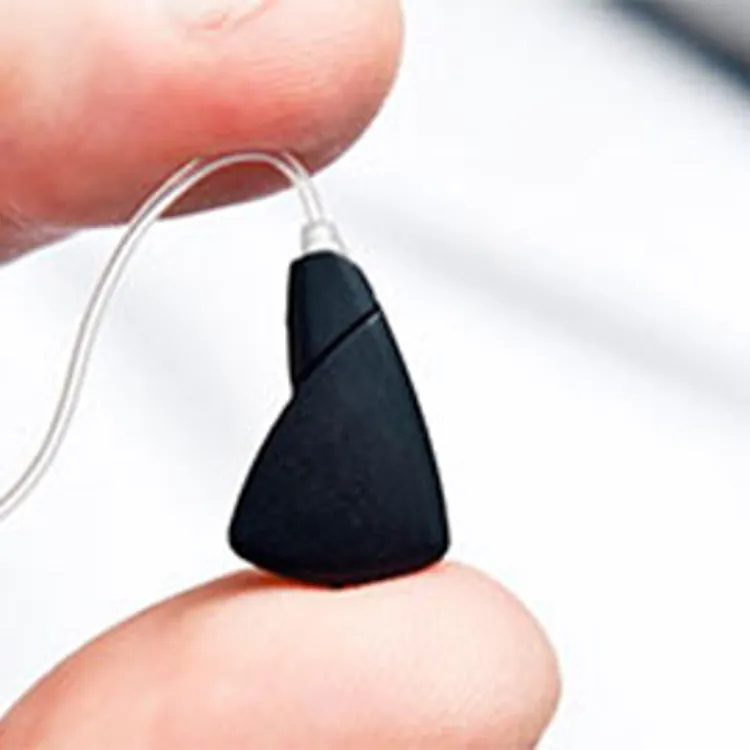
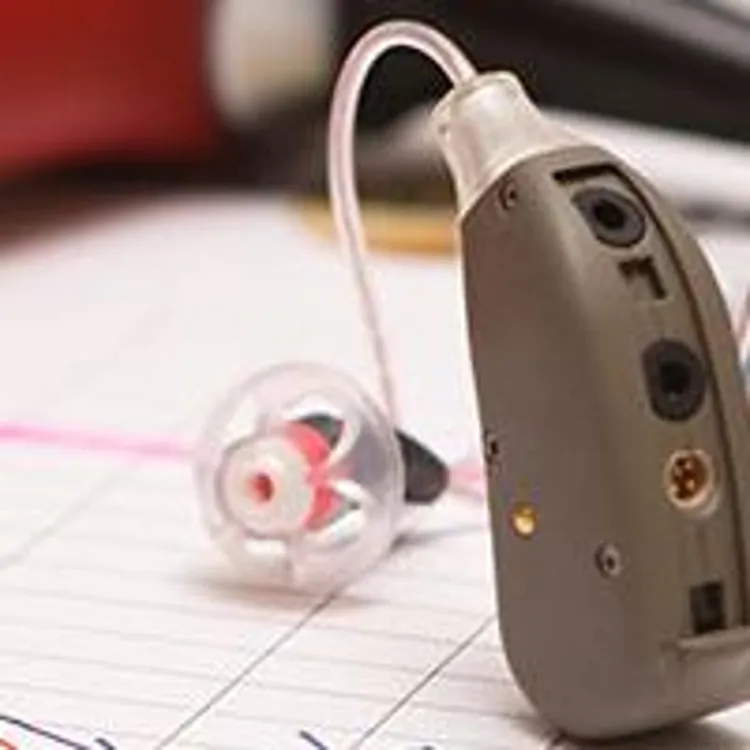
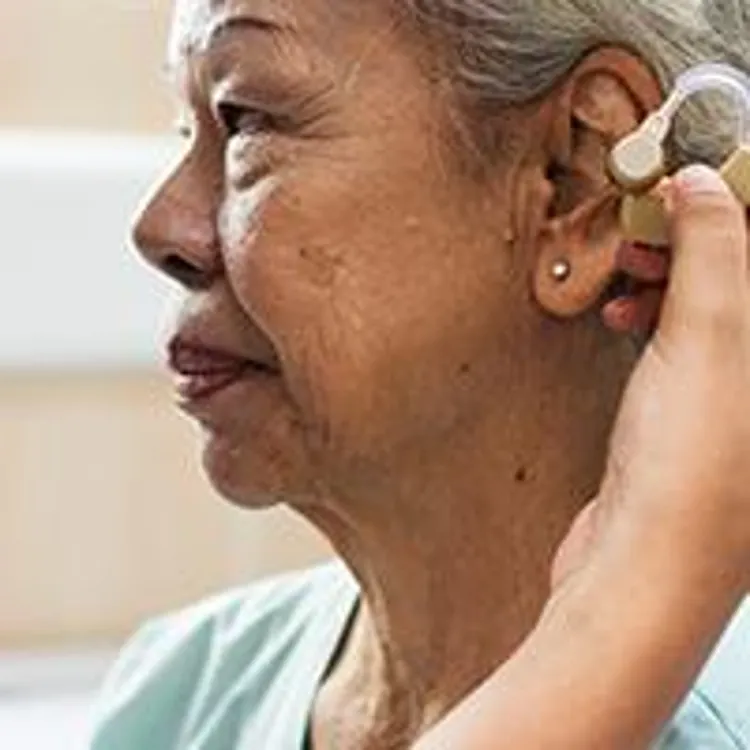
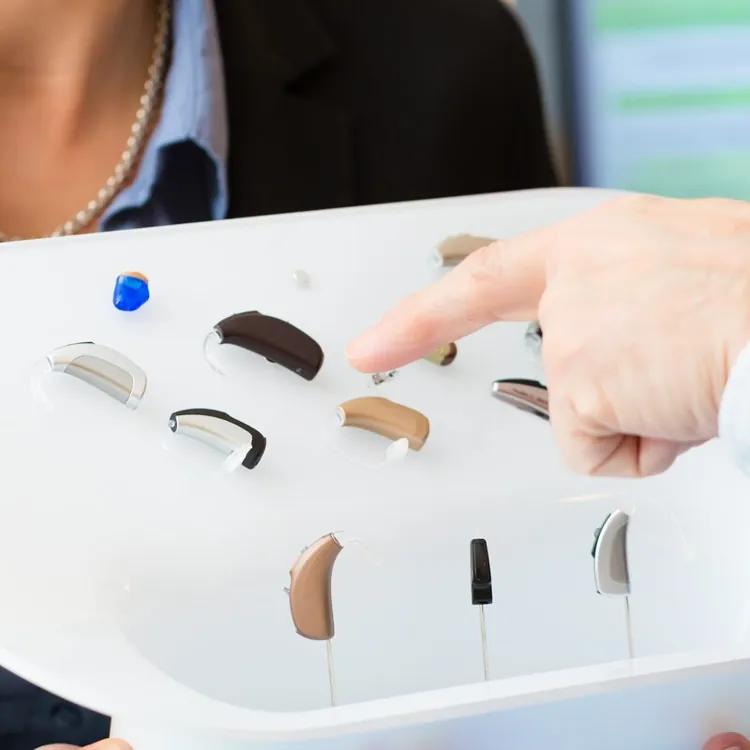
Behind-the-ear (BTE) hearing aids house the microphone and amplifier in a case behind your ear, along with a small tube connecting the case to a speaker that sits in your ear canal.
In-the-ear (ITE) hearing aids fit entirely inside your outer ear and contain the microphone and speaker in one small unit that resembles an earplug.
The bulkier case size of BTE hearing aids enables stronger amplification and longer battery life, making them a better fit for moderate-to-severe hearing loss. ITE hearing aids offer a more discreet design and may be a better choice if you have milder hearing loss or prefer a microphone positioned closer to your eardrum for a more natural sound.
The table below compares the two options to help you choose a hearing aid that is right for you.
| Factor | Behind-the-ear | In-the-ear |
|---|---|---|
| Visibility | Visible | Discreet |
| Hearing loss range | Mild to profound | Mild to moderate |
| Comfort factors | Bulkier, but doesn’t plug your ear | Snug; easy to insert and remove; can feel like your ears are plugged |
| Battery life | 5 to 10 days | 4 to 7 days |
| Maintenance needs | Easier to maintain; infrequent earwax and humidity issues | Requires frequent cleaning to prevent earwax buildup |
| Wind noise susceptibility | More susceptible, depending on model and head position | Less susceptible |
| Phone use compatibility | Strong Bluetooth connectivity | Compatible with Bluetooth, over-the-ear headphones and telephones |
» MORE: Top-rated hearing aids
Pros and cons of BTE hearing aids
Behind-the-ear hearing aids come in a range of designs and can accommodate many levels of hearing loss. Because the main device sits behind the ear, BTE aids have room for larger components and batteries than many in-the-ear models.
That design has both advantages and disadvantages. The sections below cover how BTE aids compare in areas such as comfort, battery life, maintenance, visibility and everyday use.
Advantages of behind-the-ear hearing aids
BTE hearing aids, including receiver-in-canal (RIC) devices, keep the device body outside your ear, which helps prevent earwax and moisture from affecting it. Their larger size also allows for stronger amplification and larger batteries, making them suitable for a wide range of hearing loss.
Pros of behind-the-ear and receiver-in-canal aids
- Effective for any level of hearing loss: With a larger case tucked behind your ear, BTE aids have stronger microphones and amplification, making them suitable for all levels of hearing loss, including profound loss.
- Longer battery life: While battery sizes vary by device, BTE aids tend to have larger batteries that can last up to 10 days, while many in-the-ear options last about half as long before needing a recharge.
- More comfortable: Many users find behind-the-ear aids more comfortable because the device sits outside the ear, leaving the ear canal open and allowing air to circulate.
- Easy maintenance: Since BTE aids keep the device body behind the ear, they avoid the trapped earwax and humidity issues that can plague ITE devices. This makes BTE aids generally easier to keep clean.
- Easier to dial in settings: BTE aids are larger devices with larger buttons, making it much easier for users to adjust settings and shift volume as needed. They generally don’t require as much dexterity as ITE devices.
Disadvantages of behind-the-ear hearing aids
Behind-the-ear aids’ larger size and placement mean that they’re less discreet, can feel bulky, and may get in the way of other devices around your ear. The external microphone placement can also be more susceptible to wind noise.
Cons of using behind-the-ear aids
- Conspicuous: For many, the main drawback of BTE aids is cosmetic; the bulky case is easy to see.
- Wind noise: BTE aids have an exposed microphone behind your ear, so they can pick up more wind noise than ITE aids. However, improving noise-canceling technology can reduce much of this noise.
- Can get in the way: If you wear glasses, headphones or earmuffs, BTE aids can get in the way and become a nuisance. However, though some users physically feel the device at first, they usually adjust within a couple of weeks.
- Altered sound perception: BTE aids have microphones outside the ear, unlike natural hearing, where sound is collected within the ear. This difference can cause problems with directional orientation and awareness.
Pros and cons of ITE hearing aids
In-the-ear hearing aids house all components in a single case that fits inside your outer ear. Unlike BTE aids, ITE models have no external case or tubing, making them more discreet and generally easier to put in and remove.
However, the design has both benefits and drawbacks. The sections below compare ITE aids with BTE models in areas such as comfort, sound perception, wind noise, battery life, maintenance and everyday use.
Benefits of in-the-ear hearing aids
A more consolidated option, in-the-ear hearing aids are less obtrusive and harder for others to spot. They also offer some auditory advantages, including less wind noise and microphones positioned within the ear.
Positives of in-the-ear aids
- Can be easier to put on or remove: ITE aids are a single unit you can insert quickly into your ear. There are no tubes to manage or tuck behind your ear, which many users appreciate.
- Discreet: Many ITE hearing aids are difficult for others to see, especially when viewed from the front or back, making them a more discreet option.
- Less wind noise: ITE aids have microphones inside your ear, which can reduce wind noise and provide a more focused sound.
- More natural sound perception: With microphones inside the ear, ITE aids can more closely approximate the natural location where sound enters your ear. This may benefit sound perception, directional hearing, spatial awareness and speech clarity.
- Less bulky: ITE aids are smaller and lighter than BTE aids, making them easier to store, travel with and carry in your pocket. The in-ear design means they’re less likely to interfere with glasses or traditional telephone use.
Drawbacks of in-the-ear hearing aids
The main downside of ITE aids is that they generally have less amplification power than BTE aids, limiting their use for more severe hearing loss. Their in-ear design can also create a plugged-ear feeling and make them more susceptible to earwax and moisture.
Potential issues with using in-the-ear aids
- Generally not suited to severe hearing loss: ITE aids typically provide less amplification than BTE hearing aids, making them more appropriate for mild-to-moderate hearing loss than more severe loss.
- “Plugged-ear” feeling: ITE hearing aids are custom fit to sit snugly in your ear. They may make your ears feel plugged or full, which can be distracting, especially during the first couple of weeks as you adjust.
- May require more dexterity: A smaller device means smaller buttons. While BTE aids generally allow you to adjust settings without removing the aid, ITE aids’ smaller controls may require more finger dexterity.
- Smaller, shorter-lasting batteries: ITE aids generally have shorter battery life than BTE alternatives. Depending on the model and battery, however, you may get up to seven days of use before needing to recharge.
- Moisture and wax: Because ITE aids sit inside your ear, earwax can build up around the device or clog the speaker. Moisture and humidity can also affect the device and, in some cases, contribute to ear irritation or infection.
Choosing the right hearing aid style
When choosing between behind-the-ear and in-the-ear hearing aid models, the most important factors are your hearing test results and your audiologist's recommendations.
However, your decision-making process should also consider lifestyle factors like your athletic habits, glasses and other headwear, and your aesthetic preferences.
What to consider when choosing a hearing aid
- Hearing loss severity: Before choosing a hearing aid, it’s critical to do a comprehensive hearing test with an audiologist. These results, which show your ears’ volume and frequency baselines, indicate the degree of your hearing loss and help determine which aids suit your needs.
- Audiologist guidance: As a medical authority with knowledge of your hearing loss, your audiologist’s guidance and hearing aid recommendations should take top priority.
- Cosmetic preferences: In-the-ear hearing aids are more discreet and less visible. If it matters to you that others don’t see your hearing aid, an ITE aid will be more subtle.
- Finger dexterity: Behind-the-ear hearing aids are bigger, with larger buttons that are easy to press. If you have large fingers or limited dexterity and want to minimize frustration when adjusting settings, BTE aids may be a smoother option.
- Glasses and headphone usage: If you wear glasses, a headset or over-the-ear headphones, behind-the-ear hearing aids are more likely to get in the way. ITE aids will likely be less disruptive, though it’s worth trying samples of both ITE and BTE options before committing to a final choice.
- Lifestyle and athletic factors: The bulkier BTE aids are more likely to cause disruptions if you’re highly active. If you are an athlete who runs, jumps or moves quickly, the snugger fit of ITE hearing aids makes them a better option, with a lower risk of falling out or distracting you.
- Earwax production and ear infection proneness: If your ears clog easily or produce excessive earwax, or if you’re prone to ear infections, BTE aids are probably a safer option because they preserve better airflow in your ear.
- Maintenance preferences: Because BTE aids avoid the humidity and earwax that can threaten ITE aids, BTE aids generally require less cleaning and maintenance, such as dehumidification.
FAQ
Which hearing aid style is most discreet?
In-the-ear hearing aids are the most discreet because they fit inside your ear, keeping them mostly out of view.
Which hearing aid style works for severe hearing loss?
Behind-the-ear hearing aids are generally more effective for severe hearing loss because they include stronger amplification technology.
Which hearing aid style is easier to clean?
Behind-the-ear hearing aids are generally easier to clean because most of the device sits outside your ear, avoiding the earwax that can clog in-the-ear aids.
Are behind-the-ear hearing aids better for Bluetooth streaming?
Not necessarily. Today, behind-the-ear and in-the-ear hearing aids both tend to include Bluetooth streaming capabilities.
Article sources
ConsumerAffairs writers primarily rely on government data, industry experts and original research from other reputable publications to inform their work. Specific sources for this article include:
- American Speech-Language-Hearing Association, "A New Approach to Hearing Aid Directionality." Accessed Sept. 15, 2026.
- Audibel, "How Long Do Hearing Aid Batteries Last?" Accessed Sept. 15, 2026.
- Happy Ears Hearing Center, "In-the-Ear vs. Behind-the-Ear Hearing Aids: Which Is Right for You?" Accessed Sept. 15, 2026.
- Hear4U, "Ear Infections and Hearing Aids." Accessed Sept. 15, 2026.
- Hearing Aid UK, "In-the-Ear (ITE) Versus Over-the-Ear (OTE) Hearing Aids." Accessed Sept. 15, 2026.
- National Library of Medicine, "Wind Noise Management in Hearing Aids." Accessed Sept. 15, 2026.
- New York Hearing Doctors, "Comparing Completely-In Canal and Behind the Ear Hearing Aids." Accessed Sept. 15, 2026.
- Premier Audiology & Hearing Aid Center, "The Pros and Cons of In-The-Ear (ITE) Model Hearing Aids: A Balanced Perspective." Accessed Sept. 15, 2026.
- University of California San Francisco, "Hearing Aid Types: BTE, RIC, ITE, CIC/IIC." Accessed Sept. 15, 2026.
- Yes Hearing, "How Does a Behind-the-Ear (BTE) Hearing Aid Work?" Accessed Sept. 15, 2026.