

Solar panel scams to watch for
Complex technical details, a patchwork of rebates and regulations and complex contracts make solar power ripe for scams and misleading claims. While the best solar power companies should provide accurate information, homeowners often have to sort through many fake companies and misleading situations to find a reputable solar provider.
Free solar panel scam
Free solar government programs and claims of “free in your area” or other limited-time free solar panel offers are common scams, similar to those sketchy late-night commercials that promise things like a “new benefit they don’t want seniors to know about.”
There are no widespread free solar panel or solar system programs. However, occasionally low-income programs are available, such as the Disadvantaged Communities Single-family Solar Homes (DAC-SASH) program in California.
False rebate claims
Various state and local governments do offer incentives for going solar. However, some companies and scam artists fabricate rebates and incentives, lie about how much rebates are worth, push expired rebates or tell you about a real rebate that isn’t available in your area.
Always verify rebate and incentive value, availability, location, deadlines and eligibility requirements. One example to watch out for: solar companies that still list a 30% federal rebate, the Residential Clean Energy Credit, which expired in December of 2025.
Inflated savings
A huge part of most solar pitches is saving money on your power bills. Unfortunately, that means some companies overinflate savings with best-case scenarios and present them as absolute fact.
Similar to false rebate claims, some companies may also play fast and loose when discussing savings from net metering (where the energy company buys power from you) and solar renewable energy certificates (SRECs) that are only available in some areas.
Fly-by-night installers and empty warranty promises
Like fake, low-quality roofing companies that go door to door after a storm, this scam has evolved as solar power has become more common. These door-to-door solar installers and scam artists often promise full lifetime warranties as well.
However, these companies typically go out of business in a year or two and then reform under another name and repeat the cycle.
Energy company or government impersonators
A subset of fraudulent installers/companies impersonate real solar companies, utility companies or government employees and go door-to-door to pitch scams like free solar panels, false rebates and “limited time state programs.” Common props for this scam include khaki pants, a blue or white button-up shirt, a generic safety vest, a hardhat and a blank badge.
Pay for energy presented as financing
Solar power financing plans are often complex. Many advertise zero out-of-pocket when it is, at best, a no-down-payment option with payments later or, more likely, a system you don’t own and, therefore, pay the solar company for power rather than your old electric company.
Watch for terms like TPO (third-party ownership), PPA (power purchase agreements), solar loans (actually leases) and prepaid leases and be sure you understand what type of financing and ownership you are actually agreeing to.
Unnecessary upgrades to older systems
Early solar adopters may have a system under an old Feed-in-Tariff plan (FIT) agreement that set guaranteed power rates on the energy homeowners sold back to the energy company for up to 25 years. Changes to the system may void the FIT agreement and reduce the rate homeowners are paid for energy sold back to the grid.
Some utility companies may push for homeowners with FIT agreements to “upgrade” or replace some parts of their solar equipment in an effort to free themselves from paying higher rates for bought power.
High-pressure tactics with false deadlines
High-pressure sales tactics may make us think of stereotypical used-car dealers and hidden problems. Almost every scam and misleading solar claim is paired with high-pressure sales tactics and an urgency to sign now before you can think.
Solar panel scam warning signs
While some solar panel and solar energy system scams are confusing and hard to detect, almost all of them share at least some red flags that should alert you to pay extra attention or get outside help before signing contracts when choosing solar panels and installers.
Solar scam red flags include:
- High-pressure sales tactics that push you to make an immediate decision without time to think or research the company or deal
- Unsolicited salespeople showing up at your door
- Verbal quotes and promises without written documentation
- Demands for large payments, typically in cash, before any work is done
- A company that is unable (or unwilling) to provide proof it is properly licensed, certified (such as NABCEP certification) or carries liability insurance
- Contract terms include rising energy costs over time
- Requires high-dollar maintenance plans
- No labor warranty
- No warranty against overestimated power production
- Cannot show proof or details for promised rebates and incentives
- Newly established companies with limited reviews
Solar panel scams on leases and PPAs
Even when it’s legitimate, solar panel financing is complex, and there are common scams that surround financing. Some are misunderstandings, and others deliberately gloss over details and are designed to mislead.
Ownership
Unlike buying or leasing a car, solar panel contracts can run 25 years or longer. Financing on solar power uses a variety of options, including several arrangements where you aren’t actually buying your solar system.
PPA, prepaid leases (lump sum PPAs), leases (sometimes called a solar loan), SPPA (solar power purchase agreement) and TPO plans leave the equipment in the hands of the solar company, while homeowners make payments for energy. However, some plans offer buyouts or ownership transfers after a certain number of years.
Many homeowners aren’t told they won’t own their system under these plans.
Hidden fees and escalations
Often part of predatory lending schemes, many solar loans and leases include terms that inflate prices. In some cases, loans increased solar costs by 30% over cash prices with markup fees and dealer fees. Leases may also have built-in payment escalations of several percent each year.
Other common red flags include balloon payments based on expected solar rebates or incentives, or listing a “net price” that subtracts federal tax credits or other incentives homeowners might receive but that do not affect the loan terms.
Liens and transfer problems
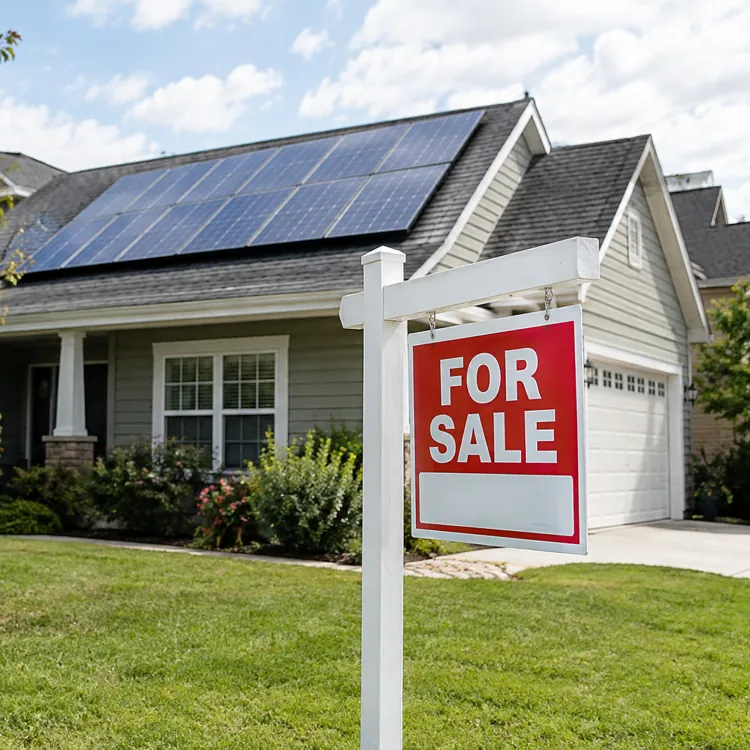
If your purchase/financing agreement leaves ownership with the solar provider, a lien on the equipment may stall home sales. For example, new owners would have to agree to the existing PPA agreement or the system must be bought outright before a sale (if terms allow).
Likewise, Property Assessed Clean Energy (PACE) financing uses your home as collateral for no-money-down financing and complicates home sales through liens.
Misleading savings estimates
Most solar savings estimates look at best-case scenarios for rebates, power costs and power production while omitting maintenance fees. For example, maximum power production rarely happens due to fluctuating weather conditions or increased shade from tree growth.
Likewise, power costs are typically underestimated, and power sales (through SRECs or net billing) overestimated. Combining overestimated production with underestimated per-kWh costs can drastically reduce savings guarantees.
What to do if you’re scammed
Even if you’ve carefully chosen your solar company, you can still fall prey. Many scams are highly sophisticated and effective at tricking homeowners. If you suspect you are a victim of fraud or a scam, take these steps.
- Do not sign any additional paperwork: As soon as you suspect a scam, do not sign anything else. However, if you already have an active payment, most states and municipalities suggest continuing payment, or require continuing payments while complaints are handled.
- Collect documentation and write out a timeline of events and promises: This will help you contest any fraudulent charges.
- Invoke a local or the federal FTC cooling-off rule to cancel the contract: Cooling-off rules often have strict deadlines, such as three to seven days after signing.
- Consult with an attorney: Numerous laws may protect you, such as the Truth in Lending (TILA) Act, and an attorney can help you navigate complex topics. Local legal aid groups may be able to connect you to a free or low-cost attorney.
- File a complaint: Federal and state agencies exist to protect consumers from scams. The FTC, the federal Consumer Financial Protection Bureau (CFPB), state consumer protection agencies and state utility consumer advocate offices all deal with different types of broken promises and misrepresentations.
FAQ
Why do solar companies claim panels are free?
Even legitimate companies sometimes market panels as no out-of-pocket cost based on best-case scenarios of selling power back to utilities, SREC sales and applying rebates towards system costs. But the claim may also be a scam.
Is it normal for a solar salesperson to pressure me into signing immediately?
No, high-pressure sales tactics are almost always a red flag. Due to the complexity of lease and loan financing around solar power, it is also recommended to discuss financing with a trusted financial advisor or lawyer before signing any contracts.
What happens if I already signed a bad solar contract?
Recent contracts may be negatable under the TILA. If the cooling-off period has expired, consider filing a complaint with the FTC or consulting with a lawyer.
Bottom line: Are solar panels a scam?
No, solar panels aren't a scam, and there are many reputable companies. However, the complexity and lack of general knowledge about solar have led to a rise in scams.
Before you sign a contract, compare quotes from multiple installers, verify their credentials and read the financing terms carefully. Be wary of promises of free panels or guaranteed savings without an assessment of your home and energy use.
Article sources
ConsumerAffairs writers primarily rely on government data, industry experts and original research from other reputable publications to inform their work. Specific sources for this guide include:
- Texas Appleseed, "New Report Reveals Financial Damage Stemming from Solar Panel Fraud in Texas." Accessed Oct. 16, 2026.
- National Public Radio, "Rooftop solar is good for the environment but has a fraud issue." Accessed Oct. 16, 2026.
- American Clean Power Association, "Solar by the Numbers: Powering America’s Future." Accessed Oct. 12, 2026.
- California Public Utilities Commission, "Solar in Disadvantaged Communities." Accessed Oct. 12, 2026.
- Internal Revenue Service, "Residential Clean Energy Credit." Accessed Oct. 16, 2026.
- Clean Coalition, "Feed-In Tariffs." Accessed Oct. 13, 2026.
- United States Environmental Protection Agency, "Financing." Accessed Oct. 16, 2026.