

Five steps to choosing solar panels
First, consider your household’s energy needs. Then compare your solar panel options on efficiency, durability and costs. Follow these steps to feel confident about the solar panels you choose.
1. Start with your home and energy needs
“The best solar panel depends on the home because homes are all different,” explained Aaron Nichols, a specialist at Exact Solar, a Pennsylvania-based solar installer.
What's your roof like?
Roof orientation plays a big role in panel selection:
- South-facing roofs receive the most direct sunlight. So, they can often work well with standard-efficiency panels.
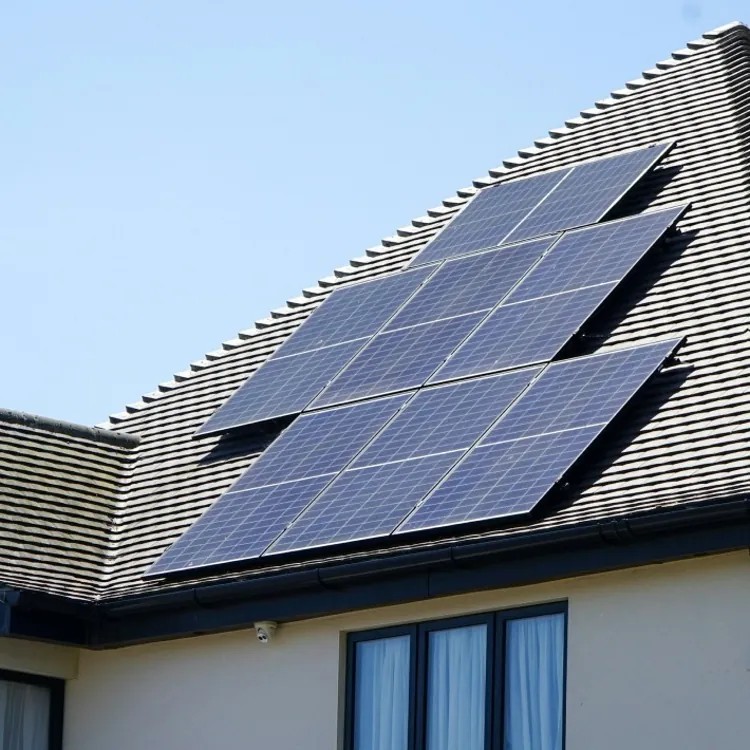
- East- and west-facing roofs get less consistent sun exposure. As a result, they might need higher-efficiency options to generate adequate power.
- Shaded roofs benefit from microinverters or optimizers that prevent one shadow from reducing your entire system’s output.
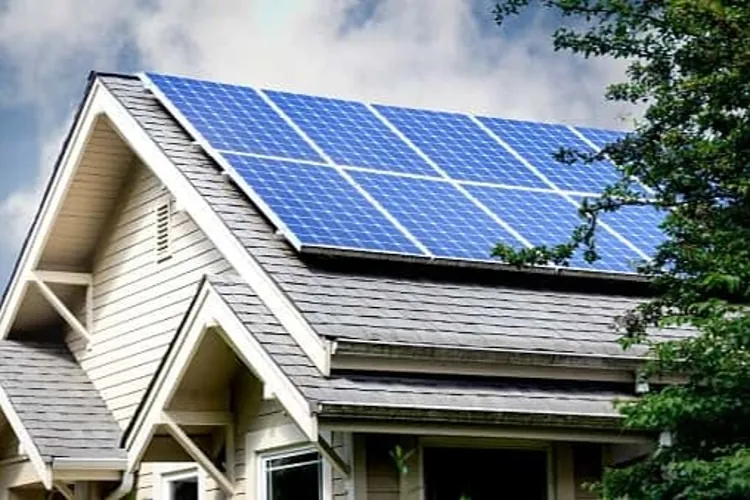
In addition to orientation, your roof’s size and shape determine whether efficiency becomes a priority. Small or complicated roofs with gables need high-efficiency panels to generate maximum power in a limited space. Meanwhile, large, flat roofs with room to spare can use standard-efficiency panels since you can install more of them.
How much electricity do you use?
Your household’s energy consumption patterns matter, too. “A family running AC all day with multiple EVs has different needs than a retired couple who mostly cooks on gas,” noted Dylan Simonson, owner of DryTop Roofing in Yavapai County, Arizona.
Homes with high daytime energy use can take advantage of power as it’s generated. But families who use most of their electricity at night might need battery storage.
2. Compare panel types and efficiency
If you’re shopping for solar in 2026, monocrystalline panels dominate the residential market when it comes to panel types. “Polycrystalline panels generally aren’t used anymore,” Nichols pointed out. “You may find these on Facebook Marketplace when they’ve been pulled off of older installations.”
Thin-film panels are available for specialized uses, such as RVs or curved surfaces, where rigid panels don’t work.
What to know about efficiency
Understanding efficiency helps you compare options within the monocrystalline category. A panel with 20% efficiency converts 20% of the sunlight hitting it into usable electricity. The rest becomes heat or passes through.
Monocrystalline panels range from 20% to 24% efficiency.
Higher efficiency panels generate more electricity in the same amount of space. So, you need fewer panels to meet your energy needs.
Higher-efficiency models cost more upfront. Premium panels (up to 24% efficiency) generate more power in less space and usually feature a sleek black appearance. Standard-efficiency models (20% to 22%) produce less power per panel but cost less.
Key takeaway
Go with higher efficiency when you have limited roof space or when your area has high utility rates. Standard-efficiency panels work well when you have ample roof space and want to minimize upfront costs.
3. Evaluate durability, performance and warranties together
“Panels are durable, usually lasting 25 to 30 years, but they do degrade about 0.5% per year,” explained Simonson.
This means a quality panel operating at 100% efficiency today will still produce around 85% to 90% of that power after 25 years.
- Panel warranties reflect this expected degradation. Performance warranties (usually 25 years) guarantee panels will maintain at least 80% of their starting production capacity by year 25.
- Product warranties (typically 10 to 12 years) cover manufacturing defects or hardware failures if a panel stops working before that natural decline occurs.
These warranties assume panels can withstand real-world conditions. Quality panels must handle 1-inch hailstones at 50 mph and wind speeds up to 140 mph to pass industry testing. Heat reduces efficiency slightly during hot days, but panels operate safely in temperatures from –40°F to 185°F.
Pro tip
“Any solar warranty is only as valuable as the company offering it,” Nichols cautioned. “If the company goes out of business, there’s no one to service that warranty.” Before signing, verify that the manufacturer has been in operation for at least 10 to 15 years and check that it has Tier-1 classification status.
» LEARN: What is a Tier 1 solar panel?
4. Compare costs and long-term value
Solar panel prices vary based on manufacturing quality, production location and marketing costs.
“There are certainly solar panels that are higher quality than others, but most major brands on the market are great,” Nichols said. The differences show up in efficiency ratings and warranty coverage rather than dramatic performance gaps.
Entry-level panels cost less upfront but may degrade faster. Premium panels handle heat better and often come with stronger warranties.
“Spending more can pay off if you’re staying in your home long-term,” Simonson noted. “But for shorter stays, mid-tier panels provide the best balance.”
Did you know?
Panel costs make up less than 20% of installation expenses — the rest goes toward labor, inverters and racking. Higher-efficiency panels can reduce overall costs when roof space is tight, as you need fewer panels, less racking hardware and shorter installation time.
5. Watch for red flags and make a confident choice
You’ll likely run into aggressive sales tactics when shopping for solar. Don’t let the pressure rush you into signing before you’re ready.
Watch for these warning signs:
- Claims that panels “pay for themselves” oversimplify how solar works. Your payback timeline depends on your utility rates and net metering policies.
- “Today only” deals create a false sense of urgency. Good installers give you time to compare several quotes.
- Demands for upfront deposits of 50% or more suggest financial instability. Most reputable installers ask for around 10% upfront.
What to look for
Pay attention to how well installers explain their recommendations and proposed add-ons.
“Ask why the installer chose that specific panel, how it fits your roof and how it affects your roof warranty,” Simonson advised. “If they can’t explain flashing, mounts and the installation process, they care more about closing the sale.”
Request model numbers for panels and inverters, not just brand names.
Also, remember that panel quality is only part of the equation. “A great panel on a poorly installed roof can lead to leaks or electrical issues,” warned Simonson.
“Often, a well-designed system with mid-tier panels beats a flashy system with top-of-the-line glass installed poorly,” Simonson said. Don’t let impressive panel specs distract you from vetting the installer’s experience and workmanship warranty.
How panel choice fits into the bigger solar decision
Panel selection works alongside three other key decisions that shape your system’s performance and value:
1. System design
High-efficiency panels produce more power per unit, so you need fewer of them to cover your energy needs. That means simpler installation and less roof space used.
2. Installer quality
Premium panels require installers who know what they’re doing. Look for companies with manufacturer certifications and workmanship warranties that last 20 to 25 years.
3. Financing
If you’re buying high-efficiency panels with cash or a loan, the system is yours (not a third party’s), and you benefit from slower degradation over time. If keeping upfront costs low is your priority, consider a lease or power purchase agreement with standard-efficiency panels.
Often, a well-designed system with mid-tier panels beats a flashy system with top-of-the-line glass installed poorly.”
Compare solar energy companies
Read our guide to the best solar companies to learn more.
| Company | Customer rating | Pro install | Max. panel efficiency | Panel warranty | Payment options | Year founded | |
|---|---|---|---|---|---|---|---|
 Sunlux | Get Started | 4.7 |  | 19.7% | 25 years | Cash, loan and lease | 2015 |
 Freedom Power Solar | Get Started | 4.1 | | 22.8% | 25 years | Cash, loan | 2007 |
 Project Solar | Learn More | 3.8 | | 20.9% | 25 years | Cash, loan | 2020 |
 Sunrun | Get Started | 4.3 | | 22% | 20 years | Cash, loan, lease | 2007 |
 ShopSolar | Learn More | 4.3 |  | Varies | Varies | Cash, loan | 2018 |
Share your solar company experience
If you’ve already gone solar before, consider writing a review at ConsumerAffairs.com to help others make better choices.
FAQ
How do solar panels work?
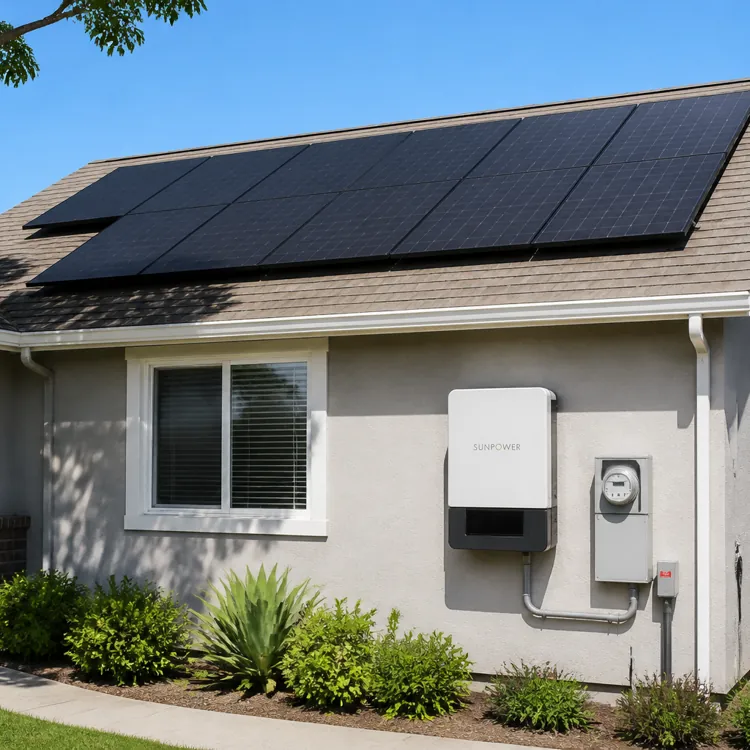
Solar panels convert sunlight into electricity that you can use in your home. Silicon cells in each panel absorb photons from the sun, which energize electrons and generate a direct current. Your home’s inverter then changes this DC electricity into AC power for your appliances, lights and electronics.
Do more expensive panels always perform better?
Expensive solar panels usually deliver better efficiency in extreme heat, last longer without degrading and come with stronger warranties. But that doesn’t mean they’re right for everyone. Find panels that match your roof space, climate and energy needs rather than defaulting to the priciest option.
Can I mix different panel brands on my roof?
Mixing solar panel brands is possible, but it may create more problems than it solves. Different brands often have varying electrical outputs, so your system will only generate as much power as your weakest panel allows. You’ll also risk voiding manufacturer warranties and creating headaches for your installer when troubleshooting issues.
Article sources
ConsumerAffairs writers primarily rely on government data, industry experts and original research from other reputable publications to inform their work. Specific sources for this article include:
- U.S. Department of Energy, “Planning a Home Solar Electric System.” Accessed Feb. 11, 2026.
- Federal Trade Commission, “How to avoid getting burned by solar or clean energy scams.” Accessed Feb. 11, 2026.
- Federal Trade Commission, “Solar Power for Your Home.” Accessed Feb. 11, 2026.
- Department of Consumer Affairs - Contractors State License Board, “Solar Smart.” Accessed Jan. 25, 2026.