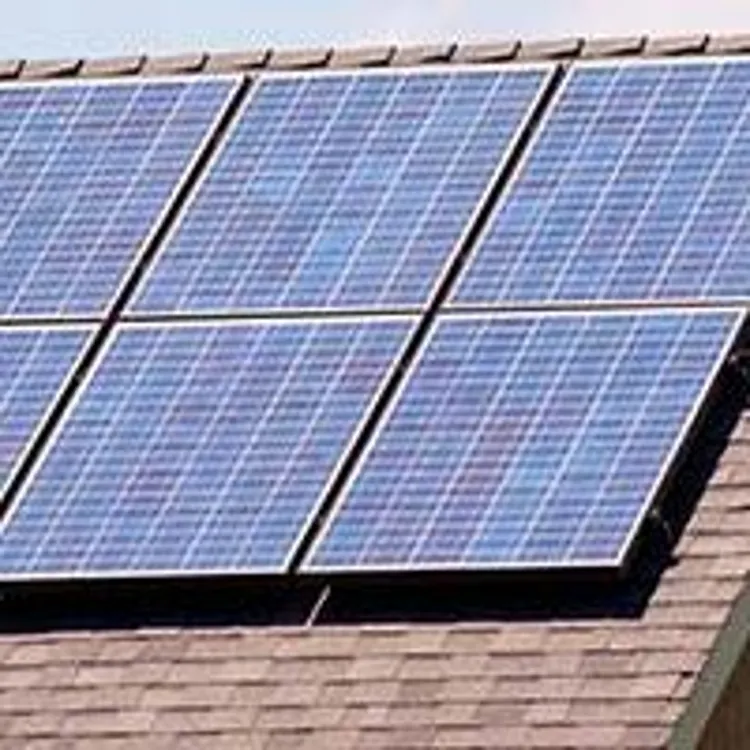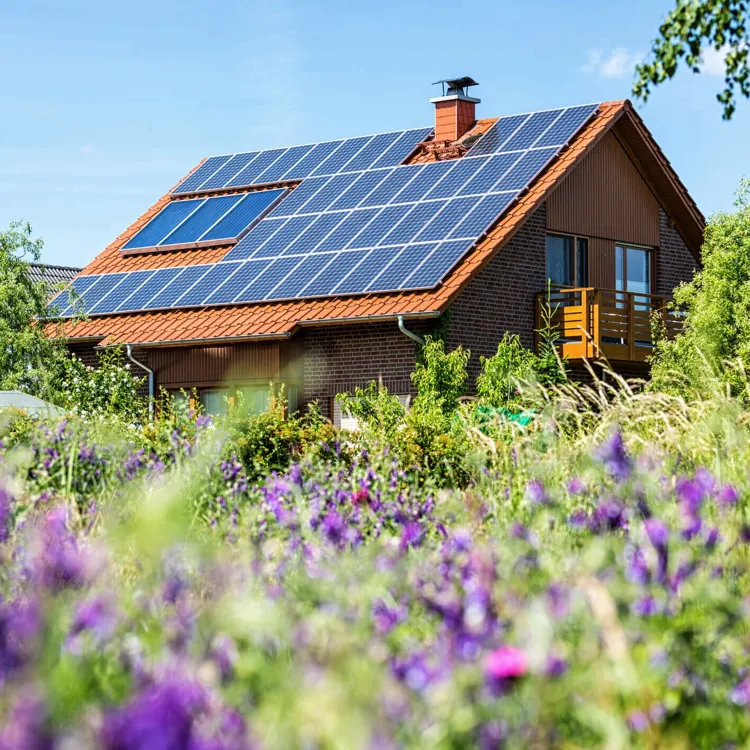

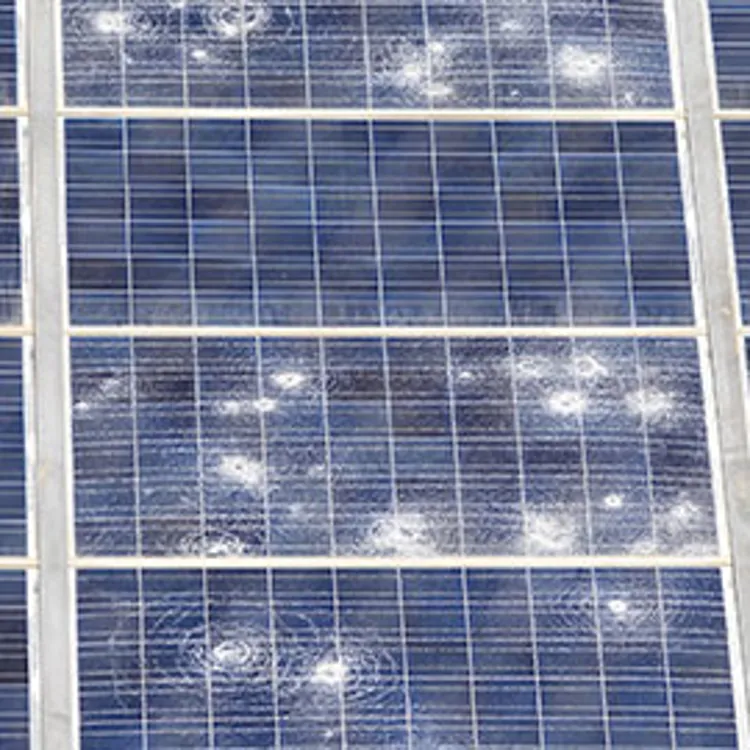
Solar panel systems typically cost tens of thousands of dollars, so it makes sense to be concerned about potential damage to your investment. However, hail may not be nearly as lethal to solar panels as you might think since most solar panels are rated to withstand hailstorms.
Why trust ConsumerAffairs?
Our editors, fact-checkers and moderators work to uphold standards for accuracy, transparency and trust.
Our editorial standards
- Our editorial team reviews and fact-checks all content before it’s published.
- We rely on expert input and trusted sources to verify our articles.
- All articles published must meet our editorial standards and independence policy.
Our review standards
- Our moderation team evaluates reviews to make sure they meet our guidelines.
- We require contact information to verify reviews come from real customers.
- Financial relationships do not influence whether we publish a consumer review.
Key insights
Hail usually doesn’t damage solar panels unless it’s over 2 inches in diameter.
Jump to insightHail damage is most likely in certain parts of the U.S., like Texas, the Midwest and the Great Plains.
Jump to insightThe cost of fixing hail damage may be covered by your homeowners insurance.
Jump to insightWhat size hail will damage solar panels?
Hail doesn’t generally damage photovoltaic (PV) systems unless the hail is at least 1 3/4 inches in diameter, or about the size of a golf ball, according to the U.S. Department of Energy.
Sara Popescu Slavikova, co-founder of Greentumble, an educational website on environmental issues, said: “Solar panels are rigorously tested and even certified to withstand hailstones up to 2 inches in diameter or larger falling at 50 miles per hour.”
Still, it’s difficult to say precisely what size hail will damage your solar panels because there are a lot of factors at play, ranging from wind speed to the quality of your solar panels.
Where hail can damage solar panels
People that live in areas prone to severe thunderstorms and hailstorms should be more prepared for potentially damaging weather conditions. Hail is typically the worst in Nebraska, Wyoming and Colorado, according to the National Oceanic and Atmospheric Administration’s (NOAA) National Severe Storms Laboratory (NSSL).
In 2024, the NOAA’s Storm Prediction Center reported that hail damage was the worst in the following states:
- Colorado
- Kansas
- Minnesota
- Missouri
- Nebraska
- North Dakota
- Oklahoma
- South Dakota
- Texas
- Wyoming
If you live in an area that's not prone to hailstorms, it’s very unlikely that hail will damage your solar panels. Generally, hail is more likely to damage other valuables on your property, like your roof or your vehicle, than your solar panels.
Does homeowners insurance cover hail damage to solar panels?
Homeowners insurance may cover hail damage to both rooftop and ground-mounted solar panel systems. Before installation, confirm this with both your installer and your insurance company.
To verify this information with your insurance provider, make sure your policy explicitly includes property damage from hail and that there's no language barring solar panels from your coverage. For the most accurate information, we recommend contacting your insurance agent directly.
In addition to homeowners insurance, hail damage to your solar panels may be covered under the manufacturer’s performance guarantees that came with your system. When talking to your installer about your PV system, ask what's covered in your solar panel warranty and determine the steps you should take in the event of hail damage.
» MORE: How long do solar panels last?
How to protect solar panels from hail
There are a few things you can do to protect your solar panels from potential hail damage before and after your installation.
Before installing solar panels
Get a professional to install your solar panels and ask to see the technical specifications and ratings associated with the equipment they use. That way, you can ensure your solar panels are properly mounted. Generally, solar modules need to pass 25 millimeter diameter tests for hail certification, according to the U.S. Department of Energy.
Next, make sure your solar panels have the right tilt to prevent damage. A higher tilt angle will generally prevent more damage than a lower tilt. If you’re interested in a ground-mounted system, consider a system with tracking that can automatically tilt panels before storms.
What to do before a hailstorm
Once your system is installed, if an intense hailstorm is forecasted, you can put a protective layer on top of your panels to keep them safe throughout the storm. However, this should only be done if you can safely access your solar panels, as is the case with a ground-mounted system. But unless you live in an area that's especially prone to extreme hailstorms, purchasing and using protective covers may not be worth the time, money and effort involved.
What to do after a hailstorm
After the storm has passed and it’s safe to go outside, carefully inspect your entire property for hail damage. In many cases, your roof or siding may be more damaged than your solar panels.
Solar panels are rigorously tested and even certified to withstand hailstones up to 2 inches in diameter or larger falling at 50 miles per hour.”
If your roof has been damaged but all of your solar panels are still in working condition, you may need to temporarily remove your PV system to repair or replace your roof. To do so, contact your original installer or another reputable solar company to safely take down your panels and store them until your roof is fixed.
Make sure the company you pick has a good reputation for follow-through. Matthew, a ConsumerAffairs reviewer from Maryland, had a bad experience: “[W]e had solar panels installed. A year later we had a new roof installed because of hail damage. [Our installer] came out and removed the panels. It took six months to have someone reinstall them and then they were not installed correctly.”
In the unlikely event that a hailstorm does damage one or more of your solar panels, you should contact the necessary parties to repair your system as quickly as possible. This includes sending pictures and descriptions of the damage to your homeowners insurance agent and your original solar installer (or another contractor if they are no longer in business).
» MORE: Solar panel maintenance guide
FAQ
How tough are solar panels?
How tough solar panels are generally depends on what materials are used and how the panels are tilted. The U.S. Department of Energy recommends selecting modules with at least 3.2 millimeter front glass, though 4 millimeters is preferred if possible. Additionally, higher tilt angles are usually better for preventing damage.
Will golf-ball-size hail damage solar panels?
Most solar panels can easily withstand up to golf-ball-size hailstones, or about 1 3/4 inches in diameter. However, they may not be able to withstand tennis-ball-size or baseball-size hail.
Should I avoid getting solar panels if I live in an area with a lot of hail?
You don’t necessarily need to avoid getting solar panels if you live in an area with a lot of hail. Even in extreme conditions, the likelihood of solar panel damage from hail is very low, even if you live in an area prone to hailstorms. Before installation, make sure the system you’re interested in has hail certification.
» MORE: How much do solar panels cost?
Bottom line
Hail can damage your solar panels depending on where you live, the size of the hail and the materials and tilt of your system. If you live in an area prone to hail, make sure that the solar installer you’re interested in provides proof that its systems have passed hail testing before you have a solar system installed.
Article sources
ConsumerAffairs writers primarily rely on government data, industry experts and original research from other reputable publications to inform their work. Specific sources for this article include:
- National Severe Storms Laboratory, “Severe Weather 101.” Accessed Nov. 24, 2025.
- National Oceanic and Atmospheric Administration, “Severe Weather Maps, Graphics, and Data Page.” Accessed Nov. 24, 2025.
- U.S. Department of Energy, “Hail Damage Mitigation for Solar Photovoltaic Systems.” Accessed Nov. 24, 2025.