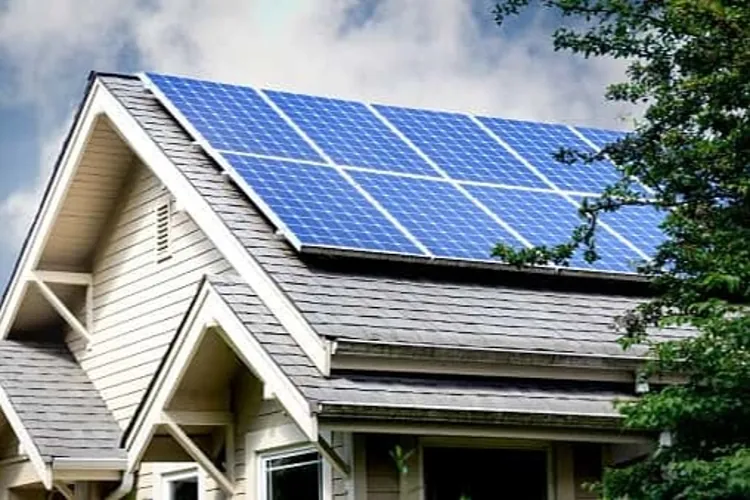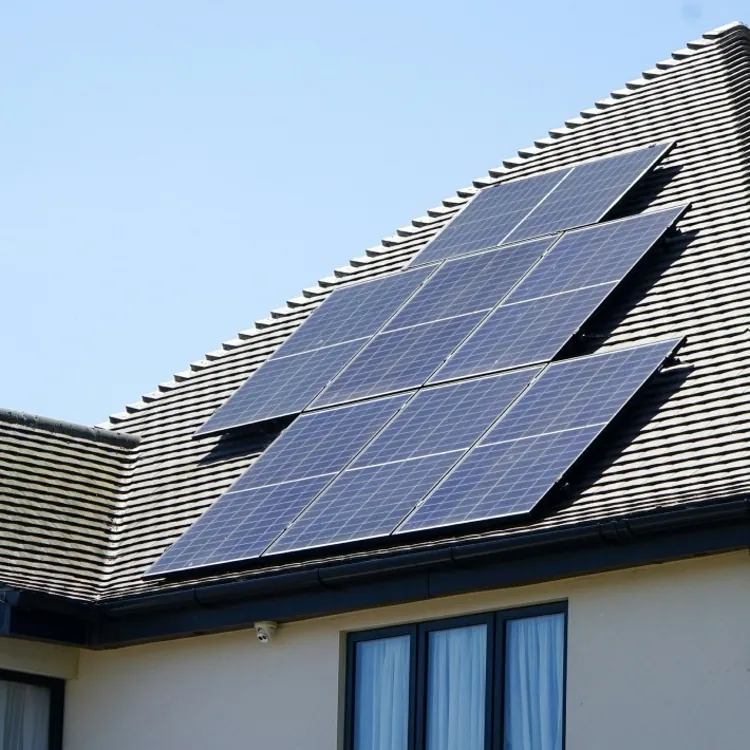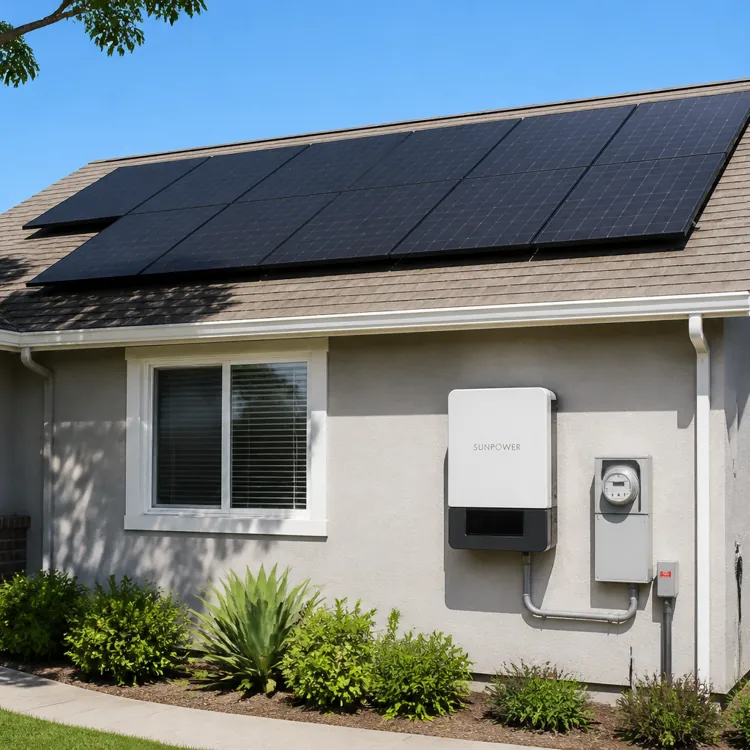


Are solar panels waterproof or weatherproof?
Solar panels are generally considered weather-resistant, not waterproof or weatherproof. They are designed and tested to withstand virtually all forms of weather, helping preserve the many benefits solar panels offer your home.
Understanding solar panel weather resistance
It’s important to distinguish between the terms “waterproof,” “weatherproof” and “weather-resistant.” Solar panels are weather-resistant. Many, but not all, can handle submersion up to one meter deep for a limited time. Most can withstand heavy precipitation, such as constant rainstorms or being buried in snow.
In fact, properly installed solar panels can withstand all kinds of weather. As long as you choose weather-tested solar panels, indicated by certifications like IEC 61730 and IEC 61215, they will remain resilient to heavy rain, snow, ice, winds and hailstorms.
Why most panels are weather-resistant
Most solar panels are weather-resistant because they are designed and tested to withstand a wide range of weather conditions, temperatures and precipitation levels.
Tempered glass and an aluminum frame protect the sensitive PV cells and semiconductors with tight seals and coatings tested against all sorts of weather conditions. Because tempered glass is significantly stronger than regular glass, this design withstands impacts, and the seal keeps water out during rainstorms.
» LEARN: How do solar panels work?
Where water can still enter
Improper installation and age-related sealant deterioration can leave vulnerable areas where water and humidity can enter your solar panels and cause damage. Standing water, especially from a flood, is particularly dangerous because it can quickly enter these vulnerable entry points.
Solar panels are typically built to last 25 to 40 years, through many yearly weather cycles. However, proper installation and sufficiently high IP ratings matter because water can damage the electrical components. This is why connection points, especially the junction box, often require extra waterproofing with materials such as marine-grade sealants.
» RELATED: How much do solar panels cost?
Solar panel water resistance and IP ratings
A solar panel’s IP rating, or Ingress Protection rating, indicates the panel’s resistance against environmental elements such as debris, water and other forms of precipitation. Although most panels have IP ratings, they refer to specific junctions or connection points, such as the junction box, which are the most likely places for external threats to enter.
Most solar panels, including those from the top solar companies, have IP ratings.
Common panel and junction box ratings
An IP rating consists of two numbers: The first (0-6) indicates dust protection, and the second (0-9) indicates water protection. IP65 and IP67 are the most common ratings, followed by IP68. The higher the second number, the more watertight, durable and secure the seal is.
Here are the most common solar IP ratings, along with the protection they designate:
| IP rating | Water protection Level | Typical solar use case |
|---|---|---|
| IP65 | Handles water jets from any direction | Most residential and business solar installations |
| IP66 | Protects against powerful jets | Heavy rain and intense storms |
| IP67 | Immersion up to 1 meter for 30 minutes | Extreme snow or risk of flooding |
| IP68 | Immersion beyond 1 meter for 30 minutes | Heavy risk of flooding, snow, major storms |
What IP67 and IP68 mean
An IP67 rating, one of the most common IP ratings, means the solar panel module can withstand rain, heavy storms and temporary submersion in water up to one meter deep for up to 30 minutes. This protects against extreme weather and some flooding.
An IP68 rating takes this protection a step further, indicating the solar module can withstand submersion beyond the IP67 standard. The maximum depth and duration depend on the manufacturer's specifications, making this rating valuable in areas at risk of severe flooding.
IEC testing versus IP ratings
The IEC, or International Electrotechnical Commission, sets the standards and testing processes for IP ratings. In particular, IEC 61215 and IEC 61730 outline strict processes and conditions to measure how securely solar panel modules and junction points hold up under varying stress levels.
Look for IEC 61215 and IEC 61730 certifications when comparing solar panels.
IEC Standard 61215 sets requirements for measuring how well solar photovoltaic (PV) modules withstand conditions like damp heat, hail and extreme temperatures.
IEC Standard 61730 defines requirements for measuring how well solar modules’ barriers and junctions protect against electrical, mechanical and fire hazards under various dampness and heat conditions.
Solar panels in rain, flooding, snow and ice
Whether it's a cloudy day, there’s heavy rain or snow is falling, weather and precipitation affect how your solar panels perform. That said, most solar panels perform well in a wide variety of conditions.
Here’s how solar panels stand up to various types of weather:
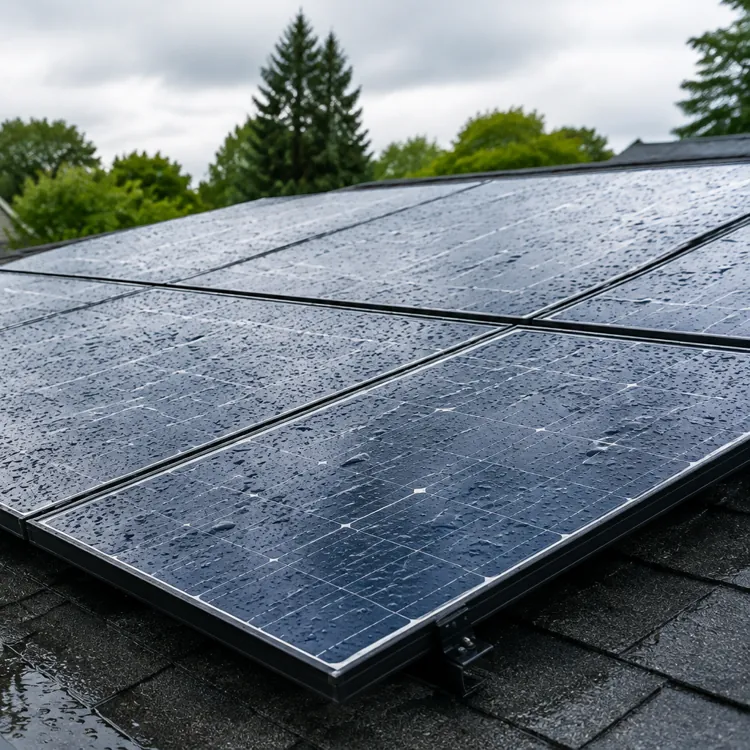
Performance and safety with heavy rain
Generally, because of their waterproof design and sealant, heavy rain has no major negative effect on solar panels — as long as they are properly installed.
One study found that accumulated raindrops can temporarily reduce panel efficiency by 7 to 9%, though this drops to around 5% with proper runoff. In the long run, rain can even improve solar panel performance by washing away dust that blocks sunlight from reaching the PV cells.
Impact of snow and ice on performance
While solar panels are well protected from snow accumulation and melting, snow can still reduce performance by blocking sunlight.
However, most solar panels are built at an angle, allowing snow to slide off, and their warm temperature helps it melt quickly. Once the snow melts, cold weather actually improves solar panel performance, since excessive heat can be an issue in warmer weather.
Flooding and standing water risks
Flooding and complete submersion in standing water pose major threats to solar panels in several ways. The most immediate issue is electrical risk, because water can infiltrate electrical connections and junctions, causing malfunctions or complete system failures. This also risks electrocution and fires.
If you’re installing solar panels in an area with high flood risk, aim to install solar panels at least two feet above the highest recorded flood level in your area. Choose a solar panel system with an IP67 or IP68 rating to help your panels withstand at least some submersion.
Waterproofing risks from wiring and connectors
Solar panels are vulnerable to water damage in several ways, including through the components themselves, the installation process and the rooftop setup. But you can protect the panels, ensure proper installation, maintain functionality and preserve your roof’s integrity.
Here are common points of vulnerability and steps you can take to secure them:
- Junction boxes: A junction box is a small enclosure on the back of your solar panel that connects the PV cells to the electrical components. Use IP-rated junction boxes, ideally at least IP65, to avoid making this a weak point.
- Cable connections: Beyond junction boxes, any point where cables plug in and connect is a potential entry point for water. Use marine-grade sealants to secure all cable connections in your solar panel system.
- MC4 connectors: MC4 connectors, one of the most critical connectors on a solar panel, link your panels to other system components. All MC4 connectors have an IP67 rating or higher, making them a great choice whenever possible.
- Cracked glass: Solar panel glass can crack for several reasons, including improper installation, contact with debris or hail damage. Your panels must use tempered glass of the appropriate thickness.
- Water pooling: Water pooling around solar panels, especially those mounted on roofs, can happen for several reasons, including poor mount placement, installation errors or poor sealant application. Make sure your installer doesn’t cut corners and keep a close eye on your panels.
- Roof penetrations: Water penetration typically occurs when water pools on roof-mounted panels and can seriously threaten your roof's integrity. Ensure your installer uses proper flashing techniques and high-quality components, and uses a water test upon completion to ensure a proper seal.
FAQ
Are solar panels fully waterproof or just water-resistant?
Most solar panels are weather-resistant, but some are fully waterproof and can withstand submersion for 30 minutes or longer. This depends on the solar panel’s IP rating.
Can solar panels survive heavy rain or flooding?
Most solar panels are designed to hold up well in heavy rain, though complete submersion during flooding can put panels at risk, especially if they have an IP65 or IP66 rating.
How common are roof leaks caused by solar panel installations?
Roof leaks caused by solar panels are common but can be prevented with precautions like proper flashing installation, a thorough roof assessment and a water test once the installation is complete.
What is the biggest risk of water damage to solar panels?
Electrical damage is the main threat that water infiltration poses to solar panels. This electrical damage can destroy your solar panel system, cause electrocution or risk a fire.
Article sources
ConsumerAffairs writers primarily rely on government data, industry experts and original research from other reputable publications to inform their work. Specific sources for this guide include:
- Anern Store, "IEC 60529 IP Ratings Meaning." Accessed Oct. 14, 2026.
- Bateria Power, "Are Your MC4 Connectors Really Waterproof? Find Out the Truth." Accessed Oct. 14, 2026.
- Capture Energy Ltd, "What is a home battery’s ingress protection (IP) rating?." Accessed Oct. 14, 2026.
- Charles Bennett Law, PLLC d/b/a Bennett Legal, "Why Is Water Pooling Around My Solar Panel Mounts?." Accessed Oct. 14, 2026.
- Couleenergy, "Solar Panels & Waterproofing: What IP Ratings Really Mean." Accessed Oct. 14, 2026.
- EnergySage, Inc., "How long do solar panels last?." Accessed Oct. 14, 2026.
- Fantasia Trading LLC, "Are Solar Panels Waterproof? Exploring Answers & Preventions." Accessed Oct. 14, 2026.
- Heaven Green Energy Limited, "Junction Box in Solar: Meaning and Why It Matters." Accessed Oct. 14, 2026.
- International Electrotechnical Commission, "IP ratings." Accessed Oct. 14, 2026.
- Millennial Solar, "IEC 61215 & IEC 61730 Testing Standards." Accessed Oct. 14, 2026.
- Portable Sun, "Are Solar Panels Waterproof?." Accessed Oct. 14, 2026.
- ResearchGate GmbH, "The impact of rain on the production of electricity in a solar panel." Accessed Oct. 14, 2026.
- Solarif Group B.V., "How do you prevent water damage to solar equipment?." Accessed Oct. 14, 2026.
- SolarSmith Energy Pvt. Ltd., "Can Solar Panels Survive Extreme Weather Conditions?." Accessed Oct. 14, 2026.
- VDE Verband der Elektrotechnik Elektronik Informationstechnik e.V., "Understanding and preventing PV module glass fracture." Accessed Oct. 14, 2026.