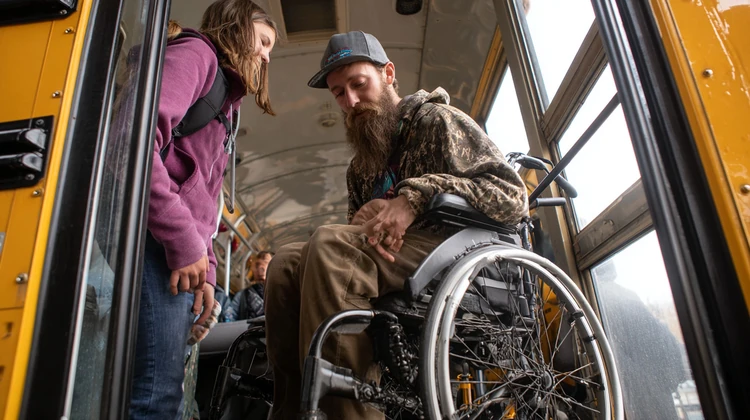
This week’s Auto Safety Recall Derby spans everything from school buses and commercial trucks to luxury SUVs, off-road icons, and even a popular Yamaha scooter. While air bag problems and fire risks remain recurring themes, the most striking pattern is the sheer number of vehicles recalled for wheelchair restraint retractor failures—an issue that appears across multiple bus manufacturers, potentially affecting fleets nationwide.
The first cluster of recalls comes from Corp. Micro Bird, which issued multiple notices (25V751, 25V752, 25V770) covering G5 and T-Series school and transit buses from model years 2023–2026. The problem: wheelchair restraint retractors that may not lock properly. If the system fails during a crash or sudden stop, a wheelchair user could be thrown, resulting in serious injury. Similar defects appear again later in the week involving Coach and Equipment Phoenix buses (25V772), Nova Bus LFS models (25V773), and two major recalls from Forest River Bus (25V779, 25V780). In all, wheelchair-restraint failures make up five separate recall events, suggesting a possible upstream supplier or design issue affecting multiple OEMs.
Commercial vehicles also feature prominently. McNeilus Truck & Manufacturing announced two recalls (25V754 and 25V755) for missing or non-compliant reflex reflectors and rear clearance lights—seemingly small omissions that still violate federal visibility standards and can increase crash risk. Meanwhile, Daimler Trucks North America issued one of the week’s more serious heavy-truck recalls (25V760), warning that loose axle clamp fasteners in certain Freightliner and Western Star models could cause a loss of vehicle control.
Two separate recalls from Wabash National Corporation (25V762 and 25V774) involve insufficient rear-impact protection on Stepdeck trailers. Non-compliant underride guards are a high-stakes safety issue because they protect passenger cars during rear-end collisions with large trailers.
On the light-vehicle side, General Motors issued multiple recalls—including one very serious one. Recall 25V764 warns that roof-rail air bag inflators in the 2014 Buick Verano and Chevrolet Cruze may rupture, an echo of past inflator crises. GM also reported a power brake assist failure risk (25V768) in Chevrolet Silverado 4500/5500/6500 trucks due to damaged wiring harnesses, and a defect that may prevent the front passenger air bag from deploying (25V769) in the 2026 GMC Hummer EV lineup.
Chrysler (FCA US) added two high-impact recalls: 25V765 warns that driver air bags may fail to deploy in 2021–2022 RAM 1500–5500 trucks, while 25V766 involves plug-in hybrid 4xe models of the Jeep Grand Cherokee and Jeep Wrangler, where engine failure may lead to engine fires or a sudden loss of drive power.
Toyota Motor Engineering & Manufacturing issued a large recall (25V767) for the Lexus GX, Lexus LX, and Toyota Tundra, noting that debris inside the engine could cause an engine stall—raising risks especially at highway speeds or in heavy traffic.
In the RV and powersports sector, Keystone RV recalled Voltage models (25V771) because generator fuel lines may have been incorrectly installed, potentially increasing fire risk. Winnebago Towable recalled Micro Minnie trailers (25V776) for a cooktop flame that may invert, and Yamaha announced a major recall for the 2018–2022 XMAX scooter (25V778), warning that a loose camshaft bolt could cause engine failure.
Taken together, this week’s recalls touch nearly every corner of the vehicle market—from school buses and heavy-duty work trucks to high-end SUVs, pickups, RVs, and scooters. Owners and fleet operators should check their VINs promptly and schedule free repairs where needed.
Prevention Tips: Staying Ahead of Recalls
- Check for recalls at least twice a year. Don’t wait for a letter that might never come.
- Prioritize school buses and transit vehicles. Fix wheelchair restraint, seat belt, and brake issues immediately.
- Don’t ignore lighting and reflector recalls. Visibility failures are a major cause of heavy-vehicle crashes.
- For hybrid and EV owners, monitor for warning lights, smoke, strange smells or sudden power loss; park outside if a fire-risk recall is pending.
- Listen to your vehicle. Unusual noises, pulling, vibration or changes in braking or steering are warning signs.
What To Do If Your Vehicle Is Affected
To find out if your specific vehicle is part of a recall, enter your license plate or vehicle identification number in our Recall Look-up Tool. If your vehicle has an unrepaired recall, contact your local car dealership and make an appointment to get your vehicle fixed for FREE.
- Locate your VIN (on your registration, insurance card, or at the base of the windshield).
- Enter your VIN or license plate number into the Recall Look-up Tool.
- If an open recall appears, call your dealership to schedule a repair.
- Repairs for safety recalls are free by federal law, regardless of vehicle age or ownership changes.
- If parts are not yet available, ask to be put on a priority list and request a loaner or alternate transportation for severe safety issues.
- Report unresponsive dealers or recurring problems to NHTSA’s Vehicle Safety Hotline.