
Screen-time battles are common: 70% of parents surveyed said conflicts over screens happen at least weekly, while 51% said recreational screen time has increased over the past year.
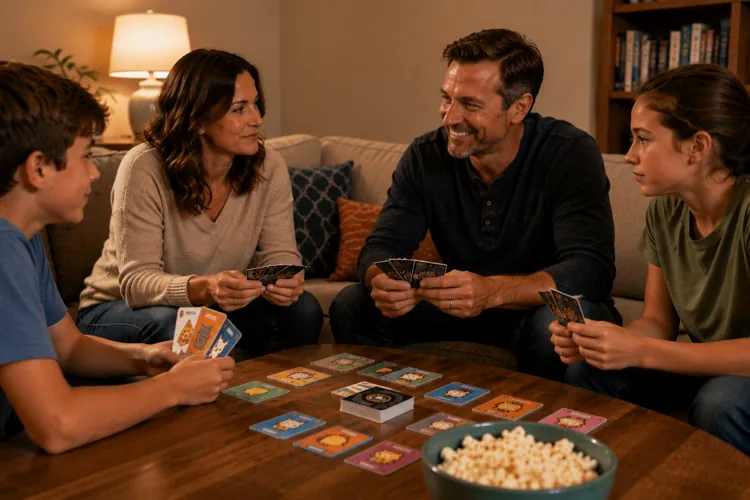
Kids may be more willing to unplug than parents think: 91% of parents said their children would likely put down their screens for a fun family game.
Don't make screen-free time feel like punishment: The better strategy is to make the alternative genuinely appealing and give kids some control over what the family does.
If telling your kids to put down their phones or tablets immediately triggers an argument, here's a different approach: Stop talking about the screens.
That's the advice Dave Campbell, founder and CEO of Taco Cat Games, gave me when I asked him what parents often get wrong when trying to pry kids away from their devices.
“Instead of making putting down the screen the goal, make the activity itself the draw,” Campbell told ConsumerAffairs. It's a timely suggestion given what parents themselves are reporting.
A new survey of more than 400 parents and caregivers found 70% experience disagreements or conflicts over screen time at least weekly, while 51% said their children's recreational screen time has increased over the past year.
But there's another number that caught my attention: 91% said their kids would likely put down their screens for a fun family game.
Nearly three-quarters also said their children are more engaged during family game time than during screen time.
So I asked Campbell, if kids really are willing to put their devices down, how can parents make that happen without turning it into another battle?
His advice was surprisingly simple: Give them something they'd rather do.
Don't sell it as a 'screen-free' activity
That becomes particularly relevant as parents start thinking about holiday gifts. The survey found 98% of parents are considering screen-free gifts for their children this holiday season.
But Campbell says parents can undermine those purchases if they present them as medicine for too much screen time.
“A new game is much more appealing when it’s presented as something the family gets to do together, rather than something kids are getting because they need to spend less time on a device,” Campbell told me.
In other words, his advice is to not make the screen part of the conversation. Instead, put a game on the table after dinner, let a child choose what everyone plays, or make game night part of the family's normal routine.
“Parents may be looking for screen-free activities, but the activity still has to be fun enough that kids want to do it,” Campbell said.
That's a useful rule when shopping, too. Don't buy a toy or game simply because it doesn't have a charging cable. Ask yourself whether your child would actually choose to use it.
Pro tip: Make screens physically less convenient. Have everyone (adults included) put phones in a basket or charging spot during game night. Kids are more likely to buy-in when the rule applies to parents, too.
The best game has the shortest instructions
One of the mistakes parents can make is choosing an activity that's technically screen-free but requires so much effort that nobody wants to do it.
Campbell said families face practical barriers including limited time and energy, children of different ages and interests, and activities that are simply too complicated.
“The games that stick are usually easy to understand, get kids involved quickly, and give them a reason to keep playing,” he said.
In other words, a game doesn't have to be elaborate to compete with TikTok, YouTube, or a video game. In fact, requiring a 10-minute rules explanation before anyone can start will usually work against you.
Pro tip: Before buying a game as a gift, check its recommended ages, estimated playing time, and complexity. If your family tends to lose interest quickly, look for something that can be explained and started within a few minutes.
Try this seven-day screen-time experiment
I also asked Campbell to come up with a simple seven-day challenge families could use to determine whether game night can realistically reduce recreational screen time. Importantly, his experiment doesn't start by confiscating anybody's phone.
For the first couple of days, simply observe your family's normal recreational screen habits without trying to change them.
Then choose two or three nights during the rest of the week and play a game together for just 10 to 20 minutes. Pick a time when everyone is already together, such as after dinner, and give the kids some ownership over what you play.
Have children of different ages? Campbell says it's fine to make small adjustments to the rules so everyone can participate.
Then, at the end of the week, ask yourself two questions:
Did we actually spend less recreational time on screens?
And did everyone enjoy the alternative?
That second question may be the more important one because you're looking for something the family will willingly do again.
Pro tip: Try using the “one-round” rule. Instead of committing everyone to an entire game, agree to play just one round to start. If nobody's having fun, stop. Removing the commitment can make reluctant kids more willing to give the game a shot.
Don't turn game night into another screen-time rule
There's one more part of Campbell's challenge that parents may find difficult, which is to keep the rules light.
This means not requiring kids to finish a game before they can have screen time. Don't mandate that everyone play for a certain amount of time. And try not to turn every game into a serious competition.
With 70% of surveyed parents already reporting screen-time conflicts at least weekly, the idea is to avoid creating yet another reason to argue about devices.
“If kids are having fun, getting them to put the screen down becomes a lot easier,” Campbell said.
That's also a useful takeaway as parents start shopping for screen-free holiday gifts.
A “screen-free” label isn't what makes a toy, game, or activity capable of competing with a phone. The real test is much simpler. When given the choice, does your kid actually want to do it again?