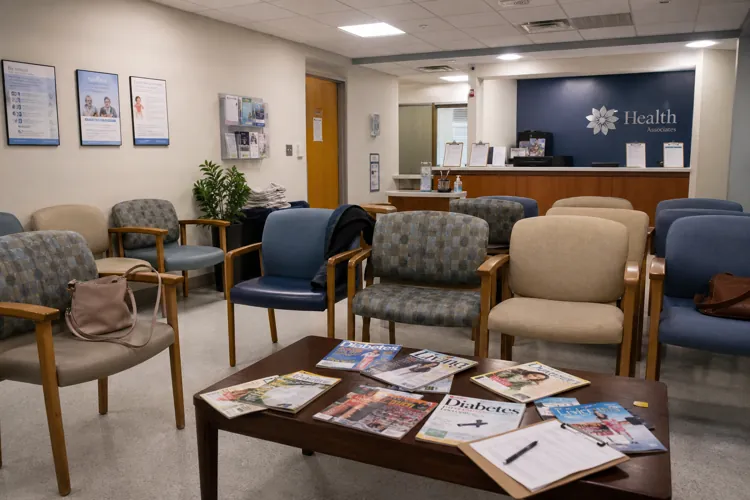

Primary care shortages are driving longer wait times. Experts say fewer doctors are choosing primary care careers, while many communities—especially underserved areas—face shortages of physicians, nurses, and specialists, creating bottlenecks for routine appointments.
System-wide healthcare pressures are slowing access. Workforce shortages, provider burnout, administrative burdens, insurance approvals, referral delays, and staffing gaps reduce clinics’ ability to absorb demand, even when doctors are working at full capacity.
Urgent care can offer faster treatment, but it’s not a complete solution. Walk-in clinics can help patients receive routine care more quickly and ease pressure on the system, but experts say the best outcomes occur when urgent care is integrated with patients’ primary healthcare teams to ensure continuity of care.
Many patients seeking medical appointments for fairly routine care are being offered appointment times that are sometimes months into the future.
Some of the strongest reporting comes from AMN Healthcare's 2025 national survey of physician appointment wait times, which found that the average wait time for a new patient appointment across six major specialties reached 31 days, the highest level recorded since the survey began in 2004. This was a 19% increase from 2022 and a 48% increase from 2004.
Average waits by specialty included:
OB-GYN: 41.8 days
Gastroenterology: 40 days
Dermatology: 36.5 days
Cardiology: 32.7 days
Family Medicine: 23.5 days
If this is a trend, what’s behind it?
The healthcare experts we consulted cite a variety of reasons. Many told us fewer physicians are choosing to become general practitioners.
"More frequently than ever, physicians are choosing not to go into residency with primary care,” Rene Hermes, chief of operations at Hermes Health in Chicago, told ConsumerAffairs. “It is a tough residency, where you have to be on top of your game in all subjects, as family physicians have to properly diagnose and treat patients of all ages with a wide array of symptoms.”
Other issues
Olusheyi Lawoyin, Ph.D., chief of operations at Watts Healthcare Corporation, told us that it’s not just a shortage of general practitioners.
“In certain geographic communities, particularly those that are medically underserved, there remains a shortage of physicians, nurses, specialists, and other healthcare professionals,” she said. “The dearth of primary care providers also creates a bottleneck because primary care often serves as the entry point to the healthcare system.”
Dr. Saravanan Thangarajan, visiting scientist at Harvard T.H. Chan School of Public Health, points to systemic failures that make the system less responsive. It’s more than a doctor shortage, he says; it’s what he calls a “care-routing failure.”
“Clinics have less room to absorb demand,” he said. “Patients are coming in with more complex needs, while providers are dealing with workforce shortages, burnout, documentation burden, prior authorizations, referral delays, and staffing gaps across the whole care team.”
It’s more than the availability of the doctor
Kyle Morham, co-founder of NextPatient, agrees that the system is what is working against both practitioners and patients.
"The delay usually isn't a shortage of appointments — it's a shortage of staff time to book them,” Morham told us.
“Most practices still rely on patients calling during business hours and a front desk that's already underwater. Calls go to voicemail, callbacks pile up, and patients wait days just to get on the schedule. Meanwhile, open slots from last-minute cancellations sit empty because no one has time to backfill them by phone."
Morham said there are some practices where nearly half of all bookings happen after hours if you give patients that option.
“That tells you how much demand never reaches the front desk during the nine-to-five phone window,” he said. “The bottleneck is the booking process, not the calendar."
While an appointment with a provider could be weeks away, patients can access much routine care at a walk-in urgent care clinic. Lawoyin agrees that in many cases, it can provide speedier care and take pressure off the healthcare system.
“But that may create challenges if they operate separately from patients' usual care teams,” she added. “The most effective models of care delivery are those that are integrated with the broader healthcare system so that urgent, walk-in care becomes a bridge to care continuity and preventive care, and not a replacement for it.”